How holding the UK together became part of Labour's power struggle

 PA Media
The Labour power struggle at Westminster is not just about the career prospects of those involved.
It is also about the future of the UK and Scotland's place within it.
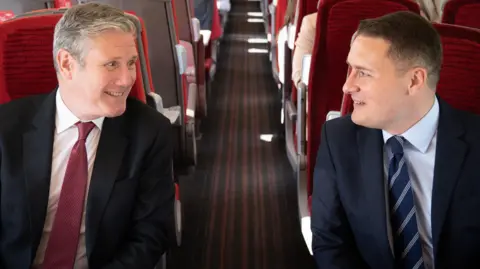
That was spelled out in the exchange of letters between Wes Streeting and Sir Keir Starmer when the former resigned from the UK government.
Streeting's worried about what he calls an "existential threat" to the future integrity of the UK.
Why? Because, as he put it, "nationalists are in power in every corner of the UK" for the first time in history.
It is certainly true that, following May's elections, there are now first ministers from the SNP, Plaid Cymru and Sinn Féin in Scotland, Wales and Northern Ireland.
In addition, Streeting asserts that Reform UK represents "English nationalism" even if the party self-describes as being for a "confident, sovereign, prosperous Britain".
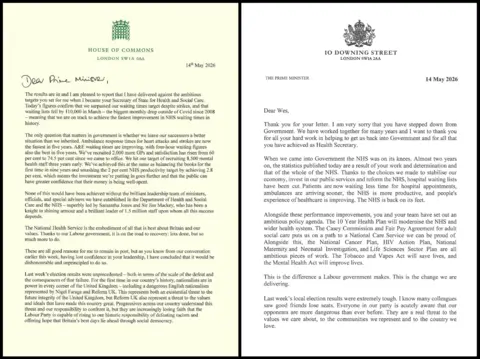
In his reply to Streeting, Starmer accepts that Labour's opponents are more "dangerous" than ever and that there is now a "battle for the soul" of Britain.
One big difference between the two men is over how best to respond to the new reality of multi-party leadership in the multi-national state that is the UK.
For Streeting, a change of prime minister is essential.
For Starmer, Labour must deliver on all its 2024 election promises, including the "promise to turn the page on the chaos" of the preceding years.
He argues that a leadership election would cause chaos. Even without it, the UK government looks fairly chaotic.
There have already been five ministerial resignations and replacements this week.
Streeting was expected to resign and then trigger a contest for the top job in British politics on Thursday.
He did the first bit but not the second.
His critics think he either bottled it or simply did not have the level of support necessary to directly challenge the PM — claims his backers deny.
One senior Scottish Labour figure who had been sympathetic to Streeting said that he had sabotaged himself by not being bolder.
 EPA
EPAAmong those who remain in the Streeting camp there is talk of giving Starmer the space to arrange a dignified departure and a contest that's as broad as possible.
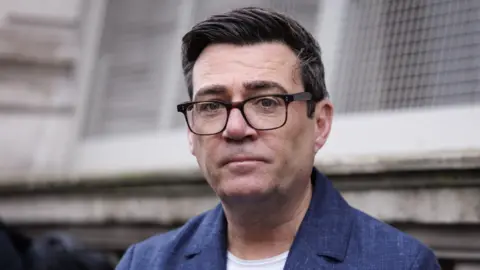
To some extent "breadth" is code for allowing the mayor of Greater Manchester Andy Burnham the opportunity to be included.
That opportunity has already arisen with Josh Simons, the MP for Makerfield standing down, Burnham seeking to replace him and Downing Street letting it be known that Starmer would not block his attempt to return to Westminster.
You have to be a Labour MP to run for the party leadership.
There is still the not insignificant matter of Burnham actually winning a by-election in an area where Reform UK is strong.
There are other potential candidates to take over from Starmer, possibly including the defence minister Al Carns who is from Scotland, represents an English constituency and has a military background.
More prominent figures such as Ed Miliband, Lucy Powell and Angela Rayner (now that she has paid her property tax bill) have all been mentioned.
Starmer himself has not publicly moved from the position that he would fight any challenge.
It's three months since the Scottish Labour leader Anas Sarwar became the first senior figure in the party to call for the PM to go.
We'll never know if a change then would have transformed his prospects of becoming first minister.
 Reuters
Those seeking to take over from Starmer have been working to a different timetable - waiting to see the outcome of last week's elections and ensuring the PM got the blame.
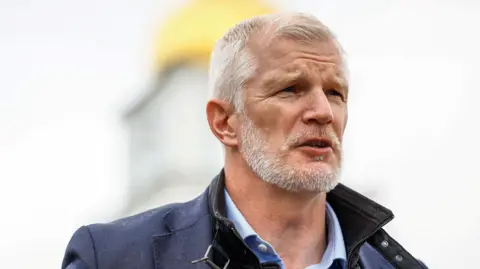
While all this has been unfolding it may have gone largely unnoticed that the SNP's new Westminster leader Dave Doogan had a meeting with his Plaid Cymru counterpart Liz Saville Roberts and the Sinn Féin first minister Michelle O'Neill.
The three parties are seeking to increase cooperation on shared interests which include constitutional change.
Both the SNP and Plaid are parties of independence and Sinn Féin ultimately favours a united Ireland.
In a further development, Scotland's first minister John Swinney had a call with the prime minister this week after which he said Starmer would meet him next month to discuss a referendum on independence.
They are due to meet but Downing Street was quick to insist that the PM had unambiguously stated his opposition to both independence and another referendum.
That did not stop the Conservatives seizing on the conflicting accounts of the conversation and accusing Starmer of "capitulating" to Swinney on the constitution.
As if to try to settle the issue, the UK government ensured that the King's speech included a line recommitting his ministers to the "strength and integrity of the Union".
This is a live issue because the SNP and the Greens have the largest pro-independence majority there has ever been at Holyrood and argue that this is a mandate for a referendum.
Swinney's opponents note that the SNP lost votes and seats at this election compared to 2021.
They also point out that he set an outright majority for the SNP as the benchmark for breaking the deadlock with the UK government and fell short of that target.
Scotland is split down the middle over independence but revisiting the question did not appear to be a priority for more than one in eight of those surveyed by Savanta for the BBC ahead of May's election.
Independence supporting parties are determined to push it up the political agenda and to use instability and uncertainty at Westminster as an argument for giving Holyrood more clout.
