Call to 'break the cycle of burnout' in teaching

 BBC
BBCA teaching union in Jersey says its members are working "beyond their contracted hours" in a way that is "not fully recognised".
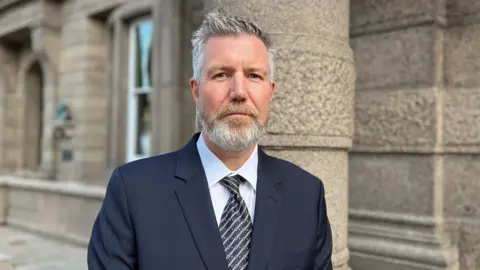
Adrian Moss from the National Education Union, said there is "growing pressure" on staff, who he said are working "51 to 53 hours a week".
He's calling on government to "break the cycle of burnout" by increasing planning and preparation time for teachers.
Following a review last year, the Government of Jersey said the role of teachers must be respected, and their "capacity strengthened" in order to deliver "sustainable, inclusive education".
'Heavily overloaded'
A recent staff survey suggested 62% of respondents had considered leaving teaching, with people citing concerns around wellbeing, personal finances, and leadership.
Moss said: "It's really important to understand that when you have teachers that are burnt out, they're not attending school, then the other teachers, who are already heavily overloaded, have to pick that up, so it becomes a cycle."
He described staff as working 51 to 53 hours per week on average, and said "the working conditions of teachers reflect the learning conditions of students".
The union wants to see contact time between teachers and pupils reduced, while planning and preparation time is increased, as has just been agreed in other jurisdictions like Scotland.
Teachers there will spend 90 minutes less in the classroom, starting in August 2027.
Moss also said class sizes were a concern and called for increased investment in special needs provision, school sites and opportunities for students.

Matthew Burke, the headteacher of Beaulieu Convent School, said it's "really important" that staff feel listened to.
"No teacher I believe is ever going to say that they are earning enough... but I think one also has to understand that as schools, we have to be sustainable, we have to be financially secure with what we do," he said.
He added it would be "naive to think that staff aren't working the sorts of hours that are being talked about", but that his school makes an effort to "acknowledge those who go above and beyond" and aims to find ways to help and support them.
"I still believe that working in schools is a vocation. I don't mean that to belittle it. I think it's important to understand that people who work not just in teaching but in schools are contributing so positively to the lives of the next generation," he said.
The Government of Jersey said it would be inappropriate to comment ahead of the election, but that it "continues to engage constructively and positively with the NEU".
Responding to a review of special educational needs in late 2025, it said: "If we want sustainable, inclusive education, we must build it with our teachers not around them. Their voice must be heard, their role respected, and their capacity strengthened. The future of inclusion in Jersey depends on a confident, well-supported teaching workforce."
It has also recently introduced a partnership model, grouping schools together with an aim to reduce workload for teaching and support teams among other objectives.
Follow BBC Jersey on X and Facebook. Send your story ideas to channel.islands@bbc.co.uk.
