'I'm still paying a mortgage for a home destroyed by a fire'

 BBC
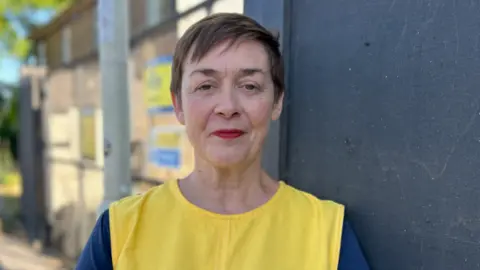
BBCSarah Williams vividly remembers watching her home burn down on the news. On 26 August 2024, she was on holiday when a neighbour texted her to say the Spectrum Building in east London was on fire.
But two years on from the blaze in Dagenham, which left more than 80 people homeless, residents including Williams say they are still "in limbo".
The leaseholder said: "We're still just stuck waiting for other people to make decisions about our future."
She added that in a year's time, the money they were given through insurance to pay for alternative accommodation will run out, and she is still paying her mortgage for a home that does not exist.
At the time of the blaze, from which at least 20 people were rescued, work was under way to remove dangerous cladding. An investigation found the scaffolding around the building at the time had caused the fire to spread, although the exact cause of the blaze is unknown.
The government had provided almost £6m through its Building Safety fund to remediate the building - administered by the Greater London Authority (GLA) – with a clause stating that if the work was not completed, the money would have to be repaid.
The Spectrum Building was demolished in December 2024 after surveyor reports deemed it unsafe.
The building's freeholder, Arinium Ltd, has since gone into administration, leaving the administrators, FRP, in control of the company's assets, including the insurance proceeds.
The government says the GLA has told the building's administrators that the GLA may be owed money as part of the insolvency process.
The government says this is a standard procedural step and would not affect the money residents are owed, as the GLA would only receive any funds left after residents had been fully compensated.
The GLA said that, as is standard practice in insolvency law, it had informed the administrators of the government's interest as a potential creditor.
'The smell of burning hit me hard'
In the meantime, Williams is paying a mortgage of £750, and hopes to receive a payout from administrators to help pay it off.
But because of the insolvency dispute, she is still waiting for answers.
"I'm not cross at my mortgage provider for making me continue to pay the mortgage," Williams says. "They've been really supportive, and sympathetic when I've spoken to them on the phone," adding: "It just shows that the whole thing can collapse, right?
"Building insurance becomes absolutely useless because there wasn't enough to rebuild the building."
Williams blames the freeholder for underinsuring the building.
"There are no checks and balances to make sure what happened at Spectrum doesn't happen again."
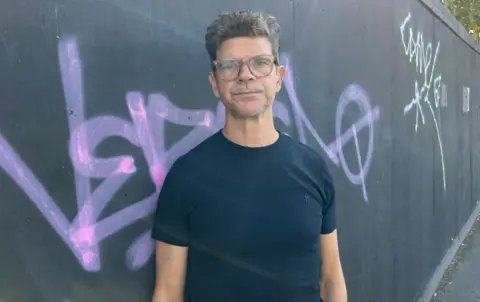
James Allchurch was a leaseholder in a third-floor flat in the Spectrum Building. He told BBC London he "still has nightmares" about the night of the fire.
Recalling the fire in the early hours, he said: "We saw a load of flashing blue lights and embers floating down outside the window. The smell of burning hit me hard. We just threw on any old clothes and legged it out of the building as quickly as we could.
"We were among the last people to evacuate and it was surreal, looking at the burning building."
Since the fire, Allchurch said the freeholder of the building had been "nowhere to be seen" and described the situation as "poor".
"What we would like to see is lessons learnt. We'd like to see accountability and responsibility.
"There were belongings in that building that I can never recover - things that don't have a monetary value. Photos of my parents, an old watch that my dad left me. They can't be replaced. It's heartbreaking, and it'll take a long time to get over."
He says his experience has also raised wider concerns about fire safety and cladding.
'Not good enough'
In the time since, prompted by the Grenfell fire, the government has established a Building Safety Regulator, which is responsible for overseeing the safety and design of high-rise buildings across England, nearly 70% of which are in London.
At the time of the fire, the then deputy prime minister Angela Rayner visited the site of the blaze, and said there had been "slow progress" since the fire in Grenfell Tower and there was "still far too much cladding".
She added that it was important for residents to know that the government and the council "would be there for them".
But Williams says the words have been "followed by nothing".
She said she hoped Andy Burnham would "live up to the promises and the statements that he made when he was Manchester mayor", when he stood alongside cladding action groups and said: "This is not good enough."
Steve Dudeney, director of fire safety consultancy Ignis Fire and Resilience Ltd, and a former London Fire Brigade commander, said there had been "lots of talking and very little doing".
"It just seems bizarre. When it was in the media the government were making all the right noises, but two years on, people are still left in the lurch.
"People are still paying mortgages on what is effectively a pile of rubble. Where is the oversight?"
He says insurance money should be paid to those who are owed it.
"The fact that this hasn't been solved clearly points out that this is a massive problem."
Speaking about cladding remediation, he says there has been little change within the industry.
"In the industry, I don't see many changes. I see confusion, and cladding is still not being taken seriously.
"The landscape, for me, is as confusing as it was post-Grenfell. The bureaucratic process is an ongoing nightmare."
'Incredibly complex case'
A spokesperson for the Ministry of Housing, Communities and Local Government said: "The residents of the Spectrum Building must be fully and urgently compensated so they can start to rebuild their lives.
"We urge the building's administrators to resolve the insurance settlements quickly, and more broadly we continue to work to speed up cladding removal and bring the building safety crisis to an end."
The building's administrators FRP said in a statement: "We recognise how difficult the situation remains for former residents. We are in regular dialogue with resident groups throughout this process.
"This has been an incredibly complex case, demanding independent legal expertise and bespoke valuation models to assess the many individual claims.
"I'm pleased to say we are now applying to the court to approve the first round of payments to leaseholders and creditors. Getting money out to residents as quickly as the process allows is our priority."
A spokesperson for London Mayor Sir Sadiq Khan said: "Following the devastating fire at the Spectrum Building, the mayor has always been clear that the former residents must rightly and urgently be compensated for their losses.
"It is the responsibility of the Spectrum administrators to pay the funds to former residents to cover losses and damages caused by the fire."
The freeholder of the block, Arinium Ltd, has been approached for comment, but has not responded to the BBC.
Listen to the best of BBC Radio London on Sounds and follow BBC London on Facebook, X and Instagram. Send your story ideas to hello.bbclondon@bbc.co.uk

