Why are thousands of bins stacked at a railway station?

 Qays Najm/BBC
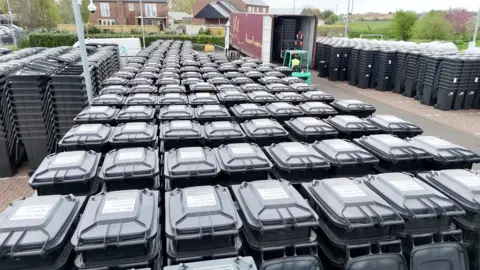
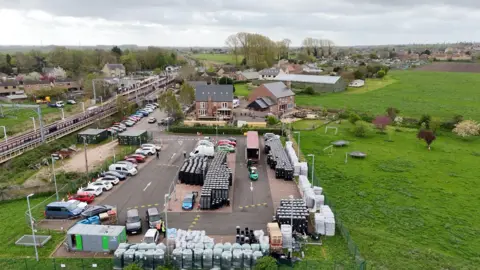
If you arrive at one railway station in Cambridgeshire, you might be forgiven for thinking you had accidentally arrived at a waste management site. About 16,000 black and food waste bins are piled high at the car park in Littleport, ready to be delivered to households. But what is it all about?
Up until now, people across the East Cambs district have been asked to leave their general rubbish (destined for landfill) in bags outside their homes - one of the last council areas in the country where this happens.
East Cambs District Council says it has wanted to give their residents black plastic bins for some time, but decided to wait for the government to clarify its new rules on weekly food waste collections for all homes in England.
While it did not meet the 31 March deadline to introduce them - blaming high demand for specialist vehicles and bins from other councils up and down the country - it will be rolled out by 1 June.
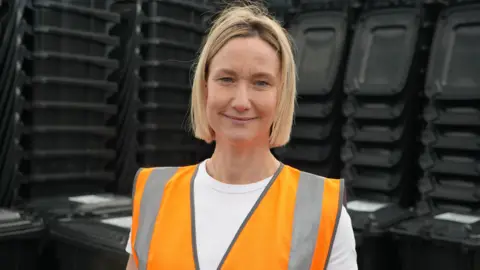
"It's a really big project for us," says Cat Sutherland, the council's senior waste management officer.
"There are about 45,000 houses in our district... every property will be changed."
 Qays Najm/BBC
What are the changes?
When recycled separately, food waste can be used to produce electricity. This reduces the amount of waste rotting in landfill that releases greenhouse gases.
In East Cambs, homes are due to get a small kitchen caddy and a larger outdoor caddy for food waste collections, a year's supply of caddy liners, and a new black bin for non-recyclable rubbish.
Soft plastics, like carrier bags and vegetable packaging will also be able to go into existing recycling bins.
All of this change across East Cambs comes at a cost of more than £3m.
 Qays Najm/BBC
"People, sometimes, are a bit reticent to change, but when we talk about it with them they tend to kind of understand it," says Sutherland.
"They're willing to give it a try, but we also do have things for residents who can't accommodate the bins and we're able to flex the service for them."
She says she has been encouraged by the questions households are asking, adding: "My favourite so far has been about [what to do with] oyster shells.
"That's why I love my job as well because there's always something that we don't necessarily know the immediate answer for."
And those shells? In with food waste, please.
What is happening in the car park?
The council does not have enough space at its depot for the thousands of bins needed and the vehicles delivering them, so a temporary distribution depot has been set up at Littleport's unstaffed railway station - on the Fen line between Cambridge and King's Lynn.
It needs security 24 hours a day, from when they first started delivering bins last month to the end of May. Much of the car park remains open to the public.
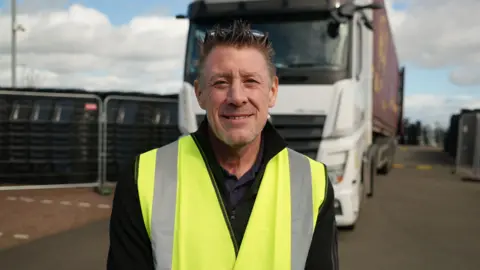
John Exley, managing director of Kee Environmental and the man responsible for distributing the bins, says the car park "creates its own challenges, being such a tight spot, but at least it's good ground".
"I've distributed bins off beaches in the past," he says.
 Qays Najm/BBC
The bins arrive, are piled up high and then teams of three in vans go out and deliver to individual properties in what is predominantly a rural district centred on the small cathedral city of Ely.
Exley says that on the doorstep he has heard "mixed reactions" from residents, but the majority are "embracing it".
"But we do have the odd one that thinks it may be a waste of money or something," he says.
He says that in the first 11 days they have delivered about 14,000 bins, making them "ahead of schedule".
What do residents think?
 Qays Najm/BBC
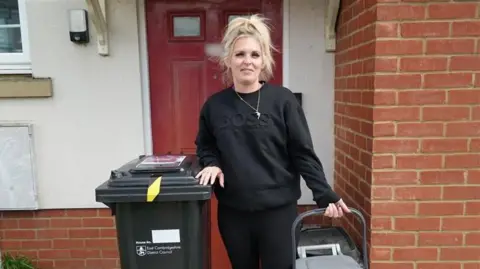
Slightly different to a normal home delivery, the BBC joined the teams taking the new bins to homes in the small town of Soham.
Kirsty Meads thinks the new bins are "a lot better".
"Obviously having black bags on the floor and getting bit by animals and clearing up mess [is a problem] and some people don't clean up their mess," the householder says.
"Having a bin is a lot better for the environment and for people."
She says the new food waste bin will be good for her children "to learn new ways of how to get rid of their rubbish properly".
 Qays Najm/BBC
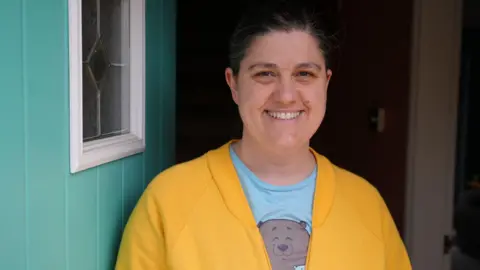
Kim Turner says she is "quite excited" because "with the change comes our ability to recycle more within our blue bins and I think that's great news, especially with soft plastics being able to go in them now".
"It'll just make it far easier for us to hopefully look after our world a bit better," she says.
The council says bin routes are also being changed to make routes as efficient as possible, and information leaflets are being delivered with the new bins as collection days may have changed for some.
Do you have a story suggestion for Cambridgeshire? Contact us below.
Follow Cambridgeshire news on BBC Sounds, Facebook, Instagram and X.
