Cardiff Bay barrage brings no benefits to local people, says campaigner

 Getty Images
The Cardiff Bay barrage has brought "no benefits" to local communities, according to a campaigner.
Gaynor Legall, a former councillor in the city's Butetown area, said that "very few people" from her community visited the bay as they felt it "wasn't meant for us".
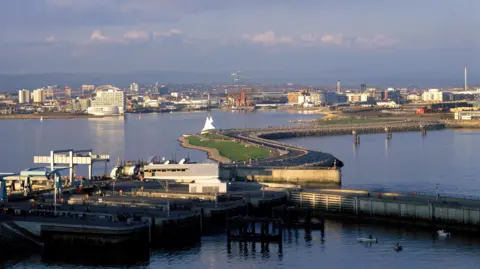
Opened to the public in 2001, the barrage transformed an area of tidal mudflats into a 200‑hectare freshwater lake in Cardiff Bay, paving the way for shops, bars and restaurants to open.
Former Cardiff Council leader Huw Thomas said the barrage had "changed the impression of Cardiff on the world stage" but said further redevelopment was needed.
The barrage was first proposed in the 1980s by the then Conservative Welsh secretary Nicholas Edwards, as a way to tackle deprivation in an area affected by the decline of heavy industry.
The structure traps water from the Taff and Ely rivers, without which the bay would be without water for much of the day.
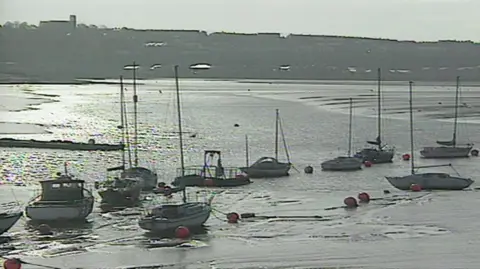
The proposals for a barrage were controversial at the time, attracting opposition from environmentalists who were concerned about the possible impact on wildlife.
During its construction the barrage was one of the biggest engineering projects in Europe, with the entire scheme costing around £220m.
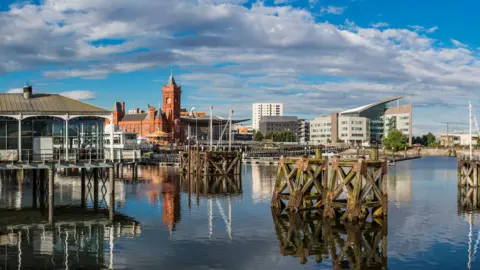
Along with it came the shops, bars and restaurants of Mermaid Quay that overlook water, and the construction of Lloyd George Avenue linking the waterfront with the city centre.
The Wales Millennium Centre, the Senedd building and the BBC's Roath Lock studios are other landmarks that have opened in Cardiff Bay since the barrage was built.
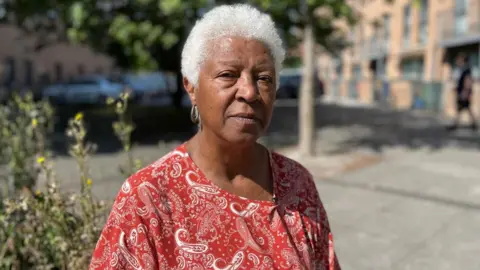
Gaynor was among those who supported the plan at the time, but 25 years since the official opening of the barrage to the public, she said: "In terms of Butetown, the council estate and the old houses at the bottom of Bute Street, there's been no benefits."
"Very few people from Butetown go to Mermaid Quay and Atlantic Wharf [in Cardiff Bay]," said Gaynor, chair of the Tiger Bay and the World charity.
She said local residents felt "it wasn't meant for us and it's nothing to do with us".
Economist Calvin Jones, from Cork University, said: "If you're from one of the economically very challenged communities in south Cardiff - Butetown, Adamsdown, Grangetown - you might look around and think 'OK, so what's changed for my community?' and the answer probably would be not very much."
 Getty Images
The plans also caused divisions within the Labour Party in Cardiff, with Cardiff South and Penarth MP Alun Michael leading the campaign for the barrage and Cardiff West MP Rhodri Morgan leading the opposition to it.
"It was very tense, and it was personally very tense between myself and Rhodri," Alun Michael told Politics Wales.
"We'd actually shared an office and we were the first MPs to have our own fax machine," said Michael.
"And we had to actually agree to differ and have separate fax machines because we were very worried about each other knowing the tactics that were being used in Rhodri's case to oppose the legislation and in my case to support the legislation."
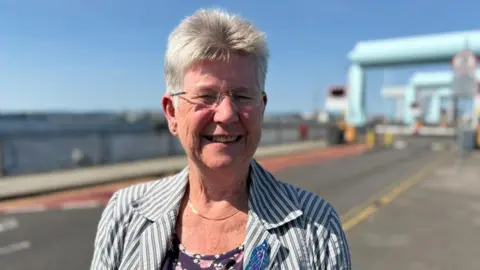
Former First Minister Mark Drakeford and Welsh government minister Jane Hutt were Cardiff councillors at the time.
They opposed the scheme due to concerns over flooding and voted against the plans.
"We were subsequently suspended [from the Labour group] for a few weeks because we voted against the barrage," said Jane Hutt.
"In all my years of political service, and I've been chief whip for many years in the Senedd, that is the only time I've voted against the whip because I felt this was such a key issue."
Local Labour Member of the Senedd and former Cardiff Council leader Huw Thomas said the barrage was "the fundamental thing that changed the impression of Cardiff on the world stage, and continues to do so".
However, he said further redevelopment was needed and it was important to make sure local people felt "involved".
Politics Wales is on BBC One Wales at 10:00 BST on Sunday 5 July and iPlayer
