Five takeaways from Surrey NHS boss in hotseat

 BBC
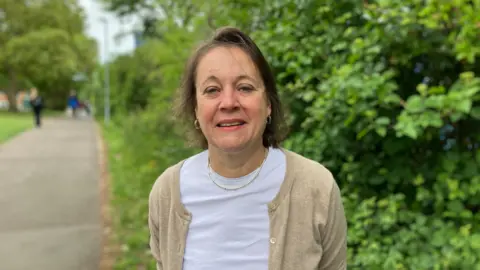
BBCHospital trust boss Louise Stead has been in the hotseat on BBC Radio Surrey.
Starting her career as a nurse, she has been group chief executive of Ashford and St Peter's and Royal Surrey NHS Foundation Trusts since January 2025.
In a wide-ranging interview on Wednesday, she fielded questions from BBC Radio Surrey Breakfast presenter James Cannon.
Here are five takeaways from what she had to say.
1. Waiting times
Although hospital waiting lists in England have fallen, long waits in departments like A&E have continued.
Stead told BBC Radio Surrey it was an issue for the trusts.
"We have got some long waits in our emergency departments, we have got patients being treated in corridors, neither of which is something that any of us would aspire to have," she said.
She said she wanted to see some services moved out into the community to improve access, as well as more care in people's homes.
"There's a very big push this year, particularly led by the Surrey and Sussex new combined ICB (Integrated Care Board) to reduce the number of patients coming to A&Es by 10%.
"So that is about providing care in different ways, in different places."
2. Winter pressures
Winter is the busiest time of year for the NHS, because of issues like cold weather and viruses such as flu.
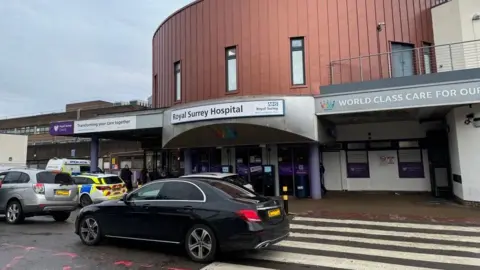
In January the Royal Surrey and Ashford and St Peter's had to declare a "business continuity incident", to allow key services to continue during the pressures.
Stead said the trusts were working on "some big transformation programmes" to avoid the same issues next year.
"We need to start planning for discharge for patients the second they come through the door," she said.
"I think we get to a point that's happened over time, I suppose, where we wait for people to be medically fit and then we start thinking what's going to happen afterwards.
"Unfortunately, the bit that happens afterwards takes quite a long time, particularly if that needs social care involvement or equipment or getting district nurses to go in, so we need to we need to change what we're doing."
3. Cancer services
According to BBC analysis, both trusts, like most across England, did not meet a key NHS waiting time target in the 12 months up to November 2025.
Stead said there was "more we need to do" and that part of the issue for the Royal Surrey was that, because it was one of the country's major cancer centres, patients were sent there by other trusts and that had an impact on the times.
There was, she added, "a few exciting things coming up" regarding investment in cancer services.
"On the Ashford site we've got the Macmillan Cancer Support Centre which is being built," she said.
Stead said the £1.9m centre was "going to be able to provide advice and support to people around the whole of the area who are going through cancer treatment and I think that's really, really important".
4. Lessons after death of girl with learning disabililities
Last year a coroner raised concerns about "the discrimination of disabled children" after the death of a 12-year-old girl at the Royal Surrey Hospital in Guildford.
Rose Harfleet died on 30 January 2024, having attended its emergency department the day before with abdominal pain and vomiting.
Stead said they were "incredibly sorry for what happened to Rose and we would continue to give our apologies to her family".
She said one of the actions that had been taken was to increase the "paediatric presence" in the emergency departments.
"We've also looked that when we assess patients, we take into account that even if the observations look like they're okay, we make sure that if anyone has got any concerns, they immediately refer it to a much more senior doctor," she said.
"I think that it is more difficult sometimes in children that are not able to express themselves and we must make sure, if you look at things like Martha's rule, that we take on board the concerns of parents in a very, very serious way."
5. Hospital parking
Patients often raise concerns about parking at hospitals, whether it is charges or the difficulty in finding spaces.
In September, Ashford and St Peter's hospitals increased charges, while the Royal Surrey started using automatic number plate recognition in May to track how long vehicles stayed for.
Stead said any money made from car parking which did not cover running costs or staff was put back into patient care.
"It's very difficult to get any more parking spaces on hospital sites and I think that we probably are at our maximum at the moment," she added.
"I think there's a lot of things that are changing...so people now have virtual appointments, they have video appointments, we're trying to not get as many people to come on site."
She added there was "never going to be a perfect answer".
Follow BBC Surrey on Facebook, on X, and on Instagram. Send your story ideas to southeasttoday@bbc.co.uk or WhatsApp us on 08081 002250.
