UK gaming icon Peter Molyneux on AI, his final creation and a changing industry

 22cans
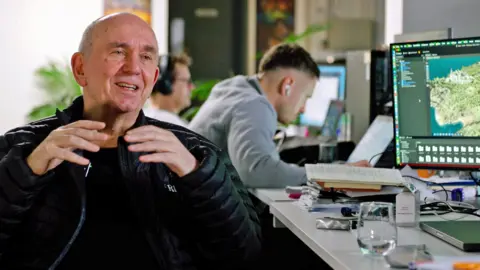
Peter Molyneux is reflecting upon the future of the UK games industry in his office - and how he could soon be leaving it.
The 66-year-old, who over the years has helped create iconic series such as Fable, Black & White and Theme Park, tells me Masters of Albion - his latest project as creative director of 22cans - will also be his final one.
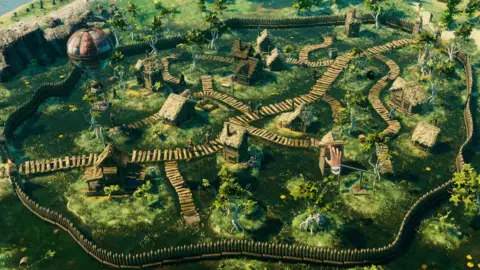
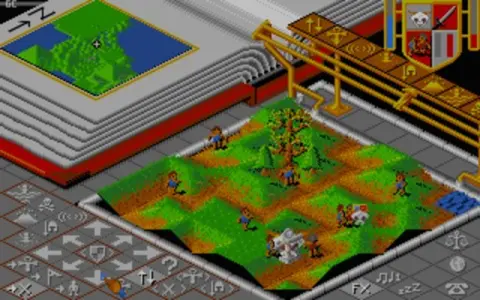
He sees it as a "return to his roots" - a reinvention of the god game - a genre he introduced with Populous in 1989, one where players play as a deity on high, controlling a population's inhabitants as they please.
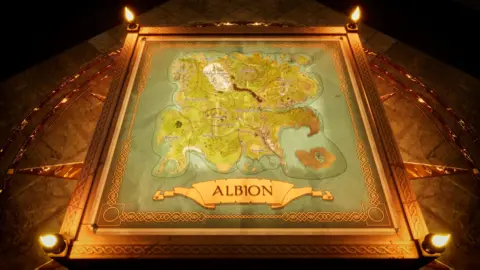
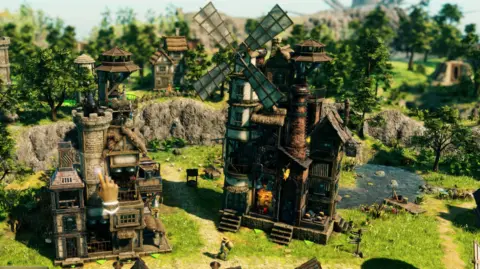
In this new iteration, players are able to build and manage settlements by day, before defending them from attacks at night, with the ability to take control of individual characters at any point.
For Molyneux, once chosen as one of the top game creators of all time, the key idea is "freedom" - creating systems that respond to player curiosity rather than directing them down a fixed path.
"What I'd like to be remembered for is someone who - ridiculously sometimes - tried lots of different genres," he remarks.
 22cans
While Molyneux explains he does not have the "life energy" to design another game after this one from start to finish, there are still plenty of elements about development which excite him.
This includes the possibilities AI could bring to experiment with ideas at a much lower cost - although he doesn't believe the technology is completely there yet.
"AI is not of a high enough quality for us to really use in games right now," he says.
"I think we have to be very, very careful that there are safeguards in there, so we can't abuse this power that AI gives us."
But Molyneux is firm in his belief that recent advances in AI are as comparable to huge technological shifts of the past, likening it to the industrial revolution in Britain.
"It's going to cause disruption," he says.
"But you know what? We're human beings. We've always evolved. We've never stayed still. Societies have changed, and we just deal with it."
 22cans
I'm talking to Molyneux in his office in Guildford, Surrey - which has become a hub for the UK gaming industry since he and a handful of developers set up Bullfrog Productions there in 1987.
Now nearly 30 companies, including parts of major studios like EA and Ubisoft, call it home.
He mentions another nearby studio - Hello Games, maker of the Bafta award-winning No Man's Sky - as an example of how the UK has long had an edge when it comes to risk-taking and creativity in the industry.
But he warns that position is under pressure, arguing that developers are struggling to compete against the likes of China which "can create games in a fraction of the time that we can" or the US with its "unbelievable resources".
Nick Poole, head of industry body UK Interactive Entertainment (Ukie), said the sector was right to highlight global competitiveness, but added the UK remains "one of the world's true creative powerhouses for video games".
"With the right support we can build on our strengths to attract investment, back new talent and help more studios scale," he said.
What needs to change, according to Molyneux?
"The first thing is, and this is slowly changing, is the appreciation that games are not just about shooting and killing," he says.
"They are really incredible ways for people to explore their own creativity. And I think at a government level and almost a population level, to really celebrate that would help with everything."
 EA
EAThe launch of London Games Festival last week saw applications open for a £28.5m pot of funding from the government to support video game studios, with grants of £20,000 for new companies and up to £250,000 for those looking to expand.
"We've developed this in conjunction with the industry because they've told us this is what they need," Ian Murray, a minister in the culture department, told me at the festival.
"They need entry-level support for people to get their ideas into some kind of shape that [they] can take forward. And then once you start to do that, you're able to have that momentum in terms of the whole ecosystem."
This, says Molyneux, is "welcome news", particularly for "smaller and emerging studios trying to bring ambitious ideas to life".
Running a small independent studio like 22cans, which has some 24 staff, is "immensely stressful" he says.
"Every game you do, you're pushing all your chips on to the table, you're betting on one number, and that makes it very, very scary."
 22cans
Masters of Albion is being released in early access on the global online PC store Steam, a model which allows users to purchase and play games in active development before their official launch.
It is one way of lessening that stressful situation of putting out a game, especially for a smaller studio with fewer people to test it.
Molyneux has previously come under fire from fans and critics alike for overstating game features and getting carried away with ideas.
A now infamous pitch for Fable, for example, promised players they could plant an acorn in the game that would grow into a fully reactive tree - a scale of interactivity which was never available in the final game.
"When I used to give a demo, I used to get so excited. I was like a kid," Molyneux admits of some of his past exaggerations.
"It was more about me being excited about the game, which I think people started to misinterpret as being absolute promises. And I wasn't smart enough to realise that."
If Masters of Albion is his final game - as he insists it will be - is there anything he would do differently in his career?
"I probably would have shut up in the press far earlier," he says with a chuckle.
"I think you always have regrets, but the incredible experiences I've had as a creator outweigh those regrets many, many times over."

Sign up for our Tech Decoded newsletter to follow the world's top tech stories and trends. Outside the UK? Sign up here.
