Cows arrive for yearly conservation grazing

 BBC
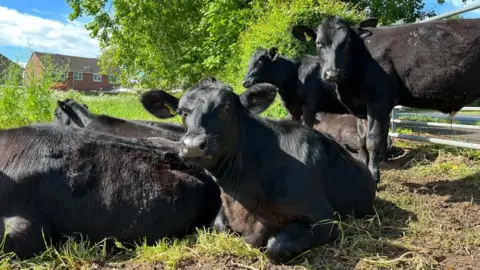
BBCTwenty cows have arrived in an urban nature reserve to carry out annual conservation grazing.
The cattle are Angus crossbreeds native to Britain, and are spending time at Shrewsbury's Rea Brook to play their part in protecting the natural landscape.
By munching on grass during the warmer months, the cows create new habitats and manage the land.
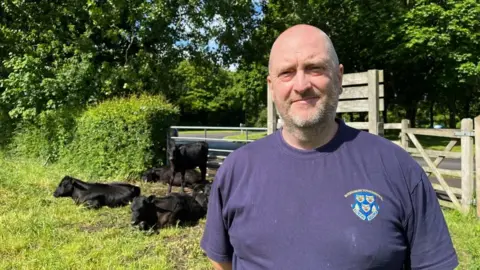
The resulting effect created a "mosaic" of landscapes, said Jim Goldsmith, who is the countryside manager at Shrewsbury Town Council.
Cows were particularly useful for conservation grazing, Goldsmith explained, as they tend to "selective graze", pulling and tearing at grass.
Sheep, on the other hand, were more like small lawnmowers and left grazed fields closely-cropped, he said.
The cattle left some patches bare, which gave butterflies and bees space to "bask in the sun".
"That feeds the smaller mammals, like birds and bats, and the food web goes up to buzzards, foxes, and sparrow hawks," Goldsmith added.
 Ellen Knight/BBC
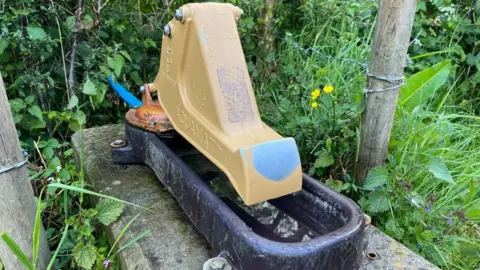
In 2015, the town council was given funding by Severn Rivers Trust to install "pasture pumps" on the land.
The pumps transfer water from the brook into a small trough when nudged by a cow's snout.
It means thirsty cattle are less likely to visit the brook itself - reducing bank erosion from their hooves.
It also reduces pollution, with cows likely to relieve themselves while drinking from the brook, Goldsmith explained.
The cattle took to the pumps "straight away", he added.
 Ellen Knight/BBC
The fields around the brook are open to the public, and are a popular spot for dog walking.
"The cows that we have are very docile," Goldsmith said, clarifying they asked owners to keep dogs under control.
"These [cattle] would rather just keep out of your way, but they're curious and they'll have a look.
"We don't want dogs to be chasing them and injuring them."
Overall, Goldsmith said the conservation grazing has had a "fantastic" impact on the area.
"This time of year is great because you get all the buttercups out," he added, noting the pasture's diversity.
Follow BBC Shropshire on BBC Sounds, Facebook, X and Instagram.
