Future model for water sector debated by MPs

 BBC
BBCThe future of the private companies that run England's water industry has been debated in Westminster after more than 200,000 people signed a petition calling for change.
Created by Oxfordshire-based Ash Smith, from Windrush Against Sewage Pollution, the e-petition called for a national referendum on whether the water industry should be returned to public ownership.
The debate did not have the power to grant a referendum, but did give MPs the opportunity to put forward their opinions on the current ownership model.
The water minister said the government was "bringing in tougher regulation, stronger enforcement and greater accountability".
Online e-petitions can be used as a call for action from the government.
Once published, it stays open for six months with Parliament considering a discussion on the petition once it has reached 100,000 signatures.
The water petition, debated on Monday, reached this figure within a month of being published.
It described water as a "basic human necessity" and called for "the people to decide who owns and controls it".
While the MPs who took part in the Westminster Hall debate did not agree with the need for a referendum, there was broad consensus that the current model was "broken", with differing opinions on how to fix it.
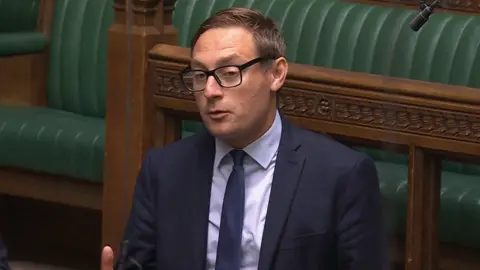 Parliament TV
Oxfordshire MP Olly Glover said more than 860 people from his Didcot and Wantage constituency signed the petition.
Glover reiterated his opinion that Thames Water should be brought into special administration, but opposed calls to nationalise the system.
Instead, he argued for the creation of mutually owned, public benefit corporations, "owned by customers, professionally managed and not driven by shareholder profit with effective regulation".
In the official government response to the petition, a spokesperson said "we are taking action now through stronger regulation and enforcement."
'Can't continue'
Acknowledging this position, Sean Woodcock, Labour MP for Banbury, said he was concerned it did not go far enough.
"What more is the government prepared to do, in order to demonstrate that it understands the scale of public anger, that it hears the public frustration and is prepared to act with greater urgency in response to it?" he asked.
Water Minister Emma Hardy, said: "For too long pollution, poor performance and financial instability in the water industry has left customers and communities to pay the price.
"This situation can't continue – which is why this government is giving the public more control and helping keep bills as low as possible.
"The prime minister has been clear that the failures of the past must be corrected.
"We are bringing in tougher regulation, stronger enforcement and greater accountability, so water companies deliver for customers and the environment."
