Disabled transport issues ahead of local elections

 Getty Images
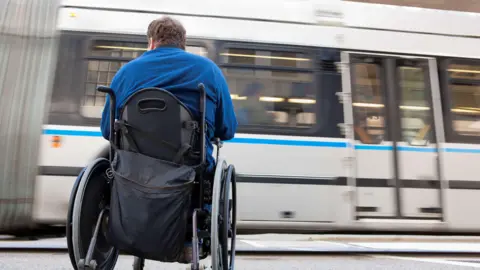
Getting on and off buses and trains, a lack of information from drivers to passengers, accessibility at railway stations, and problems caused by slopes and surfaces on platforms are some issues raised by disabled people and campaigners in Surrey about travelling on public transport.
Nearly one out of seven people in Surrey have said they have a disability, according to the 2021 census.
On 7 May voters will elect councillors for two new unitary authorities, which will be responsible for certain areas of transport, including managing bus services and having a strategy for rail, from April 2027.
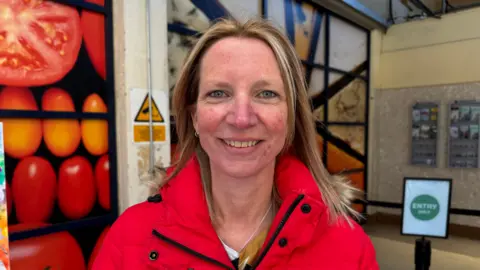
Nikki Roberts, CEO of the charity Surrey Coalition of Disabled people, said: "Transport is an issue raised by our members frequently - whether that's inaccessible train stations, inaccessible bus stops or lack of transport to and from stations.
"This means that some of our members rely on wheelchair accessible taxis which are cost prohibitive."
She says the charity is calling on ministers "to work with transport providers to make accessibility a non negotiable".
The charity said a project arranging days out for disabled people to the countryside by train had highlighted some of the issues, particularly at rural stations.
"I worry about whether the platforms are accessible in both directions if the station is unmanned, whether I'd be able to get on/off the train, if there are lifts and knowing that they are in working order," one person taking part said.
Others described the difficulties in being able to get from their homes to railway stations in order to travel.
However, another individual said the experience of going to the countryside had "helped my mental health and helped me feel better".
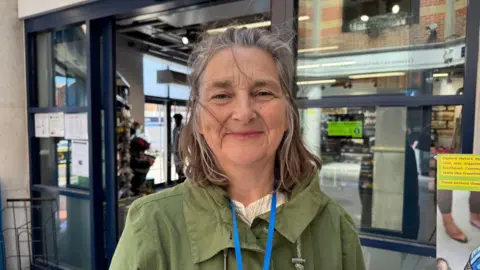
Sara Grisewood, the North Downs Line Officer for Southeast Communities Rail Partnership, which was also involved with the project, said: "The thing this really highlights is issues of access to the stations themselves.
"It's often the roadways, the footpaths, the curbs, the slopes from the station itself which present the most difficulties."
She added there which "small improvements" which could make a "huge difference."
Steve Plowman from Horley, who is a white cane user and has a visual impairment as well as hearing loss, told BBC Radio Surrey he uses buses and trains near to where he lives.
He says he does not have "too many issues" with the bus operator in his area and thinks they do "a good job," have "excellent" timetables, standard of vehicles and reliability.
"However, getting on the bus and making sure it's the right bus and wondering where you are in terms of the route once you're on that bus is another thing," he said.
"I think they try really hard but it tends to just fail at the final hurdle."
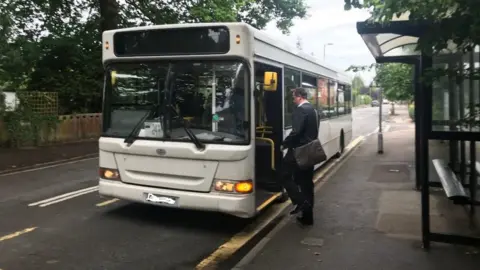
Plowman said sometimes there are problems with announcements letting passengers know about their location, and also drivers checking he and other disabled people were in the right place at bus stands and stops.
He called for more training for some drivers, who he said "don't get it",
"I don't think they fully appreciate what it's like trying to travel as a visually impaired traveller," he added.
A spokesperson for Surrey County Council said: "We know from speaking with local stakeholder groups and people with lived experience that using the bus network can present challenges, and as part of the Surrey Enhanced Partnership between us and bus operators, we have taken improving accessibility seriously."
A number of measures have already been carried out, including working with bus operators to have more on-board audio and visual next stop announcements, and these are having an impact, the council spokesperson said.
"But there is always more we can do," they said.
A spokesperson for the Department for Transport said: "We're working to make journeys easier for everyone, with £280m for step free access and lifts at train stations across the UK, including vital upgrades to Ash Vale station in Surrey.
"We're also delivering better passenger assistance and setting clear expectations about accessibility for buses and taxis so that people can get to their next mode of transport more easily."
'More needs to be done'
A spokesperson for the Rail Delivery Group, which represents rail firms, said the industry had made progress.
"Many stations now offer step-free access, and assistance can be booked in advance or requested on the day through Passenger Assist," they said.
"However, we recognise more needs to be done. Improving accessibility remains a priority."
The spokesperson said: "We continue to work with customers, accessibility groups, frontline staff (including through disability awareness training) and industry partners to deliver meaningful improvements."

Follow BBC Surrey on Facebook, on X, and on Instagram. Send your story ideas to southeasttoday@bbc.co.uk or WhatsApp us on 08081 002250.
