Funding lifts lid on life in mill workers' model village

 Saltaire World Heritage Education Association
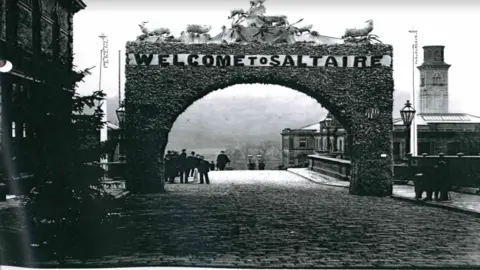
A former mill workers' village on the edges of Bradford is celebrating 25 years as a World Heritage Site. Now a major archive project, started as a labour of love by a group of volunteers, will open up Saltaire's story to the public as never before, backed by lottery funding.
In a small office tucked away at the back of Shipley College, thousands of fragments of Saltaire's past sit carefully packed into boxes, folders and filing cabinets.
In a nook are more piles of material - letters, photographs, certificates and records - meticulously gathered over decades by a small group of volunteers.
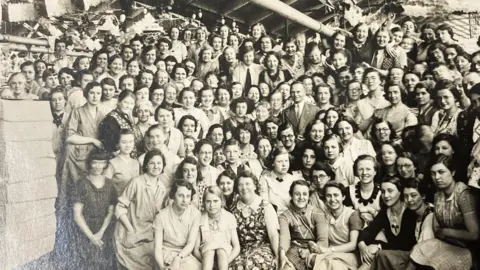
The documents - totalling about 7,000 - form a detailed and unique record of Saltaire, not just as a place, but as a community shaped by ambition, philanthropy and everyday working-class lives.
Documenting more than 170 years of life, from mill workers and schoolchildren to global industry connections, it is set to become more accessible to the public after receiving £249,000 from The National Lottery Heritage Fund.
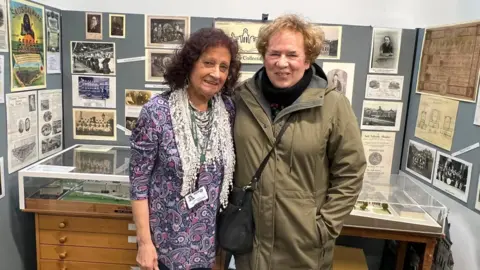
"It reflects Titus Salt's philanthropy, it reflects his vision, but it also reflects the changes that happened over 170 years, right up until today," says Maggie Smith, secretary of the Saltaire World Heritage Education Association.
"If we didn't keep collecting, we wouldn't have the history in a hundred years' time.
"People want to understand why it happened, why it was built, what's happened to it since, how people's lives have changed."
 Saltaire World Heritage Education Association
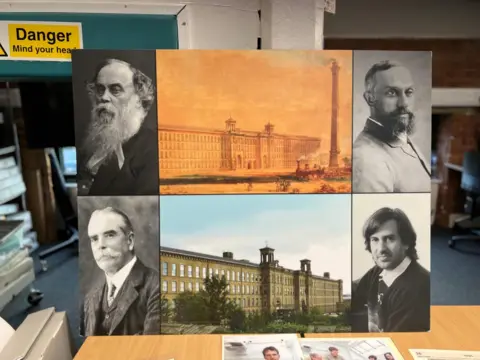
The archive centres on the settlement created by Sir Titus Salt in the mid 19th Century, when the textile manufacturer moved his operations out of Bradford and built a community for his workforce.
Many of the village streets still bear the names of his children and grandchildren, as well as others linked to its inception.
Salt's vision was born at a time when Bradford was being shaped by rapid industrial growth and often harsh living conditions.
"He lived through a time in Bradford when the conditions were so appalling that the average lifespan was 18 years," Smith says.
"So he lived through cholera epidemics, Chartist riots, and anti-Catholic riots… and he wanted to do something better.
"He wanted to create better relationships between capital and labour. And he wanted to get people into a place that had fresh air and greenery around it."
 Aisha Iqbal/BBC
The result was a community where work, housing and education were closely linked, and where workers were given opportunities to progress.
"People would start in the packing room as a boy and they'd end up as head of costings department, accountants, mill managers," Smith says.
Stories of movement, aspiration and working lives run through the collection.
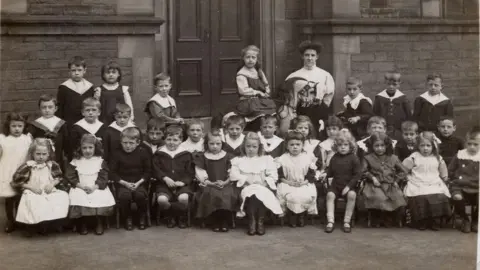
"It's internationally important, because it's a unique focus on not just people who owned and managed the big mill, but the workers, the residents, the schoolchildren...
"People loved Saltaire. Working-class people loved where they lived. They loved where they worked. They kept everything."
 Saltaire World Heritage Education Association
Today, Saltaire is often described very differently.
It is a UNESCO World Heritage Site, known for its architecture, galleries and cultural life, and regularly appears on lists of desirable places to live.
This year marks 25 years since the designation, prompting renewed reflection on the village's history and significance.
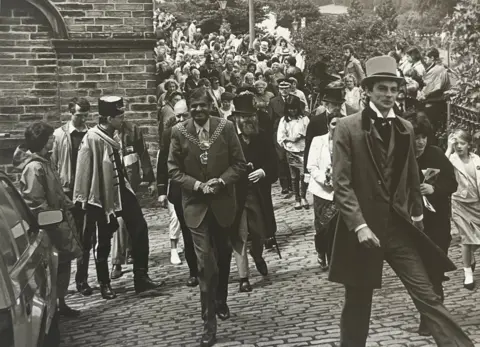
But its current picture-postcard identity is far removed from its origins, which historians like Smith say can be easy to overlook.
"That working-class era has not quite married with the current generations of people who live in Saltaire," she says.
"There's a gap in understanding.
"But this story is woven into Bradford as well as this village, and we must never forget that."
 Saltaire World Heritage Education Association
For Smith, the collection offers a way of reconnecting those present-day lives with the history that shaped the place.
However at present, much of the collection remains out of sight, accessible only by appointment.
The lottery funding aims to change that, supporting improved storage, conservation and the creation of exhibition spaces, alongside work with communities to tell a broader range of stories, including those linked to migration and Bradford's textile workforce.
"Those stories are so important," Smith says.
The plans come at a time when the future of parts of the village is also being debated.
A proposal to build an arts, heritage and technology centre on the Caroline Street car park site - intended to house the collection - prompted local opposition last year, with concerns about development within the historic village and the loss of parking.
Smith points to another perhaps little-known fact, that in the late 1980s parts of Saltaire itself had faced decline, with buildings standing empty and deteriorating.
"It was damp rot. It was wet rot and dry rot throughout the buildings," Smith says.
"So the ceilings were coming down, the glass had broken."
 Saltaire World Heritage Education Association
The survival of both the buildings and the archive has depended on sustained local effort.
"We never ever really need to recruit volunteers or trustees," Smith says. "They just come."
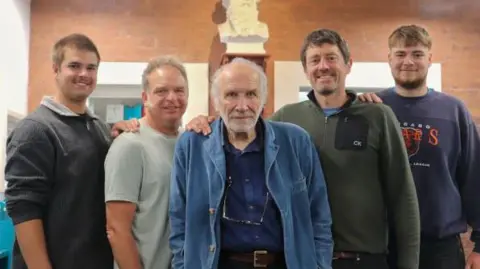
Descendants of Sir Titus continue to maintain links with the village, with recent visits bringing family members back to explore the archive alongside local heritage groups.
"This collection explains Saltaire today," Smith says.
"And it explains Bradford today."
 Saltaire World Heritage Education Association
Listen to highlights from West Yorkshire on BBC Sounds, catch up with the latest episode of Look North.
