Meet the loo guru - mapping places to pee

 BBC
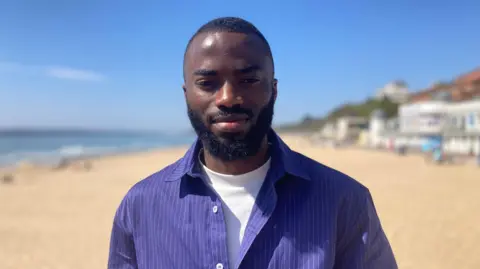
BBCA man has developed a free smartphone app to help people find public toilets.
Blessing Fasina, who moved to Bournemouth, Dorset, from Nigeria to study for his Masters degree in 2023, said he found it "challenging" to find facilities when he arrived and felt "anxious".
The 29-year-old used his background in web design and mobile app development to create Where to Wee, that launched in January to help tackle what he called "a serious problem in the UK".
Research by The Royal Society for Public Health (RSPH) found that there are 15,481 people for every public toilet in England.
Fasina said the app currently has about 1,500 active users and he hopes to help those with health conditions.
"People facing challenges include elderly people, pregnant women, people with irritable bowel syndrome, people with disabilities," he said.
He added that he had feedback from one woman with children who said, at times, she stayed at home for fear of not being able to find a toilet.
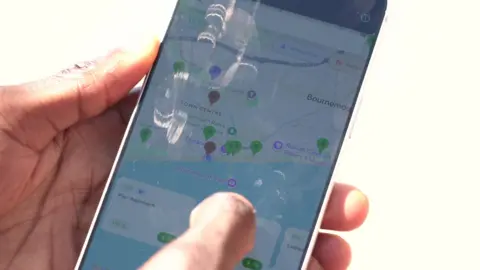
Fasina recalled asking people in the town where the nearest toilets were, but said he was "surprised" that no-one seemed to know.
He said that "the idea started from my own frustration" and that "getting the data and getting the app together wasn't really easy".
"I looked at public data online - different council data mashed up with latitude and longitude, open source data and put it together," he said.
"One of the challenges was the accuracy and completeness of the data.
"I've had people say there are toilets listed on the app that are closed, they're not open, the opening hours are different, they're not clean, they're not well looked after."
Fasina said he is looking to partner with local councils to make the app more accurate.
"But there is a lot of positive feedback so that's what's keeping me going with the project," he added.
"It's really surprising to me that a lot of people are searching - a project that I just started in my own room and it makes me know that this is a serious problem."
In Bournemouth, Poole and Christchurch there are 30 toilet blocks along 15 miles of seafront, and the council said each of them is cleaned at least three times daily.
A council spokesperson added: "There are occasions when unforeseen circumstances arise, including mechanical failures, misuse, or vandalism.
"We have a wide network of free, accessible toilets across the BCP area and remain committed to providing this essential service for both residents and visitors."
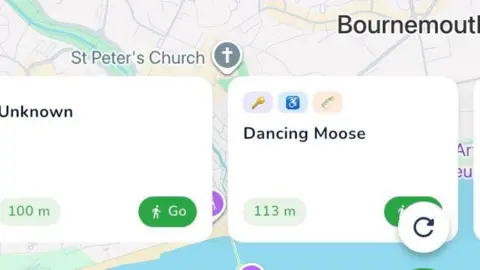 Where to Wee
RSPH said data, based on more than 200 Freedom of Information Requests, found that there are 14% fewer public toilets across England since 2016.
It said that public toilet provision in England is currently discretionary to local councils.
The Local Government Association added that "funding pressures have caused councils to rethink provision" as "the maintenance of a public toilet could cost a council £25,000 a year".
Fasina said that he thinks central government should provide local authorities with additional funding to make public toilets more accessible.
He added: "Councils and public sectors need to work in collaboration together to know exactly what's really happening.
"Look at the data, seek feedback, work with people like us, know what's happening and draw a plan of what can be the solution to difficulties of getting accessible toilets."
