Drivers 'chucking stuff out of windows' blamed as litter on 99% of main roads

 BBC
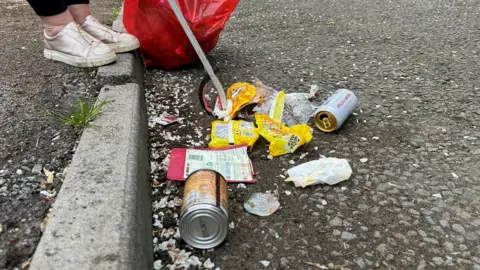
BBCThere has been an "extraordinary rise" in litter dumped on roadsides, campaigners say, after a survey found rubbish on 99% of main roads in Wales.
Keep Wales Tidy said sweet wrappers, drinks containers and fast-food packaging were the most common types of litter found on kerbs.
The charity's chief executive said it was "ridiculous" that "anyone feels that it's appropriate to chuck stuff out of their window while they're driving", warning that clean-ups were both dangerous and expensive.
Ron Ford, 75, a volunteer litter picker in Torfaen, said roadside litter was a "constant problem" and certain "grot spots" required repeated cleaning.
Ford said his volunteer group, which collects rubbish weekly in the Pontypool area, had collected almost 14,000 bags of litter since 2018 - including more than 650 since the start of this year.
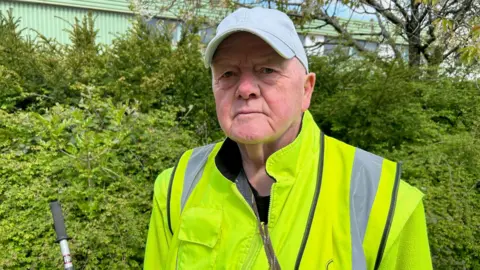
"We like to get back into what we call 'grot spot areas' every six to eight weeks," he explained at a litter pick near New Inn.
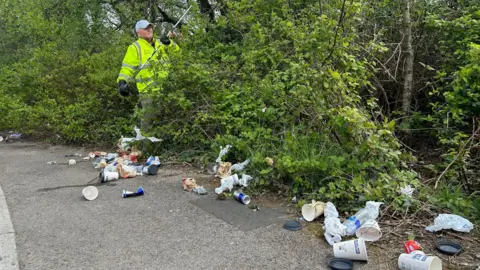
"We get quite a lot of bags full of rubbish that have been kept in [people's] vans and cars – it's a constant problem to keep it all down.
"It's the quick 'in the bush' kind of thing, which creates a problem for us then, we're clambering through to get it out."
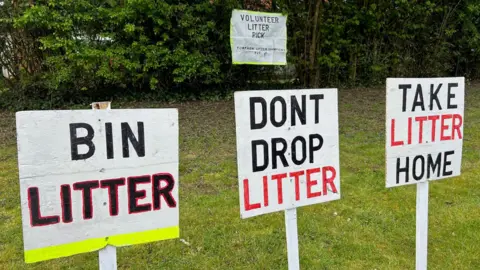
Ford added: "It is predominantly fast food outlets – not too far from here, we have two main ones. So this whole area here is littered all the time."
Fellow volunteer Alison Harrison, 59, from Cwmbran, said the problem had "got a lot worse" in recent years.
"It is disheartening, but we just go and we get on with it," she said.
"We know where the really bad areas are… but once you've done it, and it looks nice and clean and tidy, that's why we do it."
A survey conducted by Keep Wales Tidy between April and December 2025 found that litter was present on 98.8% of A and B roads in Wales.
Smoking litter and cigarette butts were spotted on 88.1% of the roads surveyed, while confectionery packaging was found on 80.7%.
The data also showed drinks litter present on 72.1% of roads, with fast food waste seen on 67% of routes.
"We've seen an extraordinary rise in the amount of on-the-go litter – these are things that have absolutely increased hugely over the last couple of years," said Owen Derbyshire, Keep Wales Tidy's chief executive.
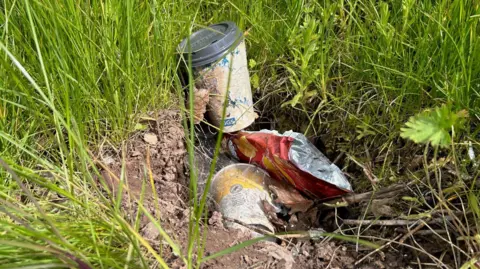
"And it's something that our volunteers are finding in their droves at the minute, across every single community in Wales," he added.
"It feels easy to blame everyone else for these issues, but we need to take that individual responsibility as well.
"It's ridiculous to me that anyone feels that it's appropriate to chuck stuff out of their window while they're driving. It shouldn't be acceptable in Wales in 2026."

As well as being unsightly, Derbyshire said that some types of litter - such as discarded vapes which include batteries - could pose a risk of "real damage" to cars.
Ultimately, someone also has to clear up rubbish dumped by the roadside at locations that can be difficult to access.
"It's the cost that we're paying as taxpayers to tidy this stuff up – we spend about £3m across Wales tackling roadside litter," Derbyshire added.
"And that's obviously incredibly dangerous for the people doing the work as well."
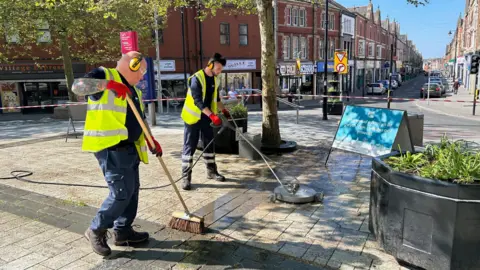
For council teams who end up clearing the litter along busier roads, the danger is often mitigated by having to temporarily close routes – to the inconvenience of commuters.
"Sometimes we have to close it because there's no other safe way to do it, especially in more rural roads," said Tony Spear, who works for Vale of Glamorgan Council's Highways Maintenance team.
"I'd rather them not [have to clear up roadside litter], and concentrate on everything else, but unfortunately we have to do it.
"So if people took it away a bit more, we could then use those resources on other things."
