Jewish music used to connect with schoolchildren

 BBC
BBCOne of the oldest Jewish communities in England has been using music to educate and inspire a new generation about its heritage.
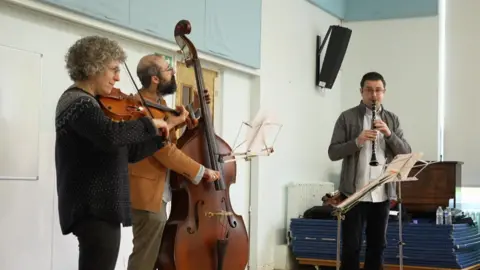
The Klezmer Village Band has been taking a centuries-old musical tradition into primary schools around Plymouth.
Klezmer is traditionally played at weddings and celebrations, and is known for lively rhythms and expressive, almost vocal melodies.
A sell-out performance at The Drum at Theatre Royal Plymouth and the educational workshops are part of the UK's first Jewish Culture Month.
The band's visit to the city is part of a wider effort to reconnect Plymouth with its Jewish heritage through culture and education.
It follows comments by the Prime Minister Sir Keir Starmer calling for "every part of society" to take responsibility against rising antisemitism.
At Woodfield Primary the band was also joined by pupils from nearby St Peter's and Mount Street schools.
For many of the children, it was a first encounter with klezmer music and with Jewish culture.
'A wordless language'
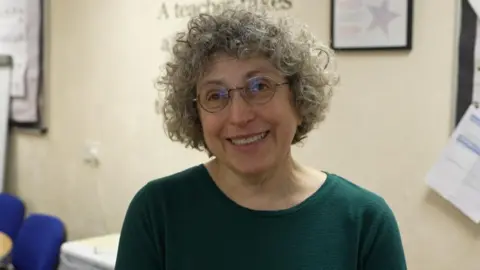
"It comes from Eastern Europe, from communities that lived there when it was part of the Russian Empire," explained musician Ilana Cravitz.
"A lot of this music comes from places now known as Ukraine."
It was hoped the music can be used to bring people together across borders and generations, organisers said.
"Music is a wordless language," Cravitz said after the session at the school.
"People respond from inside - they stop thinking, they feel. And we really saw that today."
One pupil said: "I thought it was lovely. I loved the dancing and the singing. When the band played, it was amazing."
Another added: "It had a really nice sound. It made me feel happy and relaxed."
For some, it was entirely new. "No musicians have ever played live music to me before," one boy said.
The word klezmer comes from two Yiddish terms meaning vessel of song - a reference to both the instruments and the musicians who bring the music to life.
Alongside the performance, the workshops opened discussions about identity, belonging and shared experience.
Cravitz said: "We talked about people coming together... sometimes because they've felt excluded or persecuted, and finding connection through music."
The project has been organised by Plymouth Jewish Community CIC.
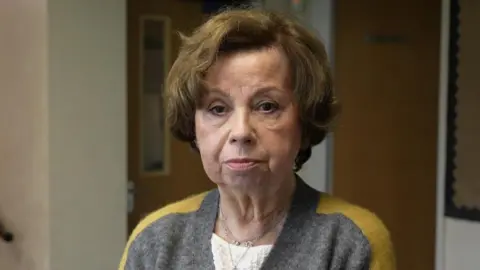
Director Louise Clements said: "We wanted to bring Jewish culture back into the community. This is the first time in many years that something like this has happened here."
She said she had a personal connection to the music, but everyone could learn from it.
"It takes me back to family celebrations and weddings," she said.
"For others, it shows a different side of Jewish culture - something that sparks curiosity."
The project aimed to show "young people what Jewish life and music is like", she added.
One of the musicians, John McNaughton, said the reaction had been overwhelmingly positive.
"Children have that innocence - they're not afraid to enjoy something new," he said.
Follow BBC Devon on X, Facebook and Instagram. Send your story ideas to spotlight@bbc.co.uk.
