Cuckoo takes one look at UK and flees to France

 British Trust for Ornithology
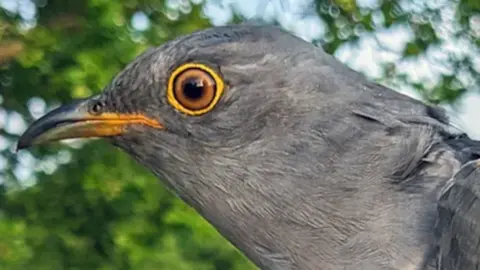
A cuckoo, believed to be one of the first to have migrated back to the UK since the winter, has changed its mind and returned to mainland Europe.
Ashok the male cuckoo was electronically tagged by the British Trust for Ornithology (BTO) at Worlingham Marshes near Beccles, Suffolk, in May last year, so he could be tracked and monitored during his migration.
The birds migrate to Africa for the winter months, and Ashok slowly began to make his way back last month before touching down in Suffolk on Tuesday.
But according to Jon Carter, from BTO, Ashok spent 36 hours in the county before quickly changing his mind and heading to France.
"He was actually the earliest record we've ever had of a tagged bird going back to Europe," Carter explained to BBC Radio Suffolk's Wayne Bavin.
"We were thrilled to see him back, but within about 36 hours he turned back and went back to France, so we're not quite sure what he's doing."
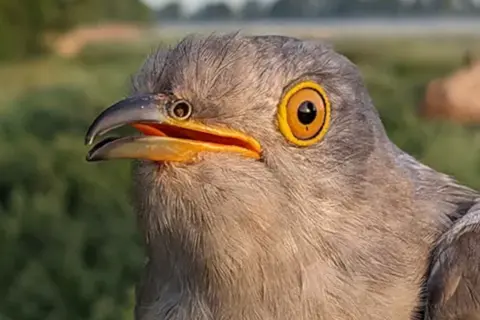
Another male cuckoo also from Worlingham, named Arthur, was tagged the same day as Ashok and has also recently arrived back in the county.
But unlike Ashok, he has decided to stick around and is living just west of Halesworth.
Carter hoped Ashok would change his mind again and return to Suffolk over the next few weeks.
 British Trust for Ornithology
The BTO began tagging the birds back in 2011 to learn more of their migration habits, but the birds are in decline here in the UK.
"We've lost about 70% of them in England since the mid-90s which is pretty shocking and about a third overall across the UK," Carter continued.
"They seem to be doing better in northern areas... but in lowland England they are having a really bad time which is why we're trying to find out what's causing their decline.
"By understanding their routes and the problems they face on the way to migration we can hopefully do something about reversing that decline."
Do you have a story suggestion for Suffolk? Contact us below.
Follow Suffolk news on BBC Sounds, Facebook, Instagram and X.
