'They become labelled as the child who can't speak'

 LeanneRinne/BBC
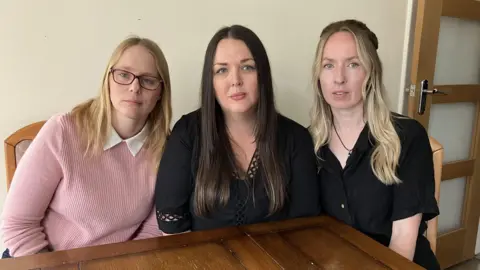
Parents say they are "angry" and "frustrated" that children with selective mutism are given "no help or support" by the council and NHS in West Sussex.
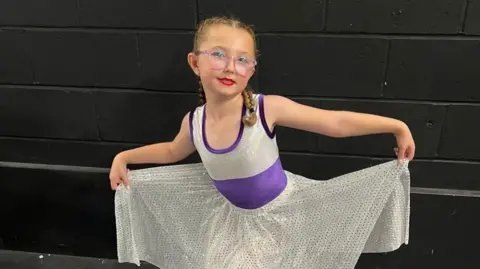
Joanna's daughter Scarlett, nine, has selective mutism, a severe anxiety disorder which prevents a person from being able to speak in specific social situations, stopping her from being able to communicate at school.
"I've spent years being bounced between services thinking that somebody was going to help my child but the help never came," Joanna said.
West Sussex County Council and NHS Surrey and Sussex Integrated Care Board said they were working "directly with families to address these concerns".
 Leanne Rinne/BBC
Joanna, from Littlehampton, has started an online petition calling for the county council and the NHS to commission a "clear pathway" for families with children with selective mutism to follow.
The petition calls for early intervention by trained professionals.
"Scarlett is in year five at school now and she has never had any support for her selective mutism," she said.
"We followed the pathway that the NHS tell you to follow but it leads to nowhere and it's meant her access to education has been blocked.
"Unlike other areas in the country, the help just doesn't exist here and I find that really hard to accept."
Joanna said it was "frustrating" that the only way to get a formal diagnosis for selective mutism in West Sussex was to pay privately.
"After years of waiting I have now taken the decision to pay for Scarlett to have a private assessment and I have had to pay for that on my credit card. I know it's the only way to get her the help she needs," she said.
 Leanne Rinne/BBC
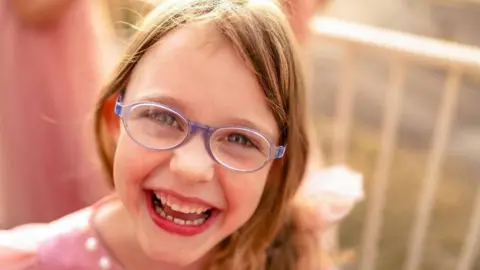
Samantha, from Barnham, said she had "no choice" but to pay for a private diagnosis of selective mutism for her daughter Maddie, six, after receiving no local authority or NHS support.
She said she has recently bought an iPad for Maddie to try and help her communicate and said she has tried to teach her Makaton at home, a language programme which combines signs, symbols and speech.
"Maddie's selective mutism affects her every day outside of the home," Samantha said.
"It affects her at shops and at after-school clubs. She feels so lonely and isolated because there is so much that she wants to share but can't.
"She doesn't want to go to school because why would she want to go somewhere she can't speak for six hours?"
 Leanne Rinne/BBC
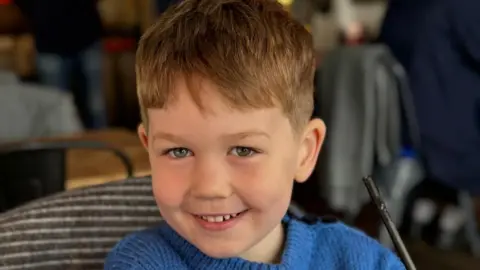
Jenni, from Worthing, also paid for a private diagnosis for her son Theodore, six, and said she has spent more than £2,000 for the private speech and language therapy he "desperately" needed.
The private support lasted for six months but she said she cannot afford to continue to pay.
"The longer selective mutism is left untreated, the more entrenched it becomes. They become labelled as the child that can't speak," she said.
"I feel angry that Theodore is not getting the support he needs when I know that other children in other areas are getting that support."
'Postcode lottery'
Catherine Bates, a trustee for the Selective Mutism Information and Research Association, said early diagnosis and intervention was crucial.
She said it was "concerning" that some professionals still thought selective mutism was "a choice" for children rather than a disorder.
She said some areas could diagnose selective mutism through their speech and language teams but then "will not have the support to help the child and they will recommend paying privately".
"In other areas there is absolutely no support for selective mutism, it is not a condition that is even recognised by the NHS Trust, it is sadly a postcode lottery," Bates added.
In a joint statement, the county council and NHS Surrey and Sussex Integrated Care Board said they recognised the concerns about support for children with selective mutism in West Sussex.
"We are working directly with families to address these concerns and to better understand their experiences, provide individual support, and ensure they are connected quickly to the most appropriate services," they said.
They said they were working closely with schools and coordinating input from speech and language therapy, early help, autism services and mental health teams where needed.
Local guidance and pathways were being reviewed with partners to make access to support clearer and more consistent for families, they added.
Follow BBC Sussex on Facebook, X, and Instagram and listen to BBC Radio Sussex on Sounds. Send your story ideas to southeasttoday@bbc.co.uk or WhatsApp us on 08081 002250.
