Parkinson's tech helps man talk to his daughters

 Supplied
"The technology was really well suited to Paul's needs, it was easy to use, could be used anywhere, and it encouraged him to be independent."
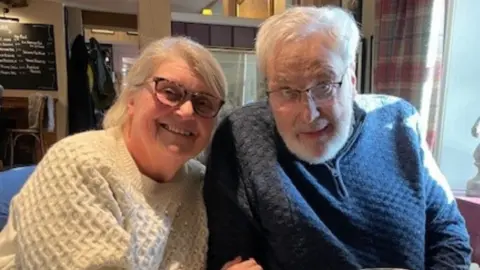
Paul Tunnicliffe has had speech difficulties since his Parkinson's diagnosis in 2018, but his wife Barbara said a voice therapy app on his phone had helped him maintain his speech and stay in regular contact with his daughters across the country.
The University Hospitals of Derby and Burton (UHDB) NHS Foundation Trust said the software helped people with Parkinson's do "self‑directed, structured speech exercises" at home to maintain speech strength.
UHDB said patients using the software at home had contributed to a reduction in waiting lists and visits.
'More convenient'
UHDB said the software provided a link between speech therapists and their patients, so therapists could provide self-directed, structured speech therapy exercises without a hospital visit.
Barbara, from Ashbourne in Derbyshire, said the app had helped her husband use the "phone confidently to stay in touch".
"At first, he really struggled using the phone and they couldn't hear him well, but since working with Caroline and using the app, that has really improved and they can speak with him on the phone every day, which means a lot to him," she added.
"The technology was really well suited to Paul's needs, it was easy to use, could be used anywhere and it encouraged him to be independent.
"We have always felt well supported, it has been much more convenient accessing the therapy at home instead of having to go into hospital so regularly, but there was always an avenue for contact if we needed it, the care has been fantastic - we are so grateful to the team."
The software, called Telea, was designed by a speech and language therapist in Ireland.
UHDB said the app had reduced waiting times for therapy from an average of six weeks to zero, and could be accessed by the patient anywhere, at any time.
Caroline Bartliff, specialist speech and language therapist in the Derby Parkinson's team, said: "The patient feedback has been really positive and patients are doing better with their therapy.
"They are able to do it in their own time and they feel like they are able to achieve their goals in a way that is more comfortable for them, reducing the amount of time they have to spend coming into hospital and enabling them to independently manage their symptoms."
Listen to BBC Radio Derby on Sounds and follow BBC Derby on Facebook, on X, or on Instagram. Send your story ideas to eastmidsnews@bbc.co.uk or via WhatsApp on 0808 100 2210.
