The 'life changing' help community nurses give families

 BBC
BBCCommunity nurses have been describing the care they provide for children with life limiting conditions. With a national shortage of people filling these roles, we spent a day with members of the team in north Devon as they carried out their visits, seeing the impact of the work on the children they are supporting, their families and the nurses themselves.
"It can be extremely sad, but it can be incredibly rewarding" says senior community children's nurse Kim Duckworth.
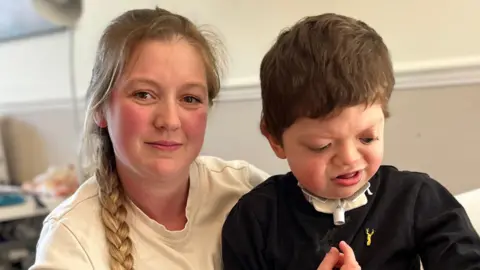
She is visiting Fletcher,10, who is described by his mum as cheeky, cuddly, strong and brave.
He has Cardiofaciocutaneous Syndrome (CFC) – a rare genetic disorder that means he needs continuous care.
Kim has been part of Fletcher's life since he was one.
"Fletcher takes a village, and I've got a fantastic village, including Kim and her nursing team," says Fletcher's mum Heather.
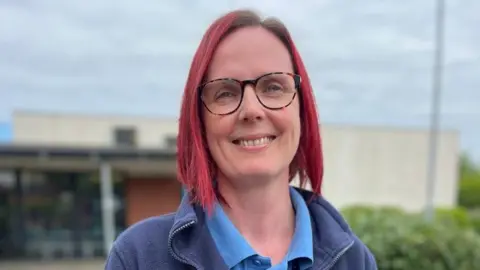
Kim helps Heather manage Fletcher's clinical needs, including seizures, his heart defect and complex feeding and breathing issues.
"I thought you might need some new tracheostomies," Kim says as she hands over two boxes to Heather during one of her regular visits to the family home in north Devon.
"I absolutely think that some of the things we've put into place have helped Fletcher stay at home," Kim explains.
"It's reduced his need for medical interventions, and has helped him live his best possible life."
Heather agrees: "Fletcher wouldn't be as happy and as well as he is now without our care team. Our lives would be completely different if we didn't have Kim."
The nurses also provide emotional and social support to Heather and her family.
"Kim has been an advocate for Fletcher when he needs an advocate. She has been a therapist when I've needed someone to talk to," Heather adds.
"She's been someone that we get to share those special moments with, and she's someone my other children get to know too."
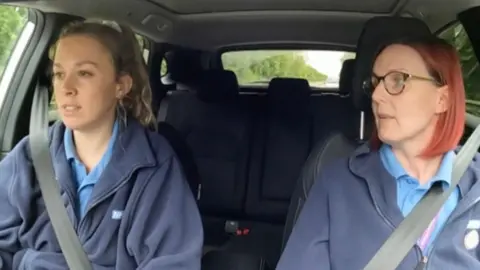
Kim is one of 24 full time community children's nurses across Devon – making it one of the largest teams of its kind in the south west.
Some nurses are based in special schools, but most are out on the road visiting families across a large geographical area.
The north Devon team provides support to children and families from Hatherleigh to Exmoor.
"The driving can be hard going," says community nurse and hospice liaison Louisa Squire, she says as she and Kim get back into their car for the next visit.
"But it's absolutely worth it."
The next stop is to see Alisha who is almost 17.
Alisha is studying animal care at college, and hopes to travel before starting a career caring for reptiles.
She has a life-limiting condition and complex health needs including a rare gene mutation, mobility issues and a liver disease.
Her life was saved by surgery when she was 43 days old.
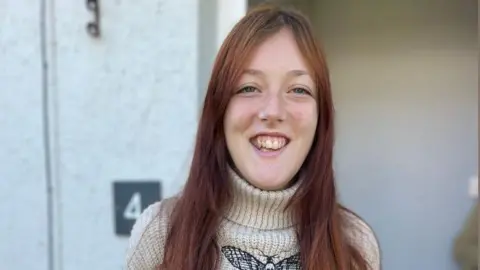
"I let my body tell me what I can and can't do," Alisha explains as Kim arrives.
"I'll try it and if anything on the inside says, no, I just won't do it again.
"But you don't know unless you try."
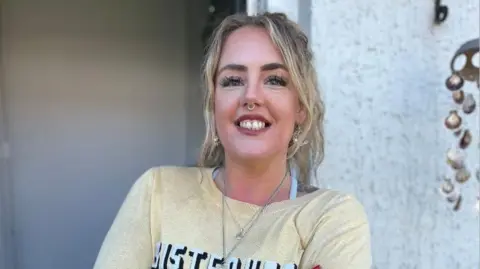
"How's the pain in your hips?" Kim asks Alisha as she runs the teenager through a series of mobility exercises in her living room.
"I'm struggling a bit," Alisha replies.
When she turns 18, Alisha will lose the support of children's services and the nurses are helping prepare her for that.
"I don't want to lose Kim, but unfortunately, it's just the way, isn't it?" Alisha's mum Zoe says.
"We used to have a different community nurse, but Kim was given to us after Alicia's needs became a bit more complex.
"Kim doesn't always have the best news, but the way she delivers it is incredible."
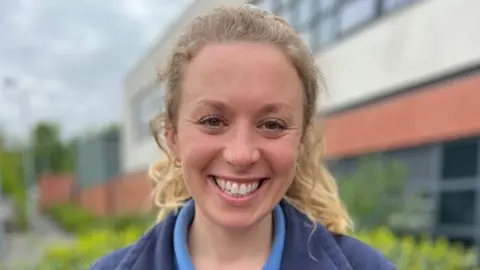
Louisa is a community nurse who also works to foster links between families and Children's Hospice South West.
Many rely on the hospice for what was known as respite help, and are now called carers breaks.
The hospice also helps families prepare for end-of-life care.
"There's no denying that there are really sad, challenging, difficult times" Louisa explains after we leave Alisha's family home.
"But a lot of the stuff we do is really beneficial, making their quality of life better, keeping them at home.
"It's a mix of emotions, but the majority of the time it is an amazing job."
There's a national shortage of children's community nurses across the country according to the Royal College of Nursing (RCN), which describes the situation as "critical".
An RCN report found between 2009 and 2024 there was a drop of the equivalent of 4,200 full-time district nurses in England.
Its work, along with research from the children's charity Together for Short Lives, suggests demand for services is rising while the workforce is shrinking.
The RCN has called on the government to invest in district nursing – the BBC has asked the Department of Health and Social Care for a response.
These families in north Devon describe the service they've received as "life changing", and Kim says she wouldn't do anything else.
"I think we make an incredible difference to these families," she says.
"It's being able to provide care in their homes to reduce the hospital admissions – that is most important.
"And of course it can be extremely sad, but it can be incredibly rewarding.
"I think that's what I hold onto the most through my job and through my whole career – providing those moments".
