Digitally-enhanced walks to recreate lost ship era

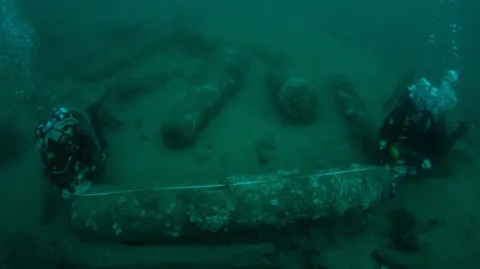 Norfolk Historic Shipwrecks
A university has been awarded just under £250,000 to create digitally-enhanced heritage walks focusing on one of Great Yarmouth's most important shipwrecks.
The project, led by the University of East Anglia (UEA) will attempt to bring to life the loss of the Gloucester warship off the town's coast in 1682.
The vessel ran aground on some sandbanks, nearly killing the Duke of York, who went on to become King James II of England.
Guided and self-guided walks, alongside Great Yarmouth's first augmented reality (AR) heritage trails, will enable participants to explore the town's 17th-century streets, buildings, and waterfront, the UEA said.
The programme will be led by UEA historians Claire Jowitt and Benjamin Redding in partnership with the Time & Tide Museum of Great Yarmouth Life and Great Yarmouth Borough Council.
Funding of £249,776 was secured by the university from the National Heritage Lottery Fund.
The shipwreck was first discovered by Norfolk divers Julian Barnwell, Lincoln Barnwell and James Little in 2007.
Since 2019 the UEA has been researching its history and significance, with the discovery publicly announced in 2022.
Redding said: "The Gloucester heritage walks will bring life to lost stories and voices, showing the ways the people of Great Yarmouth were key to rescue and recovery efforts, and the town's enduring relationship with the sea."
Jowitt said: "Digital storytelling using augmented reality will allow participants on the heritage walks to feel like they are time-travelling to the town's distinguished maritime past."
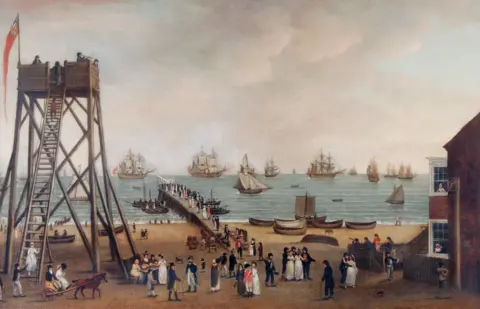 Norfolk Museums Service
The walks will also highlight figures from Great Yarmouth's past including Sir Thomas Medowe, the town's bailiff in 1682, who welcomed the Duke of York and later coordinated salvage operations for The Gloucester.
Steve Miller, head of Norfolk Museums Service, said: "We look forward to working with UEA on this ambitious project, using the collections at Time and Tide to create new opportunities for learning, engagement and tourism."
At the time HMS Gloucester sunk, Great Yarmouth was one of England's richest ports, the university said.
Do you have a story suggestion for Norfolk? Contact us below.
Follow Norfolk news on BBC Sounds, Facebook, Instagram and X.
