'Prostate cancer screening too late for my brother'

 BBC
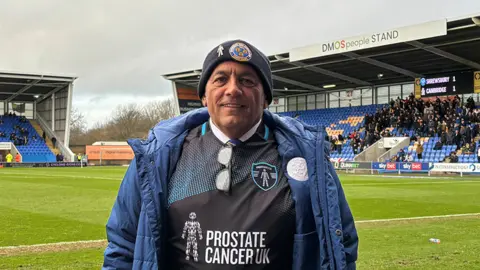
BBCA man whose twin died with prostate cancer has said the news that tens of thousands more black men will be invited to screening has come "three years too late" for his brother.
Black men aged 45-74 are to be invited for prostate cancer checks as part of an ongoing trial in the UK to find better ways of testing for the disease.
The move, announced by the government, has been welcomed by charities and campaigners as "a truly historic moment".
Dave Cossie, 68, lost brother Pete in December 2025, and was himself diagnosed with prostate cancer in 2023.
It comes as ministers have backed the UK National Screening Committee's recent recommendation that most men should not be offered regular testing for the disease.
The committee said the harms of using the PSA blood test for widespread screening outweigh the benefits in the majority of cases, except for "a few thousand" men who have a dangerous genetic variant and a family history of cancer.
Prostate cancer is the most common cancer in men in the UK, with 64,000 men diagnosed and 12,000 dying each year.
One in eight men will get prostate cancer in their lifetime and for black men, that risk doubles to one in four.
Cossie, whose father was Jamaican, said he was "delighted" to see that the government will invest £18m into the Transform trial, so that more black men will be invited to take part in the research.
"But it's something that should have happened a long time ago," he added.
Cossie, who is from Shrewsbury, noted that breast and cervical cancer screening has been taking place in the UK since the 1980s.
"I don't understand why it's taken so long," he said.
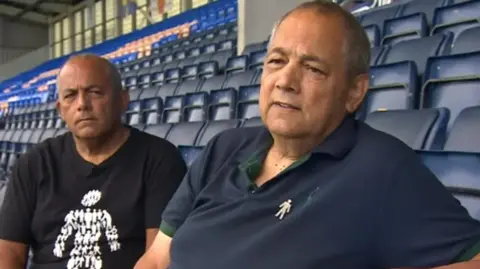
His brother Pete was diagnosed with stage four prostate cancer with bone metastasis in 2021.
"Had there been a screening programme, his would definitely have been spotted [earlier]," Cossie said.
The Transform trial is assessing whether extra tests alongside PSA, such as genetic checks and faster MRI scans, can improve screening accuracy.
All black men aged 45-74 who have not already had a recent PSA test will be offered the chance to participate.
Cossie described himself as "lucky", only being diagnosed after his brother's own diagnosis.
"I had no symptoms," he said, adding that "had Pete not had prostate cancer, I would never have known."
He added that a lot of men he had met through Prostate Cancer UK only got tested thanks to public figures like Chris Hoy and Nick Owen coming forward with their own diagnoses.
The government has said the trial will help build a more effective screening system for the disease for the future.
"This is a major step forward in how we tackle prostate cancer - focusing on those most at risk, improving the treatments available, and backing the research we need to close the evidence gaps and save lives," said Health Secretary James Murray.
Prostate Cancer UK said it was "delighted" by the government's decision, which would help the charity reach more black men "with clear, trusted information".
Follow BBC Shropshire on BBC Sounds, Facebook, X and Instagram.
