How Americanisms are killing the English language

 Getty Images
A book released this year claims that Americanisms will have completely absorbed the English language by 2120. Hephzibah Anderson takes a look.
So it turns out I can no longer speak English. This was the alarming realisation foisted upon me by Matthew Engel’s witty, cantankerous yet nonetheless persuasive polemic That’s the Way it Crumbles: The American Conquest of English. Because by English, I mean British English.
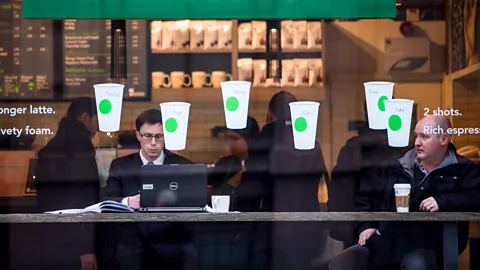
Despite having been born, raised and educated on British shores, it seems my mother tongue has been irreparably corrupted by the linguistic equivalent of the grey squirrel. And I’m not alone. Whether you’re a lover or a loather of phrases like “Can I get a decaf soy latte to go?”, chances are your vocabulary has been similarly colonised.
 Getty Images
Speaking on the wireless in 1935, Alistair Cooke declared that “Every Englishman listening to me now unconsciously uses 30 or 40 Americanisms a day”. In 2017, that number is likely closer to three or four hundred, Engel hazards – more for a teenager, “if they use that many words in a day”.
But how did this happen and why should we care? After all, as a nation we’ve been both invaded and invader, and our language is all the richer for it. Words like bungalow, bazaar, even Blighty, have their roots elsewhere. Heck, go far enough back and isn’t it pretty much all just distorted Latin, French or German?
The first American words to make it across the pond were largely utilitarian – signifiers for flora and fauna that didn’t exist back in Merrie England. Moose, maize and tobacco were among them. But there were others, too, that in retrospect might seem laden with significance – words like plentifulness, monstrosity and conflagration.
 Getty Images
With no means of swift communication or easeful passage between the two countries, American English merely trickled back into its source to begin with. But as the balance of power between Britain and her former colonies shifted, as America ascended to military, economic, cultural and technological dominance, that trickle swelled to a torrent, washing away any kind of quality control.
Cookies and closets
Throughout the 19th Century, Engel contends, “the Americanisms that permeated the British language did so largely on merit, because they were more expressive, more euphonious, sharper and cleverer than their British counterparts”. What word-lover could resist the likes of ‘ornery’, ‘boondoggle’ or ‘scuttlebutt’? That long ago ceased to be the case, leaving us with words and phrases that reek of euphemism – ‘passing’ instead of dying – or that mock their user with meaninglessness, like the non-existent Rose Garden that political reporters decided No 10 had to have, just because the White House has one (it doesn’t exactly have one either, not in the strictest sense, but that’s a whole other story).
Call me a snob, but there’s also the fact that some American neologisms are just plain ungainly. I recently picked up a promising new American thriller to find ‘elevator’ used as a verb in the opening chapter. As in, Ahmed was ‘elevatoring’ towards the top of his profession in Manhattan.
Nowadays, no sphere of expression remains untouched. Students talk of campus and semesters. Magistrates, brainwashed by endless CSI reruns, ask barristers “Will counsel please approach the bench?” We uncheck boxes in a vain effort to avoid being inundated with junk mail that, when it arrives regardless, we move to trash.
 Alamy
AlamyIt’s understandable, of course. Sometimes, American words just seem more glamorous. Who wants to live in a flat, a word redolent of damp problems and unidentifiable carpet stains, a word that just sounds – well, flat – when they could make their home in an apartment instead? Sometimes that glamour is overlain with bracing egalitarianism – it’s a glamour untainted by our perennial national hang-up, class.
Take ‘movie’. The word has all the glitz of Hollywood and none of the intellectual pretensions (or so it might be argued) of the word ‘film’, which increasingly suggests subtitles (‘foreign-language film’ is one of the few instances in which the f-word doesn’t seem interchangeable with its American counterpart – ‘foreign-language movie’ just sounds odd). Other times they fill a gap, naming something that British English speakers have been unable to decide on, as is increasingly the case with ATM, a boring but brief alternative to cash point, cash machine, hole in the wall. Also to be factored in is what Engel dubs “Britain’s cultural cringe”, which predisposes us to embrace the foreign.
 Getty Images
It’s often pointed out that plenty of these Americanisms were British English to begin with – we exported them, then imported them back. A commonly made case in point is ‘I guess’, which crops up in Chaucer. When Dr Johnson compiled his seminal 1755 dictionary, ‘gotten’ was still in use as a past participle of ‘get’. But as Engel points out, good old English is not good new English. Moreover, his beef isn’t really to do with authenticity; it’s more to do with our unthinking complicity. Because it’s not just the cookies and the closets, or even the garbage, it’s the insidiousness of it all. We’ve already reached the point where most of us can no longer tell whether a word is an Americanism or not. By 2120, he suggests, American English will have absorbed the British version entirely. As he puts it, “The child will have eaten its mother, but only because the mother insisted”.
The new Esperanto?
For more than half-a-dozen years (I almost wrote ‘more than a half-dozen’), I was a UK book columnist for Bloomberg News. Despite the nature of my beat, my identity as a Brit, and the organisation’s proudly global nature, I was required to write in American English. A cinch, thought I, but even at the end of my tenure, I was still bumping into words my editors deemed Briticisms. (‘Charabanc’, sure, but ‘fortnight’? That one was a minor revelation, suddenly explaining the many blank looks I’d received over the years from American friends.) Which is fair enough – Bloomberg is, after all, an American company. And yet I can’t help feeling a little retrospective resentment towards my British editors for all the Americanisms that I’ve got past them unquestioned. Likewise, when I published a book in America, I was excited to find out how it would read after it had been ‘Americanized’, but I’ve noticed it’s fast becoming the norm for American works to make it into print over here without so much as having a ‘z’ switched for an ‘s’ or a ‘u’ tacked on to an ‘o’. And if we can’t rely on our publishers to defend British English…
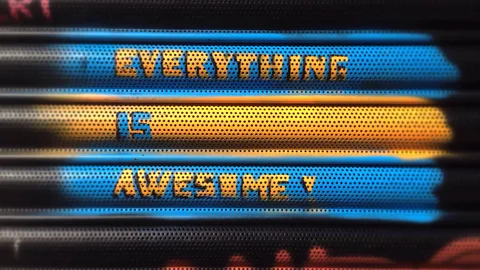
None of this would matter if these imported words were augmenting our existing vocabulary. It’s impossible to have too many words, right? But like some hoity-toity club, language seems to operate on a one-in, one-out basis. Engel quotes researchers behind 2014’s Spoken British National Corpus, who found that the word ‘awesome’ is now used in conversation 72 times per million words. Marvellous, meanwhile, is used just twice per million – down from 155 times a mere 20 years earlier. ‘Cheerio’ and, yes, ‘fortnight’, are apparently staring at the same fate.
Even so, you might ask, is this really such a bad thing? When my grandfather returned home from the front in World War Two, he became a firm believer in the unifying powers of Esperanto. Along with Volapuk, Ekselsioro and Mondlingvo, that idealistic tongue came to nothing. American English is succeeding where it failed. But it’s hard not to feel that diminishing linguistic variance isn’t shrinking the world. Engel rues the way in which our national character is going the way of London’s ‘Manhattanized’ skyline, reticence yielding to self-promotion.
 Getty Images
And then there’s the very valid theory that you can’t feel or think things for which you’ve no language. A borrowed vocabulary, one that’s evolved to meet the needs of people whose lives are subtly but profoundly different (ask anyone who’s lived Stateside for a while – those superficial similarities and familiarities soon fall away to reveal a decidedly foreign country), deprives us of fully experiencing our own. It’s nothing short of a “crisis of self-imposed serfdom”, Engel says. “A nation that outsources the development of its own language – that language it developed over hundreds of years – is a nation that has lost the will to live”.
It might seem tactless to bemoan the state of any branch of all-conquering English when so many other languages are being wiped out entirely. But ultimately, the battle isn’t really one of British versus American English, but of individual experience versus the homogenising effects of global digital culture. For a provocative glimpse of where this might all lead, it’s worth noting that Globish, a “sort-of language” (Engel’s phrase) created for business types by former IBM exec Jean-Paul Nerriere, consists of just 1,500 words. Jokes, metaphors and acronyms are verboten, being too fraught with potential for misunderstanding. Personally, I think I’d rather communicate in emojis. But here’s hoping it won’t come to that. Engel’s book is certainly a wake-up call. Sorry, cri de coeur. Wait, better make that a call to arms.
And if you liked this story,sign up for the weekly bbc.com features newsletter, called “If You Only Read 6 Things This Week”. A handpicked selection of stories from BBC Future, Earth, Culture, Capital and Travel, delivered to your inbox every Friday.
