Is Game of Thrones the last great blockbuster TV show?

 HBO
HBOAs the fantasy saga returns for its final series, Chris Mandle asks whether the small screen will ever produce such a worldwide obsession again.
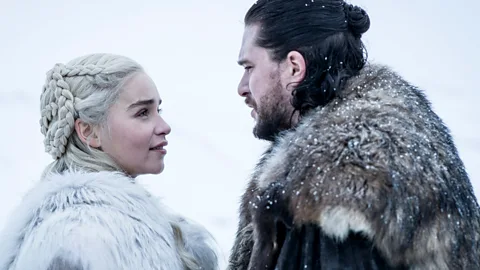
The end is nigh. Game of Thrones returns to our screens next Monday for its eighth and final season. It’s safe to say nobody knows how the final six episodes will unfold – but once the dust (and snow) has settled on Westeros (or whatever’s left of it), and the fates of the Starks, Lannisters and Targaryens are sealed, one question will remain. What will we all talk about next?
More like this:
Since its relatively humble debut in 2011, the HBO saga has become a cultural phenomenon. The show, based on the book series A Song of Ice and Fire by George RR Martin, is ostensibly high-fantasy, with dragons, giants and mysticism woven into its fabric. But it’s equally a political drama – set amid a warring kingdom shaped not unlike Great Britain and densely packed with tens of thousands of years of complex history and lore.
 HBO
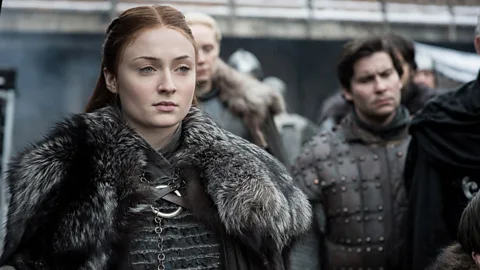
HBOAbove all, though, Game of Thrones is the closest thing television has ever had to a blockbuster: a series produced on a scale to match the biggest budget films. It’s also what’s known among critics as an old-fashioned ‘monoculture’ show: consumed week-by-week, with its millions of devoted fans poring over what happened after each episode has finished. Indeed Thrones has united audiences across the world.
In the US, season seven had an astonishing average viewership of 32.8 million people per episode – to put that in context, the finale of Mad Men, another critically acclaimed, much talked about prestige drama, pulled in 4.6 million US viewers in 2015 – while in recent years, interest in the show has surged in Asian markets, among others.
But while Thrones changed television, it’s also true that television itself changed during the show’s run. As the wars between the factions of Westeros’s Seven Kingdoms have raged, traditional television has been usurped by streaming services, non-linear viewing and ‘binge’ culture, where consumers, rather than wait patiently for an episode airing each week, are more used to having an entire season dropped in their lap to watch at their leisure.
What seems likely is that Game of Thrones’ swansong might also mark the end of TV’s monoculture era – the age of shows that everyone watches and talks about together. Certainly, nothing else that appears on traditional broadcasters seems primed to roll out on its scale. So while people are trying to predict what the next Thrones will be, the truth is we may never see one show have such a universal cultural impact again. Sarah Hughes, a TV critic who has been writing weekly recaps of Game of Thrones for the Guardian since its first episode, certainly thinks that’s the case. “I find it hard to believe that there will be a show that dominates the conversation as much as Game of Thrones has in recent years.”
The age of peak TV
The challenges for TV-makers in today’s market were made evident last month at Apple’s launch of its new streaming service Apple TV+. Despite involving a who’s who of Hollywood talent including Steven Spielberg, Oprah Winfrey and Reese Witherspoon, the event was met with indifference. As much as anything else, that was to do with consumer malaise at having yet more content to watch.
In 2015, John Landgraf, the head of US network FX coined the phrase “peak TV” to describe how audiences had become overwhelmed by the sheer number of series being produced. The result? We’re pickier when it comes to choosing shows and even the glitziest properties with the biggest names attached have to fight it out for a seat at the table.
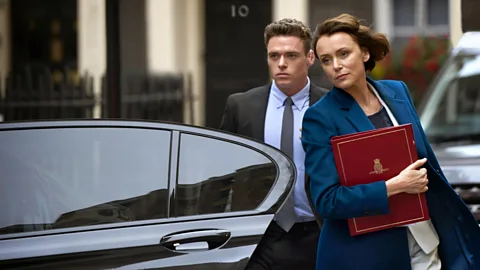
For all the competition, the occasional new show does cut through to become appointment viewing. One of the biggest success stories in the UK last year was Jed Mercurio’s thriller Bodyguard. As it was aired on a terrestrial network, it gripped the nation at the same time; with 11 million viewers at its peak, it became the BBC’s most watched show since 2008. Netflix picked up the international rights, and it was warmly received around the world, with star Richard Madden going on to win a Golden Globe for his performance.
 BBC/World Productions
But though a second series is reportedly on the cards, will the show have the longevity of Game of Thrones? Sarah Hughes is doubtful. “It was a perfect one-series show with a solid arc. However I’m not sure how you take the series onwards without losing something.”
The long and the short of it
In fact, the future model of TV making might be more compact: self-contained storylines packed into short episodes and seasons, like BBC/Amazon Prime’s pitch-black comedy Fleabag or Netflix’s Groundhog Day-style comedy-drama Russian Doll. “What you might see is less patience for meandering around. Fleabag and Russian Doll say a lot in [a] short space; nothing is wasted,” says Hughes. The fact is, with so much to watch and so little time, maybe we don’t want eight-season sagas to slog through anymore, but rather something small and perfectly formed.
That’s not to say there aren’t producers out there trying desperately to replicate Game of Thrones’ success with long-form epics. Amazon has sunk nearly $1bn (£766.5m) into a Lord of the Rings prequel TV series, while HBO is developing a show based on the cult comic Watchmen. And then there are the Game of Thrones prequels; five were commissioned by HBO, but only one is currently in development, taking place 10,000 years before the current series and starring Naomi Watts, John Simm and Miranda Richardson.

Robert Greenblatt, the new chairman of HBO’s owner Warner Media, suggested it was an uphill battle to make these shows fly. “The last thing you want to do is roll out a spinoff or two and they’re not up to the standard of the original show and then you’ve just sort of failed miserably,” he told The Wrap. “Can you really do two spinoffs? I don’t know. I mean, I’m not even sure you can do one.”
Hughes isn’t sure any of them will be a match for their parent show. “Put it his way, Game of Thrones is the only show that is watched simultaneously around the world regardless of what time it is, regardless of what time you have to set your alarm. I honestly can’t imagine we can see something like that happening again.”
Kieron Butler, a lecturer in TV production at Southampton’s Solent University, doesn’t believe we’ve seen the end of the monoculture era. “There’s never been a larger desire for a big, blockbuster show, and those shows take time to build an audience. Thrones had a devoted following due to the books, but it amassed fans considerably, particularly around its third season. Word of mouth is everything for cult TV.”
Why traditional TV won’t die
Butler also thinks that, for all the hype around the streaming platforms, linear scheduled TV still has an advantage when it comes to making an impact. “I remember when Twin Peaks came back [in 2017]. And I was enthralled by it, I loved it. I even got to the point where I was actually staying up until two in the morning, so I could watch it live because I had to get that fix. That's where Netflix and its associated shows perhaps doesn't succeed; that packaging of all the episodes, everything coming out at once, there is no sense of anticipation when you can spend a whole weekend burning through something. And when groups of people aren’t watching together, the conversations around a show are more difficult.”
In fact, Butler makes a surprising case for the next TV blockbuster he thinks will dominate the zeitgeist in years to come: Love Island. The UK-originated reality show featuring a bunch of primped and preened twentysomethings in a Mediterranean villa is, in many ways, everything Thrones isn’t. It isn’t prestige. It isn’t particularly intelligent. There are zero dragons. But like Big Brother in the noughties, the relentless pace, soap-opera hysterics and genuinely affecting moments all smash together into something utterly compelling. The UK is completely gripped, with four million viewers a night, bumping the show from its home on one of broadcaster ITV’s outlier channels to a prime-time slot over the years.
 ITV
ITVDuring last year’s World Cup, pubs across London would switch to Love Island after each match, projecting the scheduled coiling of tanned bodies on huge screens. But when Hulu picked up the rights to the show internationally, it became a sensation across the pond, too, with media outlets like the New York Times, Refinery29 and New York Magazine all proclaiming their fascination with it. Perhaps that’s because, in troubled times, it’s as escapist as television gets.
“I’m sick of trying to telegraph who I am through my television diet,” wrote a US Vogue editor, and avid fan. “In the prestige era, you are what you watch: you’re a feminist if you’re into Killing Eve; you’re anti-Trump if you like The Handmaid’s Tale. Enter the oasis of numbing nothingness that is Love Island.”
What’s likely is that the true successor to Game of Thrones, when it comes to impact, won’t look anything like it. With the challenge of emerging from its shadow, the flashier, high-fantasy stuff in the pipeline has its work cut out. But a reality show packed with sun-kissed romance capturing our attention and becoming a global talking point? That’s a twist even George RR Martin could never have planned.
And if you liked this story, sign up for the weekly bbc.com features newsletter, called “If You Only Read 6 Things This Week”. A handpicked selection of stories from BBC Future, Earth, Culture, Capital and Travel, delivered to your inbox every Friday.
