Themes in To Kill a Mockingbird
Through Scout’s eyes, the reader gets a taste of everyday life in Maycomb but also begins to see the intolerance and bigotry that is present underneath this, particularly as Scout becomes more aware of the trial and the events surrounding it.
Within the scope of this wide-ranging storyline, there are many themes or ideas that run through the novel, but three of the main themes are:
- prejudice
- family life
- courage
To Kill a Mockingbird is a novel which shows what happens to a community when it is forced to face the consequences of the racism A characteristic that exists inside someone or something. in many of its inhabitants.
One of the main messages Harper Lee wants to convey in her novel is that prejudice stems from ignorance and challenging accepted prejudices is a courageous move
It occurs to me that not knowing how other people live their lives is the beginning of misunderstanding, which is of course what Harper Lee is telling us – to get under other people's skin.
I think my favourite strand in the novel is the story about the strange and reclusive Boo Radley. Like Harper Lee herself, he is enigmatic and the subject of much colourful, but groundless rumour.
To Kill a Mockingbird challenges our habit of pre-judging people, and it lays bare the courage needed to reject prevailing opinion in favour of real understanding.
"I wanted you to see what real courage is, instead of getting the idea that courage is a man with a gun in his hand. It's when you know you're licked before you begin, but you begin anyway and you see it through, no matter what."
Prejudice
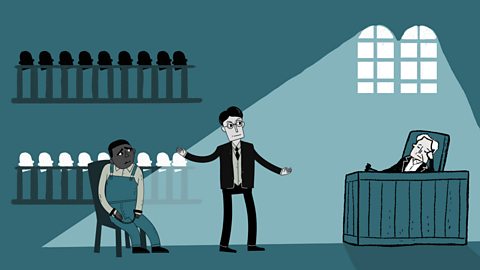
Prejudice is displayed by several characters throughout the duration of the novel. Many people who live in Maycomb are racists and prejudiced against black people. For example, Tom Robinson is assumed to be guilty of sexually assaulting Mayella Ewell simply because he is a black man and she is a white woman, even when the evidence points to him being innocent. The court is astonished to hear that he felt sorry for Mayella. “You felt sorry for her, you felt sorry for her?”, queries Mr Gilmer, the lawyer charged with proving Tom’s guilt. Many white people at court are shocked by Tom’s To have the boldness to do something. in feeling sorry for a white person and, from that moment on, his guilty verdict seemsSomething that is sure to happen..
Atticus has a strong belief in tolerance and equality, an A quality or characteristic. he would like Jem and Scout to inherit. However, his sister Aunt Alexandra is different. The reader sees this in the way she treats Calpurnia. When Aunt Alexandra arrives at the Finch house to help take care of Jem and Scout while Atticus is busy with the trial, she tells Calpurnia to take her suitcase upstairs, which is something Atticus would never do. During Aunt Alexandra’s missionary tea, the ladies of Maycomb feel pity for the Mruna tribe in Africa and show sympathy towards them, but they later condemn the black people in their own community. This is severely prejudiced and Pretending to be better than you really are or to have beliefs that you don’t actually hold..
The Mruna tribe never actually existed. Harper Lee created the tribe in order to use it as an example of how hypocritical women like Mrs Merriweather can be. She is capable of showing sympathy towards the Mruna people for what she believes to be their squalid lifestyle, but is unable to feel any sympathy for the black people living in Maycomb. Instead, she claims the black people of Maycomb are lazy and sulky, uses a racial slur to describe them, and does not understand their heartbreak at the result of Tom Robinson’s trial. Mrs Merriweather is more interested in the Mruna tribe as they are not Christians and believes white People sent on a religious mission to a foreign country, usually to promote Christianity. can save their souls by turning them into Christians and introducing them to the Bible.
Dolphus Raymond pretends to be continually drunk in order to avoid questions about the choices he has made in life. He is in a relationship with a black woman and has several children with her but he knows this would be severely frowned upon by others. He and his family are treated as outcasts. As Jem says of Dolphus’ mixed race children: “They don’t belong anywhere. Coloured folks won’t have ‘em because they’re half white; white folks won’t have ‘em ‘cause they’re coloured…”. When talking to Scout, Jem and Dill during Tom Robinson’s court case, Dolphus admits that he only actually drinks cola, commenting: “I try to give ‘em a reason, you see. It helps folks if they can latch on to a reason.”
However, racial intolerance is not the only prejudice to be included in the novel. Many residents of Maycomb are presented as being narrow-minded and intolerant of anyone who does not conform to their expectations. Boo Radley is persecuted and gossiped about because he has not been seen outside his house since he was a teenager. Neighbourhood gossip has resulted in Jem picturing Boo as a monster: “Boo was about six-and-a-half feet tall, judging by his tracks; he dined on raw squirrels and any cats he could catch, that’s why his hands were blood stained…”.
How is the theme of prejudice shown in the novel?
In To Kill a Mockingbird Harper Lee shows the theme of prejudice through:
- Tom Robinson’s trial
- Aunt Alexandra’s missionary tea
- the way Boo Radley is treated
- the way the people of Maycomb react to Dolphus Raymond’s children
| How does Lee show this? | Evidence | Analysis |
|---|---|---|
| Tom Robinson’s trial | ||
| It is evident throughout the novel that the trial is a formality only and that Tom Robinson will be found guilty. | “‘In our courts, when it’s a white man’s word against a black man’s, the white man always wins. They’re ugly, but those are the facts of life.’” | Atticus’ words reveal that the courts were always biased against black people. |
| Aunt Alexandra’s missionary tea | ||
| During Aunt Alexandra’s missionary tea the white middle class ladies discuss the awful living conditions of the Mruna tribe in Africa, but are less sympathetic to black people in Maycomb. | “‘Gertrude, I tell you there’s nothing more distracting than a sulky darky…’” | The racist slur shows lack of respect and deep prejudice. |
| The way Boo Radley is treated | ||
| Many inhabitants see Boo as a threat and gossip about him. | “‘No, child,’ she said, ‘that is a sad house…’” | Miss Maudie forms her own view based on facts rather than gossip. |
Family life
There are several families in To Kill a Mockingbird and all of them are very different. Harper Lee makes it clear that the Finch family is the family she most identifies with, and the one she thinks others in the neighbourhood should aspire to be like. As a father, Atticus is an ideal role model. He is just, tolerant, forgiving and fair. He treats Jem and Scout as equals and with maturity and, in return, they call him by his name rather than calling him Dad. This represents the fact that Atticus values their opinion as equals. He wants to show them that he will treat them as young adults. He encourages them to behave in a mature manner and to react to events in the way an adult might. Even when he is tired he always has time for them, such as when he teaches Scout to read: “I could not remember when the lines above Atticus’s moving finger separated into words, but I had stared at them all the evenings in my memory…”.
Atticus does not gossip about Boo in the way that the other Maycomb inhabitants do and he tries to instil in Jem and Scout the need to leave Boo alone. Atticus spends as much time with his children as he can and tries to teach them racial tolerance through his treatment of Calpurnia, who is seen as very much one of the family.
Many families have lived in Maycomb for decades and Aunt Alexandra is particularly interested in tracing people’s heritage. Unlike her brother Atticus, she does not believe in judging a person on their own merits and instead judges them on their ancestors’ behaviour. As the reader is told by Scout, Aunt Alexandra, in underlining the moral of young Sam Merriweather’s suicide, said it was caused by a morbid streak in the family. It is almost as if Aunt Alexandra believes Sam Merriweather was bound to kill himself simply because the rest of his family had always been gloomy and depressed.
It is also believed by some people that members of the Ewell family will always be untrustworthy. This makes it very difficult for people to break free from their family connections and be seen as individuals in their own right. It has also resulted in many residents of Maycomb becoming narrow minded and prejudiced, and unable to see the world from a wider perspective. They have become inward looking and see Maycomb, with its racist tendencies, as the centre of their universe. People tend not to move away from Maycomb and so the same ideas and prejudices are passed from generation to generation. This is why Scout tells the reader at the start of the novel that “Maycomb County had recently been told it had nothing to fear but fear itself”. “Nothing to fear but fear itself” is an A quick reference - often to an image, character or place - from a work of literature or music or mythology. directly quoted from President The 32nd President of the United States (1933–1945), who led the US through the Great Depression and World War II by implementing the transformative federal programs and reforms known as the 'New Deal'. first inaugural address in 1933, in which he tried to reassure America that the country could turn things around. The reference to fear is important given what happens in the novel – fear of what we don’t know is a driving factor in many prejudices.
Families like the Finch family, and their neighbours such as Miss Maudie and Aunt Rachel, are seen as middle class but the Ewell family are regarded as “white trash” – a term for white people, particularly those living in the southern states of America, who are poor and who have a poor standard of living. The term was first heard in 1830 and was initially used by black enslaved people to describe poor white people. Rich white people then began to use the term to describe those white people who they felt were socially inferior to them.
The Ewells live near the town dump and Bob Ewell, who is the head of the household, cannot keep a job for very long. Instead he lives on handouts from the state, money which he selfishly spends on alcohol. This leaves his children starving and it takes Mayella Ewell a whole year to save enough money to afford to buy each of her brothers and sisters an ice cream cone. The children are dirty, illiterate and covered with lice. Through them, Harper Lee presents the reader with a less than ideal family.
Dill, on the other hand, is well dressed and well cared for but there is still a sense that he is unwanted by his family, particularly when his mother remarries. His step-father promises to do lots of things with him but little of it comes to fruition: “‘…they just wasn’t interested in me’”. During the summer he prefers to stay with his Aunt Rachel in Maycomb.
At the Sunday service at Calpurnia’s church we see how the black families work together and help each other out. They contribute money to help Tom Robinson’s wife Helen during Tom’s trial and show how wrong those who are prejudiced against them actually are.
How is the theme of family shown in the novel?
In To Kill a Mockingbird Harper Lee shows the theme of family through:
- Atticus' treatment of his children
- family heritage and attitudes to this
- the help Helen Robinson is given by fellow black families
| How does Lee show this? | Evidence | Analysis |
|---|---|---|
| Atticus’ treatment of his children | ||
| Atticus treats his children as mature individuals who must learn respect. When they do something wrong however, such as when Jem breaks off the heads of Mrs Dubose’s camellia bushes, Atticus does not shy away from teaching Scout and Jem a valuable life lesson. He believes this is the correct way to show that he loves them and wants the very best for them. | “‘There was no point in saying you were sorry if you aren’t,’ said Atticus. ‘Jem, she’s old and ill. You can’t hold her responsible for what she says and does.’” | Atticus makes Jem face his punishment for damaging Mrs Dubose’s flowers. He does not allow him to use the fact that she was criticising Atticus as an excuse. Instead, he teaches him an important lesson about courage when Jem learns about Mrs Dubose’s addiction to the painkiller morphine. |
| Family heritage | ||
| Aunt Alexandra is especially concerned with family heritage. She believes an individual is only as good as their ancestors were and this allows very little scope for anyone to change and grow or to be themselves. | “Let a sixteen-year-old girl giggle in the choir and Aunty would say, ‘It just goes to show you, all the Penfield women are flighty.’ Everybody in Maycomb, it seemed, had a Streak: a Drinking Streak, a Gambling Streak, a Mean Streak, a Funny Streak.” | Many residents of Maycomb never leave the town, instead they stay close to other family members. In this way, attitudes fail to broaden and generation after generation remains as prejudiced and bigoted as their ancestors. |
| The help Tom Robinson’s wife Helen is given by fellow black families | ||
| Many of the white residents of Maycomb believe that their black neighbours are ignorant and uncaring. However, Harper Lee reveals how incorrect they are when she shows how the local black families contribute as much money as they can to a fund to help Helen Robinson feed her family when Tom is in jail. | “‘Helen can’t leave those children to work while Tom’s in jail. If everybody gives one more dime, we’ll have it.’” | The fact that the members of the church are willing to keep giving and giving until an adequate amount of money has been raised, is indicative of just how generous they are. Harper Lee wants the reader to understand that the black people living in the community were respectful and honest people. |
Courage
Courage is displayed by several characters in the novel. Firstly, Atticus is presented as a courageous man for agreeing to defend Tom Robinson even when he knows it will cause difficulties for himself and his family. He also knows he has little hope of winning the case. He is particularly courageous when he spends the night alone guarding Tom Robinson’s prison cell because he knows it is highly likely a To execute someone, usually by hanging them. This type of execution is a punishment that is carried out by a mob and without a formal trial or the proper authorities being involved. mob will try to take Tom. Indeed throughout the novel Atticus takes a stand against racism and encourages his children to do the same, such as in chapter nine when he explicitly discourages Scout from using a particular racial slur.
Atticus also shows courage when he shoots the mad dog, as despite being referred to in his youth as “One-Shot Finch”, he has not used a gun for 30 years. If Atticus misses, there will be a mad dog running free in the neighbourhood. In attempting to shoot the dog after so many years without even holding a gun, Atticus is being extremely brave. However, Atticus has not told Jem and Scout about his ability to shoot as he does not want them to think that the ability to shoot well with a gun is what makes someone courageous.
There are also other examples of courage throughout the novel. Miss Maudie shows courage when she refuses to be upset that her house has burned down. Instead she remains optimistic and reminds everyone she will now be able to have the bigger garden she has always craved. Boo Radley shows courage when he prevents Bob Ewell from harming Jem and Scout despite the fact that this means leaving the security of his house.
Mrs Dubose is another courageous character. She has been addicted to the painkiller morphine and is determined to be free from this addiction before she dies. Without realising it, when Jem reads to her he is helping her to overcome her addiction. Her decision is even more courageous when it becomes apparent that there really is no need for her to go through the pain of being morphine-free as she is going to die anyway. However, she does it for her own personal satisfaction as she does not want to be addicted to the drug at the time of her death. Mrs Dubose is being courageous but very few people in Maycomb will even know she is going through a very difficult personal battle to beat her addiction.
Atticus feels this makes her even braver and this is why he wants Jem and Scout to witness what she is doing. He wants them to understand that being courageous sometimes means doing difficult things that other people will never understand, or will criticise you for. He is preparing Scout and Jem for the bravery they will all have to show during Tom Robinson’s trial.
How is the theme of courage shown in the novel?
In To Kill a Mockingbird Harper Lee shows the theme of courage through:
- Atticus defending Tom Robinson
- Atticus’ attitude towards guns
- Mrs Dubose’s determination to be morphine-free at the time of her death
| How does Lee show this? | Evidence | Analysis |
|---|---|---|
| Atticus defending Tom Robinson | ||
| Atticus knows he must defend Tom Robinson. He feels he could never be proud of himself again, or expect Jem and Scout to trust him again, if he did not. He also knows that many lawyers in the county, if asked to take Tom’s case, would not properly defend him as they would automatically assume he was guilty. | “‘The main one is, if I didn’t I couldn’t hold up my head in town, I couldn’t represent this county in the legislature, I couldn’t even tell you or Jem not to do something again.’” | Here Atticus is telling Scout that if he lacked the courage to defend Tom Robinson in his trial then he would not be a very good lawyer or a very good father. He is being courageous in defending Tom and he wants Jem and Scout to understand how important it is that he does the right thing. |
| Atticus’ attitude towards guns | ||
| Scout and Jem are amazed that their father is so talented when using a gun but they are shocked that he has chosen to keep this skill away from them. Atticus is also reluctant to allow them to have guns. He does not think it is courageous to use a gun as this automatically gives a person an advantage over a defenceless animal. | “‘I wanted you to see what real courage is, instead of getting the idea that courage is a man with a gun in his hand. It’s when you know you’re licked before you begin, but you begin anyway and see it through no matter what.’” | Atticus wants Scout and Jem to understand the value of real courage. Courage does not mean having a gun, it means doing the right thing such as defending Tom Robinson even when you know there is very little chance of winning. |
| Mrs Dubose’s determination to be morphine-free at the time of her death | ||
| Mrs Dubose is willing to go through both physical and mental pain in order to ensure that she dies without being addicted to morphine. When Jem reads to her each day she sets the alarm clock later and later so that gradually more and more time passes before she needs to take morphine, until eventually she does not need it at all. | “‘You rarely win, but sometimes you do. Mrs Dubose won, all ninety-eight pounds of her. According to her views, she died beholden to nothing and nobody. She was the bravest person I ever knew.’” | Here Atticus is explaining to Jem that courage comes in many forms. Mrs Dubose was determined to die without needing to rely on morphine. She achieved this but her success is tinged with sadness because she died before she could properly enjoy being morphine-free. Atticus believes this makes her even more courageous. |
Test your knowledge of the themes in To Kill a Mockingbird
Further study
To Kill a Mockingbird at 50. video
Marking the 50th anniversary of To Kill a Mockingbird, writer Andrew Smith visits Monroeville in Alabama, the setting of the book, to see how life there has changed in half a century.
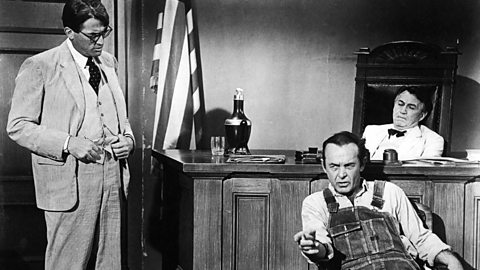
To Kill a Mockingbird play: A tale for these times. audio
Andrea Davy stars as Calpurnia in Aaron Sorkin's first version of the play. The Midlands-based actor speaks to Karen Gabay about its relevance in 2026.

Witness History: To Kill a Mockingbird. audio
Louise Hidalgo speaks to Gregory Peck's son Carey about the film of Harper Lee's novel, To Kill a Mockingbird.
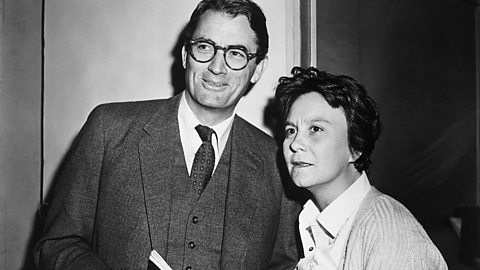
In Context: To Kill a Mockingbird (pt 1/3) video
Andy Kershaw examines the historical context of Harper Lee’s novel To Kill a Mockingbird, explaining that the author drew on the only perspective she had experienced – that of a southern white woman.

In Context: To Kill a Mockingbird (pt 2/3) video
Andy Kershaw paints a picture of the society inhabited by Harper Lee when she was writing her novel, To Kill a Mockingbird.
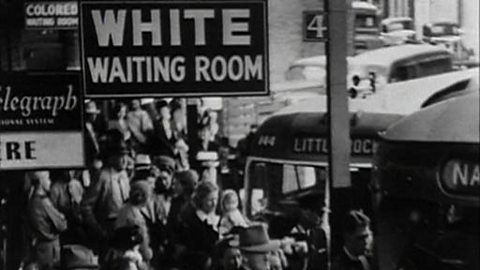
In Context: To Kill a Mockingbird (pt 3/3) video
Andy Kershaw looks at how Martin Luther King's mobilisation of the black population of America affected the nation's response to Harper Lee's novel, To Kill a Mockingbird.
More on To Kill a Mockingbird
Find out more by working through a topic
- count1 of 5
- count2 of 5