Summary
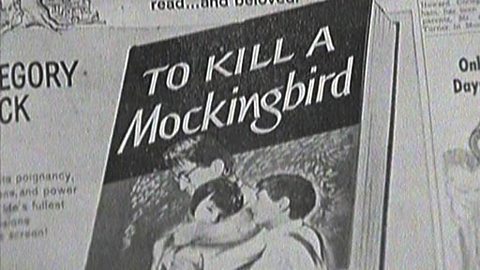
To Kill a Mockingbird was written by Harper Lee and published in 1960. It is told by the adult Jean Louise ‘Scout’ Finch looking back on events of her childhood across three consecutive years. She recounts the adventures she and her brother Jem had with their friend Dill, various anecdotes about the small town in which they live, and events surrounding a legal trial undertaken by her lawyer father, Atticus, which exposes deep racism and prejudice within their society.
Title: Taken from the expressed by Atticus and Miss Maudie that “it’s a sin to kill a mockingbird”. It is explained in the novel that mockingbirds cause no harm but simply sing, making the world more beautiful; to kill one would be an act of pointless cruelty. As such, mockingbirds are a symbol of innocence in the novel and represent the characters of Tom Robinson and also Boo Radley, cruelly treated despite doing no harm.
Narrative perspective: To Kill A Mockingbird is told from a The 'I' or 'we' used by a narrator who is a participant in a narrative, in contrast to the third person - 'he', 'she' or 'they' - of a narrator who is not directly involved.Look back at events, experiences and any developments in their life. narrative perspective. First person is where the story is told by one of the characters involved in the story, who describes the action from their point of view and regards events with their own understanding. Scout relates her firsthand experience as a child but is telling the story retrospectively – looking back on it many years later, when she is an adult. This means she can recall how she saw and understood events at the time, but can also view and relate them with the deeper understanding and wider context of an adult’s life experience.
Setting: Maycomb, Alabama – a fictional small town in the American South, during the A period from 1929 when, starting in America, countries around the world suffered huge unemployment and economic damage. of the 1930s.
Themes: Racism, hatred and prejudice, family life, courage and honour, childhood and growing up, innocence, dignity and respect, the law, community, femininity.
Characters in Harper Lee's To Kill a Mockingbird
The main character in To Kill a Mockingbird is Scout Finch. When the novel begins, Scout is almost six years old but the novel is actually narrated by Scout when she is much older and looking back at the events that happened when she was a young girl. Her older brother Jem and her father Atticus are also important characters. The experiences of the Finch family form the central story of To Kill a Mockingbird.
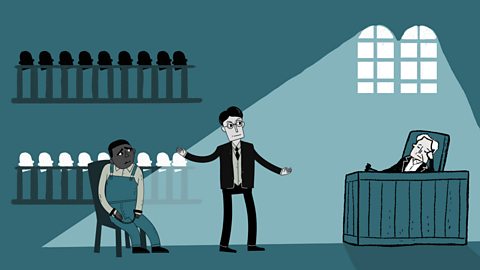
Tom Robinson is a black man wrongly accused of attacking Mayella Ewell, a white woman. Although it becomes clear that her father Bob Ewell was the one guilty of assaulting her, Tom is found guilty simply because he is black. Atticus defends Tom Robinson and his determination to prove Tom’s innocence, when many others are keen to assume he is guilty because of the colour of his skin, allows Harper Lee to explore the themes of racism and courage. It also allows Harper Lee to show how brave a man Atticus is.
There are references to many other characters within the novel, some only very briefly or in passing. This helps to build up a richer picture of what life is like in the small town of Maycomb. It also helps to show how everyone knowing everyone else can sometimes be reassuring and familiar, but can also foster rumours and deepen prejudices and divides.
Scout Finch
Jean Louise Finch, or Scout as she is always known, is the daughter of Atticus Finch. The novel begins when she is almost six years old and ends when she is nine. However, Scout narrates the novel when she is an adult who is looking back on her childhood and relating the events that happened through the eyes of the child she was. At the start of the novel Scout is obviously less mature than her older brother Jem because she is several years younger than him, and there are things that happen in the trial of Tom Robinson that she does not at first fully understand.
As the novel progresses, Scout begins to develop more of an understanding of these issues and of the lessons Atticus is trying to teach her. She also tries to control her temper and become less hot headed. The controlled voice of the older Scout when she is narrating, tells the reader that this is something she managed to achieve. When describing Bob Ewell’s attack on Jem for example, she comments, “When enough years had gone by to enable us to look back on them, we sometimes discussed the events leading to his accident”. This reveals that Scout has become mature, with an ability to discuss events with Jem rather than argue about them. Scout has a close relationship with both her father and her brother and she is portrayed as intelligent and as a loving and loyal member of the family.
| How is Scout Like this? | Evidence | Analysis |
|---|---|---|
| A tomboy | ||
| She enjoys playing outdoors with Jem and Dill and wears dungarees far more than she wears dresses. At Aunt Alexandra’s missionary tea Scout is forced to wear a dress but feels uncomfortable and ill at ease. | “Miss Maudie’s gold bridgework twinkled. ‘You’re mightily dressed up, Miss Jean Louise,” she said. ‘Where are your britches today?’ ‘Under my dress.’” | Scout wears her trousers beneath her dress so that she still feels more like herself. |
| Unprejudiced | ||
| By the end of the novel Scout realises that Boo Radley stays indoors because that is how he prefers to spend his time. She is accepting of this and when she finally meets him face to face, Scout reacts in a calm and mature manner. | “‘Mr Arthur, bend your arm down here, like that. That’s right, sir.’” | When she finally meets him, Scout feels no fear and is able to talk to Boo in much the same way as she talks to anyone else she knows well. |
| Loyal to her family | ||
| When Cecil Jacobs taunts Scout about Atticus defending Tom Robinson, she is willing to have a fight with Cecil in order to protect her father’s honour. | “‘You can just take that back, boy!’” | Scout is loyal to her father and will do all she can to defend him. |
Jem Finch
Jem is Scout’s older brother and when the novel begins he is ten years old. Because he is older than Scout he matures more quickly and sometimes understands issues she does not. Although at the start of the novel he is willing to be seen playing with his younger sister, as the novel progresses this is less apparent and he becomes moody, wishing to spend time on his own. Jem is less hot tempered than Scout but there is one moment in the novel when the reader sees him lose control of his emotions. When Mrs Dubose, the Finch family neighbour, torments him about Atticus defending Tom Robinson, he breaks down and, using Scout’s new twirling baton, he cuts every head off Mrs Debose’s beloved camellias.
| How is Jem Like this? | Evidence | Analysis |
|---|---|---|
| Even-tempered | ||
| When Scout is angry or when someone has been tormenting her about Atticus, her hot-headedness means she is tempted to lash out with her fists. Jem is more even tempered and does all he can to calm her down. | “Catching Walter Cunningham in the school yard gave me some pleasure… ‘You’re bigger’n he is,’ he said.” | Jem is being more mature and far more reasonable in his attitude towards Walter. |
| Becomes more mature as the novel progresses | ||
| Jem begins to grow away from Scout and prefers to spend time on his own. He becomes moody and feels Scout should also start to mature and behave less like a tomboy and more like a young lady. | “‘It’s time you started bein' a girl and acting right!’” | Jem begins to mimic adult attitudes. |
| Wants justice | ||
| Jem struggles with Tom Robinson’s guilty verdict. | “‘You can’t just convict a man on evidence like that – you can’t.’” | Jem shows awareness of injustice. |
Atticus Finch
Atticus Finch is a lawyer and the father of Scout and Jem. He is a single father, his wife having died when Scout and Jem were young. He takes his responsibilities as a parent extremely seriously and encourages both Scout and Jem to be tolerant and fair minded and to always see things from the point of view of other people. Atticus can also be seen as Harper Lee’s mouthpiece (a character who expresses the same ideas and opinions as the author who created him or her), as the views he expresses about the unfairness of racism and the negativity surrounding intolerance are the same as she herself held.
He is almost 50 years old when the novel begins and Scout and Jem are rather embarrassed that their father is older than many other parents they know. To them he appears to be feeble as he does not play football or have a job involving physical, manual work. However, by the end of the novel both Scout and Jem have realised that their father’s bravery comes from being able to stand up for what he believes in, even when the majority of the people around him disagree with him.
Atticus behaves the same at home as he does in the town of Maycomb or when he is at work. He remains courteous throughout the novel, even when faced with negative behaviour and treats everyone politely. This is different to many Maycomb residents who treat black people with rudeness and contempt (their belief being that they are not people worthy of consideration).
| How is Atticus Like this? | Evidence | Analysis |
|---|---|---|
| Courageous | ||
| Atticus makes sure he defends Tom Robinson with compassion and integrity. He speaks courageously on his behalf, making sure everyone at the trial is aware that Tom is innocent, even if this means he is putting himself in a difficult position among his neighbours, some of whom might turn against him due to his unprejudiced beliefs. | “‘And so a quiet, respectable, humble Negro who had the unmitigated temerity to “feel sorry” for a white woman has had to put his word against two white people’s.’” | Even using the word ‘respectable’ to describe a black man would have shocked many white people in court. Atticus is being brave in making it obvious that he not only believes in Tom’s innocence but that he also respects him as a man. He is also pointing out that it is wrong for people to now feel more anger towards Tom simply because he admitted to feeling sorry for a white woman – something many people living in Maycomb cannot tolerate. They feel black people are so uncivilised that they are in no position to feel sorry for anyone who is white. |
| Tolerant | ||
| Atticus is tolerant of people and he always tries to understand why people behave in the way they do. He is not judgmental and understands there are many reasons why people might say or do something, even if he does not agree with it. | “‘First of all,’ he said, ‘if you can learn a simple trick, Scout, you’ll get along better with all kinds of folks. You never really understand a person until you consider things from his point of view…’ ‘Sir?’ ‘–Until you climb into his skin and walk around in it.’” | Atticus is explaining to Scout that in order to truly understand a person’s behaviour and point of view, you need to empathise with them. In other words, you need to walk around in their skin, pretend to be them and try to live life as they do in order to understand how they feel. |
| The conscience of Maycomb | ||
| Atticus believes that all men have been created equal. He sees no difference between black and white people and does not judge people on the colour of their skin. Instead, he treats each person as an individual and does not judge them based on colour or class. | “‘Our courts have their faults, as does any human institution, but in this country our courts are great levellers, and in our courts all men are created equal.’” | In his final speech during the trial of Tom Robinson, Atticus speaks passionately about the equality of all people. Here he is reminding members of the jury that their duty is to put aside any prejudices they may have and to judge Tom as a man and not as a black man which might lead them to automatically assume he is guilty. |
Boo Radley
Boo Radley is a neighbour of the Finch family. When he was young he began to associate with a gang of boys and gradually they became a nuisance in Maycomb, drinking whiskey and going to dances at a gambling den. One night the boys crashed a “flivver” (a small car) and appeared in court. The other boys were sent to an industrial school but Mr Radley, Boo’s father, thought it was too embarrassing for his son to attend such a school and asked if he could look after his son instead. The judge agreed but unfortunately for Boo this meant that he spent the next 15 years of his life locked up in his childhood home. He becomes like a ghost who is unable to lead a normal fulfilling life, apparently rebelling only when he stabs his father in the leg with a pair of scissors. For a while after this incident Boo is imprisoned in the basement of the courthouse, but is later moved back home. When Mr Radley dies, people in Maycomb think Boo might be allowed outside but his brother Nathan Radley returns home and Boo’s imprisonment continues.
Boo becomes fascinated with watching Scout, Jem and Dill play in the street outside his house. He rewards them by leaving Jem and Scout gifts in the hole in the tree outside his garden but he also tries to look after them, especially when they are attacked by Bob Ewell.
As Jem matures he begins to realise that one of the reasons Boo Radley may not leave his house anymore is because he no longer wants to. His house offers him the security that the outside world would not. By the end of the novel, both Scout and Jem realise that Boo is a very different man to the one they imagined him to be.
| How is Boo Radley Like this? | Evidence | Analysis |
|---|---|---|
| Reclusive | ||
| Boo is never seen outside his house until the end of the novel. Although Jem and the reader begin to suspect Boo is responsible for leaving gifts in the hole of the oak tree and sewing together Jem’s torn trousers, he is not actually seen until he rescues Jem and Scout from Bob Ewell’s attack. | “They were white hands, sickly white hands that had never seen the sun, so white they stood out garishly against the dull cream wall in the dim light of Jem’s room.” | Scout’s description of Boo when she meets him for the first time reinforces the amount of time he has spent indoors. His hands are the pale colour associated with people who spend their time indoors and only venture outside in darkness. This emphasises the fact that Boo is shy and lacking in confidence. |
| Feared by many | ||
| Maycomb residents have not seen Boo for many years; in fact many people have not seen him at all. This means that stories have spread about Boo’s apparently grotesque appearance and awful deeds. It is this sort of irresponsible gossip which has encouraged Scout, Jem and Dill to want to make Boo come out of his house. This reinforces Harper Lee’s belief that some people living in Maycomb are wrong to be afraid of people who are different from them. | “‘Stephanie Crawford even told me she woke up in the middle of the night and found him looking in the window at her.’” | Here, Miss Maudie is giving Scout an example of some of the gossip that is spread about Boo Radley. Miss Maudie feels Stephanie Crawford’s words are ridiculous. However, they highlight the fact that people like Stephanie Crawford find it easy to believe that, when they are scared or when they believe someone is trying to hurt them, Boo is to blame. |
| Kind | ||
| Boo is consistently kind to the children and this perhaps highlights his own childlike nature. After all, he was little more than a child himself when he was locked inside his house and this may be why he leaves them gifts or tries to help them. | “‘Thank you for my children, Arthur,’ he said.” | This short piece of dialogue shows Atticus thanking Boo for saving Scout and Jem from Bob Ewell. The whole incident where Boo rescues the children allows us to see how kind he is. He leaves his house and risks his own life in order to save them yet he has had so little kindness shown to him throughout his life. This emphasises the point that far from being the monster some people in Maycomb believe him to be, he is a decent human being who has developed the ability to display kindness despite being treated with great unkindness himself. |
Miss Maudie Atkinson
Along with Atticus, Miss Maudie is the voice of reason in Maycomb. Unlike many of her neighbours, she is not quick to judge others, does not gossip about Boo Radley and hopes that even though Tom Robinson is inevitably found guilty, the words of Atticus at the trial may bring about some small future change. She is kind towards Scout and Jem and can be relied upon to offer them sensible words of advice when Atticus is not present.
| How is Miss Maudie Like this? | Evidence | Analysis |
|---|---|---|
| The female version of Atticus | ||
| Just like Atticus, Miss Maudie knows that Tom Robinson’s trial is a serious matter and not one to be treated lightly or as a form of entertainment. Therefore she is scornful of the many white people who go to the trial simply to ogle at Tom and who treat it as a way of passing the time in a carnival atmosphere. | “‘Aren’t you goin’ down to watch?’ asked Dill. ‘I am not. ‘t’s morbid, watching a poor devil on trial for his life. Look at all those folks, it’s like a Roman carnival.’” | Miss Maudie is more sensitive to the fate of Tom Robinson than the people who are going to court to enjoy the spectacle of seeing a black man on trial for raping a white woman. Just like Atticus, she sees Tom as a human being who deserves respect and to be treated as an equal throughout his time in court. |
| Cares for Scout and Jem | ||
| Miss Maudie always has time for the children and is willing to listen to what they say and engage in conversation with them. She listens to their opinions, invites them into her garden and bakes cakes for them to eat. | “Our tacit treaty with Miss Maudie was that we could play on her lawn, eat her scuppernongs if we didn’t jump on the arbour, and explore her vast back lot…” | Scout outlines how generous Miss Maudie is. As the novel progresses, Scout and Jem grow closer to her, and she acts almost as a surrogate mother figure. |
| Witty | ||
| Miss Maudie is never afraid to speak her mind and can be witty when making her opinion clear. | “‘His food doesn’t stick going down, does it?’” | Miss Maudie uses sarcasm to criticise Mrs Merriweather’s hypocrisy and defend Atticus, making her disapproval clear. |
Secondary characters
Tom Robinson
A 25-year-old black man and father of three who is accused of rape by Mayella Ewell and defended at trial by Atticus. His arm was caught in a cotton gin and injured beyond use as a child, which Atticus uses to prove that Tom couldn’t have caused Mayella’s injuries; despite this strong physical evidence and the fact Tom is respected in the community as a churchgoer and a hard worker, the jury convicts him anyway because he is black. Losing all hope of ever being freed, Tom tries to escape from jail and is shot and killed. His alignment with the symbol of the mockingbird is clear – he did nothing wrong but was destroyed by the pointless cruelty of racial prejudice. The reader does not get to see or hear much from the character himself; most of the information about him outside the courtroom itself is relayed through hearsay to reflect how Scout experiences events.
Dill
Charles Baker Harris, better known as Dill, becomes the friend of Scout and Jem while staying in Maycomb with his aunt one summer. He has a wild imagination and the stories he makes up are fuelled by the mystery of Boo Radley; he is initially intrigued by the Radley house to the point of being rude and invasive, but as he matures he recognises the difficulties and loneliness Boo must feel. He recognises loneliness since his mother’s remarriage means he feels unwanted by his parents; he runs away to stay with Scout and Jem in Maycomb as he feels a better sense of belonging there than he feels in his own home. He shows further sensitivity and humanity when he is appalled by the questioning of Tom Robinson during the trial and has to leave the courtroom, feeling sickened. He has a childlike innocence through most of the novel that contrasts with the adults’ wider acceptance of prejudice.
Bob Ewell
When she sees him in the courtroom, Scout describes Bob Ewell as “little bantam cock of a man” – this A metaphor is a word or a phrase used for dramatic effect, to describe something as if it were something else. describes both his small size and his cocksure attitude. His smug behaviour also comes from his confidence that his word will taken over any black man’s because he is white. He has a sense of superiority over Tom Robinson simply because of his race. This is especially ironic because Robinson is a respectable husband and father who is admired in his community, while Ewell is known to be a drunkard and a lawbreaker who neglects his family – yet he thinks himself better than Tom Robinson because of racial prejudice and is sure everyone else in the courtroom will agree. Bob is not only a vulgar and uneducated man who abuses his children, but he is also aggressive and vengeful. Despite winning in court, he tries to wreak vengeance on those who he feels made him look a fool during the trial, which results in him attacking the Finch children after the Halloween pageant. The fact that even the sheriff agrees he “fell on his knife” and does not investigate Ewell’s death at the hands of Boo Radley suggests that everyone in Maycomb dislikes him and knows he is unworthy of their care or concern.
Mayella Ewell
The nineteen-year-old daughter of Bob Ewell, who is clearly a victim of both neglect and abuse by her father. She is tasked with looking after the younger Ewell children and is trapped by her circumstances without education, friendship or hope. Tom Robinson was the only person who showed her any kindness; this fostered her strong feelings for him. Her attempt to seduce him by force would not only have been considered scandalously unfeminine, but also broke a major social a strong cultural rule forbidding someone from doing something against mixed race relationships. Even when it is shown in court that Tom could not have injured her as she claims, she still sticks to her testimony – partly through fear of her violent father and partly because she knows how socially unacceptable her feelings and actions were to the rest of society.
Mrs Dubose
The elderly neighbour of the Finches, who is known for shouting abuse from her porch at anyone who passes. Her racist rant against Atticus causes Jem to lose his temper and attack her garden, beheading her beloved camellia flowers. As punishment, Atticus arranges that Jem has to spend five weeks reading to her after school – it is an experience Jem hates, and he notes she barely listens to him. Her death soon after allows Atticus to reveal that she was a morphine addict. She used Jem’s reading sessions as a distraction while weaning herself off the drug, so that she could die free of addiction. Atticus uses this as an example to the children of a different type of courage – choosing to give up the pain relief so she could be at peace with herself before she died.
Calpurnia
The cook and housekeeper of the Finch family, who has helped raise the children since the death of their mother. Atticus resists Aunt Alexandra’s attempts to get her fired, saying she is like family. Scout feels Calpurnia corrects her too much, and much more than Jem, but comes to appreciate Calpurnia’s genuine care and attention as she grows. Calpurnia has her own grown up son, Zeebo, who is literate like her; she has had a strong hand in teaching Scout to read and write before school. She takes Scout and Jem along to her “black” church, First Purchase, where they are surprised to hear how differently she talks, exhibiting the Alternating between two or more languages, dialect or another aspect of speech and/or behaviour to fit a different social context that would have been common among black workers in white households. This exposes to them the fact that she has a whole other side to her life that the children know nothing about.
Aunt Alexandra
The married sister of Atticus, who comes to stay with the Finch family during the trial, apparently to try and give Scout a role model in femininity and ladylike behaviour. Aunt Alexandra has a clear sense of what a “good” family she and Atticus come from, and this makes her snobbish and disapproving. She shows clear race and class prejudice beneath her ideas of what is “proper” in society – she even suggests Atticus should fire Calpurnia, fearing she has too central a role in the household for a black person to be entrusted with. However, ultimately Alexandra is loyal to Atticus throughout and after the trial, and has genuine concern for the children’s wellbeing.
Minor Characters
Jack Finch – the younger brother of Atticus, who is a favourite of the Finch children because of his fun nature and detailed stories. He punishes Scout for fighting with Francis and is then shamed when she points out he didn’t hear her side of the story.
Judge Taylor – the elderly Maycomb judge, whose sleepy demeanour in court hides his sharp attention and strict but fair rulings. Rather than just assuming a black man would automatically be found guilty and giving the case to a less effective lawyer as a result, Judge Taylor specifically assigns Tom Robinson’s case to Atticus. This suggests he quietly believes Tom should have the best chance possible at receiving justice.
Heck Tate – the Maycomb sheriff, who seems to have a good working relationship with Atticus. He even entrusts Atticus to shoot the rabid dog loose on the street, claiming Atticus is a better shot than he is. He testifies in court during the trial; he does not appear biased, but his testimony supports the defence’s case that Bob Ewell injured Mayella, not Tom Robinson. His later refusal to further investigate Bob Ewell’s death, insisting he simply “fell on his knife”, suggests that he chooses to protect the innocent – such as Boo Radley, the real killer, and maybe even Mayella Ewell – when he can do so, without appearing to be unfair or untrustworthy.
Miss Stephanie Crawford – A lady of “polite society” in Maycomb, who is often suggested to be one of the more gossipy and dramatic members of that circle.
Test your knowledge of the characters in To Kill a Mockingbird
Further study
To Kill a Mockingbird at 50. video
Marking the 50th anniversary of To Kill a Mockingbird, writer Andrew Smith visits Monroeville in Alabama, the setting of the book, to see how life there has changed in half a century.
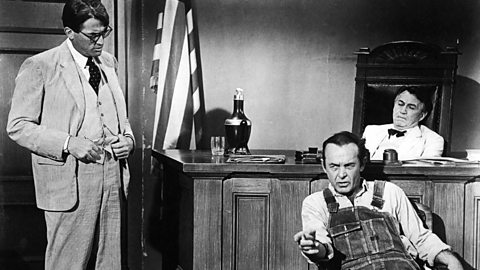
To Kill a Mockingbird play: A tale for these times. audio
Andrea Davy stars as Calpurnia in Aaron Sorkin's first version of the play. The Midlands-based actor speaks to Karen Gabay about its relevance in 2026.

Witness History: To Kill a Mockingbird. audio
Louise Hidalgo speaks to Gregory Peck's son Carey about the film of Harper Lee's novel, To Kill a Mockingbird.
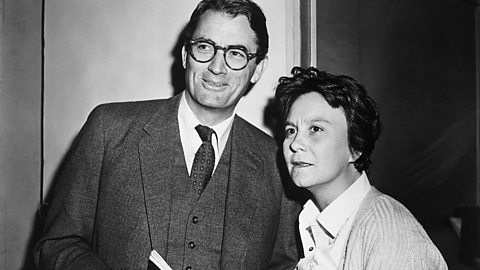
In Context: To Kill a Mockingbird (pt 1/3) video
Andy Kershaw examines the historical context of Harper Lee’s novel To Kill a Mockingbird, explaining that the author drew on the only perspective she had experienced – that of a southern white woman.

In Context: To Kill a Mockingbird (pt 2/3) video
Andy Kershaw paints a picture of the society inhabited by Harper Lee when she was writing her novel, To Kill a Mockingbird.
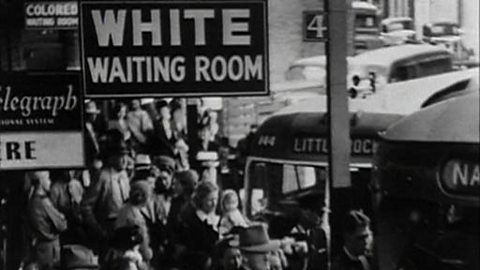
In Context: To Kill a Mockingbird (pt 3/3) video
Andy Kershaw looks at how Martin Luther King's mobilisation of the black population of America affected the nation's response to Harper Lee's novel, To Kill a Mockingbird.
More on To Kill a Mockingbird
Find out more by working through a topic
- count3 of 5
- count1 of 5