Applicable context
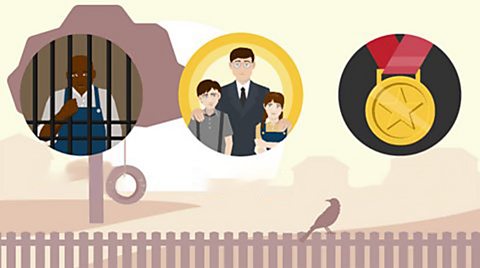
- America had a long history of racism stemming from its use of slave labour from Africa. The American Civil War was fought between 1861 and 1865 and was primarily concerned with abolishing slavery – the ‘North’ side wanted to free the slaves while the ‘South’, which depended on slave labour for its farming economy, wanted to keep slaves as they always had. The ‘North’ eventually won and four million African-American slaves were freed, but a legacy of racist prejudice lingered, especially in the southern states like Alabama, where To Kill a Mockingbird is set. Black people were legally free but society remained divided along race lines, with separate areas for black and white. Black communities were often poorer since they hadn’t been able to earn money or build family wealth during the slave era, and they were subject to intense racial prejudice, much of which was built into American law under the ‘The Jim Crow laws were state and local laws introduced in the Southern United States in the late 19th and early 20th centuries that enforced racial segregation. The name Jim Crow came from a fictional character, created by a white performer, which depicted a degrading and offensive caricature of black Americans and their culture.’, beginning in the 1870s and lasting well into the mid-twentieth century.
- Lee grew up in a small Alabama town during the 1930s; the childhood friend on whom she based the character of Dill was Truman Capote, who would also grow up to be a writer. During her childhood, nine black teenaged boys were accused of the rape of two white girls in what was known in the national press as the Scottsburo Trial. The trial lasted years, during which the boys were all imprisoned, and, despite lack of evidence and one of the girls admitting they made the story up, five of the boys were convicted. The injustice of the trial caused huge debate about the racism in American society and Lee used examples like this to inform the plot of her novel.
- A period from 1929 when, starting in America, countries around the world suffered huge unemployment and economic damage. started in the United States in 1929, after the stock market crash in October of that year. Following this, investment and spending dropped and unemployment rose, peaking at just under 13 million people in 1933. The Depression destroyed businesses and factories, and worsened poverty across America. Scout and Jem are from a comfortable middle class household, but glimpses of Depression-era poverty can be seen in the novel among Scout’s schoolmates, the Ewell family and other Maycomb residents.
- To Kill a Mockingbird was published in 1960, during what would become known as the Civil Rights era. At this time, black people were engaged in non-violent protest across America to overturn the ‘Jim Crow laws’ and pressure the government into recognising they deserved the same rights and protections as white people. In this climate, the novel was immediately successful and won many literary awards, including the prestigious Pulitzer Prize of 1961.
The plot of To Kill a Mockingbird
To Kill a Mockingbird is set in the mid-1930s in the small town of Maycomb, Alabama. It is narrated by Scout Finch, a six-year-old tomboy who lives with her lawyer father Atticus and her ten-year-old brother Jem.
During the novel Scout, Jem and their friend Dill try to make their reclusive neighbour Boo Radley leave his house. Boo has not been seen in Maycomb since he was a teenager.
Many residents of Maycomb are actively racist and during the novel Atticus is asked to defend Tom Robinson, a black man wrongly accused of raping a white woman. Atticus takes on the case even though everyone knows he has little hope of winning.
The reader sees the trial develop through the childlike eyes of Scout, as gradually both she and her brother learn some valuable life lessons from their father about tolerance, empathy and understanding.
A summary of Harper Lee's To Kill a Mockingbird, looking at themes and the main plot
To Kill a Mockingbird is a story of small-town America in the 1930s, seen through the eyes of a young tomboy known as Scout.
The novel follows Scout, her brother Jem and friend Dill as they try to make sense of the adult world – a world that turns from carefree to ominous when Scout's lawyer-father Atticus is asked to defend Tom Robinson, a black man falsely accused of raping a white woman.
Harper Lee uses the naivety of a child to present a fresh vision of the adult world and the prejudice and intolerance that they normally accept.
This is a book that changed people, shifted perceptions and quickened the march to civil rights.
- Dill arrives in Maycomb and meets Scout and Jem.
- They plan to make the local recluse Boo Radley leave his house.
- Scout starts school and takes an immediate dislike to it.
- Scout and Jem begin to find gifts left in a hole in the Radley oak tree.
- Dill returns and the children continue their games based around Boo Radley. Jem gets his trousers caught on the Radley fence but when he returns for them they have been clumsily sewn back together.
- The hole in the tree is filled with cement and the children cannot leave their letter of thanks. No more gifts can be left.
- It snows for the first time in many years and Miss Maudie’s house burns down.
- Atticus shocks the children by shooting the mad dog.
- Jem beheads Mrs Dubose’s camellias when she teases him about Atticus defending Tom Robinson, a black man charged with raping Mayella Ewell who is white. As a punishment, Atticus sends Jem to read to Mrs Dubose.
- Atticus sits outside Tom Robinson’s prison cell in order to save him from being To execute someone, usually by hanging them. This type of execution is a punishment that is carried out by a mob and without a formal trial or the proper authorities being involved..
- The trial begins but despite being innocent Tom is found guilty.
- Tom tries to escape and is shot dead.
- Bob Ewell, Mayella Ewell’s father attacks Jem and Scout but he is killed by Boo Radley who leaves his house in order to save them.
Watch: Plot summary
To Kill a Mockingbird plot summary
To Kill a Mockingbird is set in 1930s America – a country deeply divided along racial lines. Former slave states, such as Alabama, were particularly racist – with segregation in nearly all walks of life.
But at the beginning of the book, the narrator Scout Finch is oblivious to all this, spending her free-time playing with her older brother Jem. They're fascinated by a creepy house on their street where a man named Boo Radley has lived for years without ever coming outside.
Scout's playful childhood begins to change when her father, Atticus, agrees to defend Tom Robinson – a black man accused of raping a white woman.
At the trial, Atticus argues that Tom's innocent. Despite an inspiring speech from Atticus – and convincing evidence – the all-white jury convicts Tom, who is then carted off to Enfield Prison Farm. At the end of the trial, the ‘colored balcony’ stands for Atticus.
Later, Tom's shot trying to escape from prison, echoing one of the book’s most famous passages: “Remember it’s a sin to kill a mockingbird… Mockingbirds don’t do one thing… but sing their hearts out for us.”
The mockingbird represents characters such as Tom Robinson and, spoiler alert, Boo Radley, who, left to their own devices, are decent and gentle but who are crushed by the evils of society when exposed to them.
A man named Bob Ewell – who was exposed as a liar during the trial – wants his revenge on Atticus. On a pitch black evening, Bob attacks Jem and Scout but he's stopped and killed by a mysterious saviour – later revealed to be none other than Boo Radley.
Harper Lee's key theme is prejudice – which she grew to abhor during her own childhood in Alabama in the '30s. In the book, she examines not only the white community's prejudice against the black community, but also middle class prejudice against the poor white community – not to mention all of Maycomb's prejudice against Boo Radley.
As Atticus says to Scout, perhaps the best weapon against prejudice is empathy: “You never really understand a person until you consider things from his point of view… until you climb into his skin and walk around in it.”
Test your knowledge of the plot of To Kill a Mockingbird
Further study
To Kill a Mockingbird at 50. video
Marking the 50th anniversary of To Kill a Mockingbird, writer Andrew Smith visits Monroeville in Alabama, the setting of the book, to see how life there has changed in half a century.
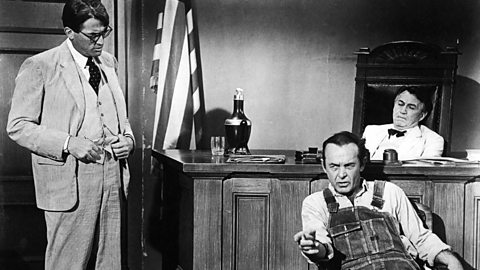
To Kill a Mockingbird play: A tale for these times. audio
Andrea Davy stars as Calpurnia in Aaron Sorkin's first version of the play. The Midlands-based actor speaks to Karen Gabay about its relevance in 2026.

Witness History: To Kill a Mockingbird. audio
Louise Hidalgo speaks to Gregory Peck's son Carey about the film of Harper Lee's novel, To Kill a Mockingbird.
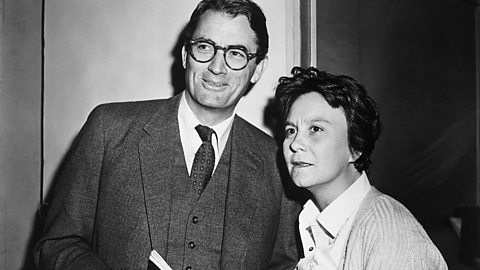
In Context: To Kill a Mockingbird (pt 1/3) video
Andy Kershaw examines the historical context of Harper Lee’s novel To Kill a Mockingbird, explaining that the author drew on the only perspective she had experienced – that of a southern white woman.

In Context: To Kill a Mockingbird (pt 2/3) video
Andy Kershaw paints a picture of the society inhabited by Harper Lee when she was writing her novel, To Kill a Mockingbird.
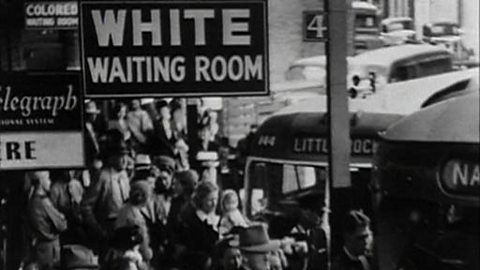
In Context: To Kill a Mockingbird (pt 3/3) video
Andy Kershaw looks at how Martin Luther King's mobilisation of the black population of America affected the nation's response to Harper Lee's novel, To Kill a Mockingbird.
More on To Kill a Mockingbird
Find out more by working through a topic
- count2 of 5

- count3 of 5