Relevant context for Shakespeare's Macbeth

Context is important but don’t use too much!
A few small and relevant references used to support your points about the play are far better than huge chunks of unrelated information – even if the information is interesting.
The English crown
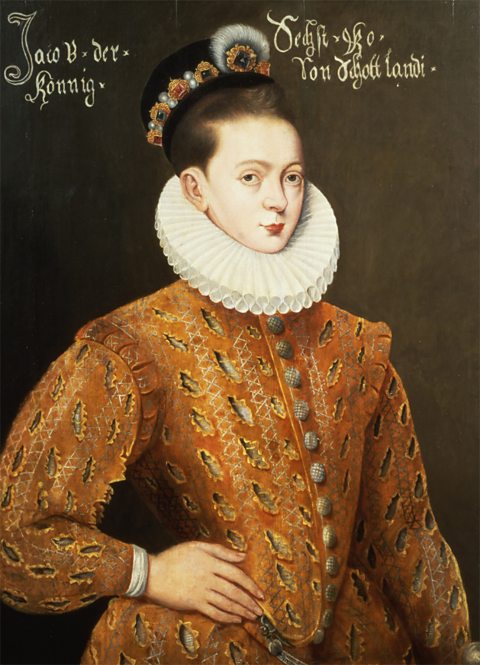
King James I of England was already King of Scotland (known as James VI of Scotland) when he came to the English throne in 1603 after the death of Queen Elizabeth I. He gave his patronage (support) to Shakespeare’s theatre company, who changed the company name to ‘The King’s Men’ in his honour. In many respects, Macbeth can be seen as a play written for the King; his support was important for the company, and the play contains many elements that would have pleased or intrigued him:
- James was Scottish – he could in fact trace his lineage back to the real Banquo (the characters in Macbeth are based on actual people who lived in 12th century Scotland, though their respective characteristics, motives and involvement in Duncan’s death were very different in the play). He would have been pleased to see his ancestor portrayed as a good and noble man.
- He was deeply religious and extremely concerned about witchcraft – he was convinced he had almost been killed by a witch’s plot against him, and he wrote a book in 1597 entitled Check your connection, refresh the page and try again., regarding the evil deeds and warning signs of witchcraft. The inclusion of the witches and their terrible influence on Macbeth would have appealed to him.
- James believed in the Divine Right of Kings, which is reinforced in Macbeth by the upturn of the natural order when the crime of regicide is committed.
The Divine Right of Kings
Early Medieval Christians believed in an interconnected hierarchy of life on earth called the Great Chain of Being, beginning with God at the top and including angels, nobles, peasants, animals and plants. As part of this top-down system came the belief in the Divine Right of Kings – the idea that kings were directly chosen to rule by God himself. No one on earth could question the identity or actions of a king.
While this belief was a little more widely doubted by people in general in Shakespeare’s time, King James was a firm advocate of the idea (or at least pretended to the court and public that he was); he delivered a speech to the English parliament in 1609 in which he said:
“The state of monarchy is the supremest thing upon earth; for kings are not only God's lieutenants upon earth, and sit upon God's throne, but even by God himself they are called Gods”.
A play which showed political and natural turmoil following the murder of a king could be said to show how God’s order had been disrupted; James would have been pleased to have his beliefs reinforced in a popular play like Macbeth.
The Gunpowder Plot
The early 1600s was a time of great political upheaval and uncertainty, and in 1605 the Gunpowder Plot unfolded – an attempt by a group of persecuted Catholics to blow up the Parliament buildings and kill King James and his entire Protestant government.

The plot was discovered, the conspirators caught and brutally punished, and the shocking, sensational details featured in many plays of the time. Shakespeare had extra reason to include the many negative and topical references to the plot that he inserts into elements of Macbeth – he was familiar with many of the conspirators himself (although there is no evidence he was involved in any way).
Instead of waiting to be taken to the tower and violently ‘questioned’, Shakespeare instead crafted a play filled with pro-monarchist sentiment that would not only please his King, but also reassure the ruler that Shakespeare was a loyal and faithful subject. He had absolutely no intention of causing or supporting regicide.
The role of women
Traditional gender roles of the time dictated that women became wives and produced children – this was their only perceived purpose in society. Wives were little more than their husband’s property and would have been expected to submit to their husband’s will without question or comment.
Lady Macbeth is an interesting deviation from this – she has borne no children, she is as ambitious as her husband, and she drives him to actively pursue his perceived fate, rather than passively hoping for it. He calls her his “dearest partner of greatness”, suggesting a much more equal (and possibly also loving) relationship between them than would have existed in almost any other marriage of the time.
Any analysis of Lady Macbeth’s role and character for your controlled assessment task should definitely include a little context about the accepted roles of women at this time. She was an Describes something that is unusual or different from what is expected. example of how a woman was supposed to think and behave.
Find out more about the Gunpowder plot, women’s roles and even the mysterious curse of Macbeth in this podcast!
Jean Menzies and Carl Anka help you revise the plot, characters, and key themes of the play, and pick out the best quotes to use in your exams.
Carl: Hello, and welcome to the Bitesize English literature podcast. Now, you've clearly done something right because you've made it here. If you want to get all the episodes in this podcast, make sure you download the BBC Sounds app.
Jean: And don't forget that whilst you're in the BBC Sounds app, there's loads of other things you can use to help you with your revision – full versions of some of the texts you might be studying, revision playlists and other Bitesize podcast series to help with different GCSE subjects.
Carl: I’m one of your hosts, Carl Anka.
Jean: And I’m Jean Menzies. In this series, we're actually heading to my neck of the woods, Scotland, to explore Shakespeare's Macbeth.
Carl: And in this episode, we're taking a closer look at the context of Macbeth, including when it was written and performed.
Jean: So Macbeth was first performed in 1606, which was only three years after King James the Sixth of Scotland also became King James the First of England, after the death of Queen Elizabeth the First. So King James was also Scottish, which might have inspired Shakespeare to set the play in Scotland in order to appeal to the new king.
Carl: And thoughts around the king and royalty play a huge part in Macbeth, which is really relevant to the time in which it was first performed. In 1605, just months before Macbeth was first performed, Guy Fawkes and other conspirators planned to blow up the Houses of Parliament to kill King James the First because they didn't think he should have been given the throne.
Jean: Remember, remember, the fifth of November – aka the Gunpowder Plot as it's now called, was uncovered and stopped. But we can see its influence on Shakespeare. And within this play, there is a strong message and warning in Macbeth about the consequences of regicide, which is another word for killing a king. Because it really was something that carried horrendous consequences. Guy Fawkes did not have a happy ending, as he was executed for his actions. And the stakes were so high because people at the time believed that monarchs were chosen by God. So the punishment was reflective of the importance of this.
Remember, remember, the fifth of November?
EXTRACT
Porter:Knock, knock! Who's there, in the other devil's name? Faith, here's an equivocator, that could swear in both the scales against either scale; who committed treason enough for God's sake, yet could not equivocate to heaven: O, come in, equivocator.
Carl: And this line you just heard from the porter shows the direct link to the Gunpowder Plot of the 1600s. A priest, Father Henry Garnett, was hanged for lying about his knowledge of the gunpowder conspiracy, which he pleaded that he did for God's sake. In his opening speech here, the porter appears after King Duncan had been murdered, and not yet discovered and refers to someone who had committed treason enough for God's sake.
Jean: And the king does play a really important part in a lot of the context for Macbeth. In the Jacobean era, the years during which James the First reigned, people believed in the divine right of kings, so they believed that the king or queen was chosen by God. So in Macbeth, when Duncan names his son Malcolm as the heir to the throne, but Macbeth then takes the crown after Duncan's death, to the audience at the time that would mean that Macbeth had taken what God had intended for Malcolm.
Carl: Basically, that would have been taken as Macbeth having gone against God, and any punishment or consequence would have been completely justified.
Jean: Exactly. It also makes regicide a sin as well as a crime, which reflects the conversations we've had in earlier episodes including Episode Two, if you want to go back and relisten – about Macbeth's hallucinations and whether they are caused by guilt or if they're a consequence given to him due to sin.
EXTRACT
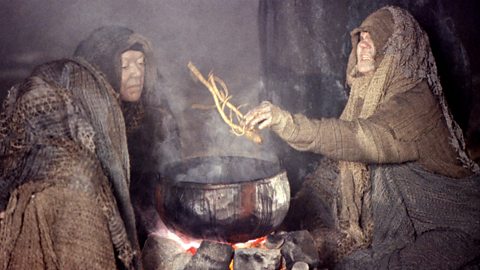
All Witches:Double, double toil and trouble; Fire burn and cauldron bubble.
Third Witch:Scale of dragon, tooth of wolf, Witches' mummy, maw and gulf Of the ravin'd salt-sea shark, Root of hemlock digg'd i' the dark, Liver of blaspheming Jew, Gall of goat, and slips of yew Sliver'd in the moon's eclipse, Nose of Turk and Tartar's lips, Finger of birth-strangled babe Ditch-deliver'd by a drab, Make the gruel thick and slab: Add thereto a tiger's chaudron, For the ingredients of our cauldron.
All Witches:Double, double toil and trouble; Fire burn and cauldron bubble.
Second Witch:Cool it with a baboon's blood, Then the charm is firm and good.
Carl: People at that time really believed in witchcraft. King James the First himself had published a book on the subject called Demonology. So we know that when Shakespeare came to write this play, he was writing it for an audience that he knew would find the witch characters very interesting.
Jean: They'd be interested and they'd also feel immediately unsettled by them. They were feared in the Jacobean era and hundreds of innocent people, predominantly women, were arrested, questioned and often tortured to get confession. Witches were usually sentenced to hanging because they were believed to be possessed by demons, and associated with the devil. In what we've just heard, the witches are throwing so many gruesome things into their cauldron from a wolf's tooth to a baby's finger. It's really emphasising to the audience how evil and twisted these characters are supposed to be.
Carl: The witches’ prophecies lead to Macbeth committing regicide, and ruling Scotland without any divine right. This would completely link with a Jacobean view that witches work against God, and are pure evil.
Jean: So the audience must have absolutely rejoiced at the end of the play when Malcolm was crowned king then. They’d feel that God's will is restored, and everything is as it should be. So there's another piece of social and historical context I'd like to take a look at though. And that's the perception and the role of women in this era.
Carl: Good roles for witches. Good roles for Lady Macbeth…
Jean: All very negative though right?
Carl: I suppose you could get a decent role as Macduff’s wife, but she doesn't have a good ending does she?
Jean: No no, the one like sort of virtuous women is murdered.
Carl: It's almost like it's a tragedy.
EXTRACT
Lady Macbeth:What beast was't, then, That made you break this enterprise to me? When you durst do it, then you were a man; And, to be more than what you were, you would Be so much more the man.
Jean: So we did already discuss Lady Macbeth's character in more detail in Episode Two. But there's also some really interesting points to be made around the context of women, when this play takes place, because they had far less rights. Wives were usually not much more than property of men, and they were pretty much there to look after the men and have their babies, especially in those upper aristocratic classes.
Carl: Women definitely weren't given the rights they should have been. Lady Macbeth doesn't seem to fit this stereotypical mould of the time, which is really interesting. She has a lot of ambition over him, and she isn't afraid to show it. And as we just heard there, she does have a lot of control over Macbeth and his decisions in a way that we wouldn't expect for this time. He actually describes her as his “dearest partner of greatness”.
Jean: She even references it herself in Act 1, scene 5. She knows Macbeth is a little shaky in his resolve to murder. And she calls on spirits saying “unsex me here”. She wants the qualities associated with being a man at the time and wants to be rid of the weaknesses associated with being a woman then. However, the only way she can get that power is through her husband.
Carl: And she follows up that line by saying, “fill me from the crown to the toe top-full of direst cruelty”. She wants to escape the limits of stereotypical femininity, which wouldn't have allowed her to be strong or cruel or so ready and able to kill. So that's why she needs unsexing and filling from top to toe with cruelty. It's quite an ask.
Jean: Yeah, well, it's worth remembering that in the original performance of this play, the part of Lady Macbeth would actually have been played by a man. Although let's not even start on the topic of women not being able to act on the English stage until 1660. Because I think I need a whole other podcast series for that. Being the case of Lady Macbeth being played by a man would have actually probably helped emphasise the character’s masculine qualities, which could have been a consideration for Shakespeare.
Carl: I just also thought of something we should mention when we talk about this play. The fact that we've been calling it by its name, rather than what we should have been doing, because there's a curse around Macbeth. Is there not?
Jean: Oh, my God, yes, there is a curse. And I'm really concerned what's going to happen after we leave the studio.
Carl: Yes, the curse, right. It's a fairly common belief today that the play of Macbeth is cursed. Apparently, the origin of that is that a coven of witches cursed the play because Shakespeare had used real spells and incantations in it. And then a lot of accidents and issues with the first performance in 1606. And there have been stories ever since with problems that people blame on the curse. So, like we said before, in order to break or avoid the curse, you must not say the play's name. And once you leave the theatre, you have to spin three times, and then curse, and then knock on the theatre door to enter to go back in again. I did not do any of those rules the first time I saw Macbeth. So…
Jean: I was about to ask, is it only because you perform in it that you have to do these things? Or when we leave this room this evening should we do this?
[Hear a knock]
Carl: Just checking.
Jean: It does feel particularly fitting, right? Given how much of this play is based in the supernatural. Although it's not necessary to bring up the curse in your exam, because I don't think that's the kind of information about the supernatural and Macbeth the examiners are looking for. It's fun to learn about though. So thanks so much for listening to Episode Seven of the Bitesize English literature podcast all about the context of Macbeth.
Carl: You can test what you've learned about Macbeth from this and all the other episodes in the Bitesize English literature podcast by adding to the final episode of this podcast for a recap quiz. And remember, you can listen to them all on BBC Sounds whenever you like. So tell your friends if you find them useful.
Listen to the full series on BBC Sounds
Macbeth performed
Macbeth on Radio 4. audio
Listen to David Tennant playing the tyrannical Scottish King.
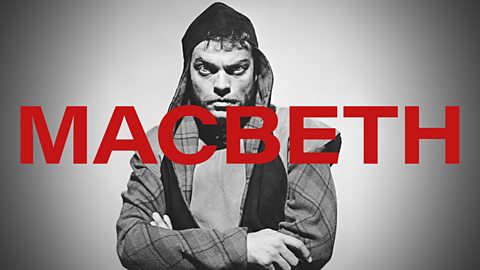
Orson Welles's Macbeth. video
Orson Welles's classic film version of Shakespeare's play.
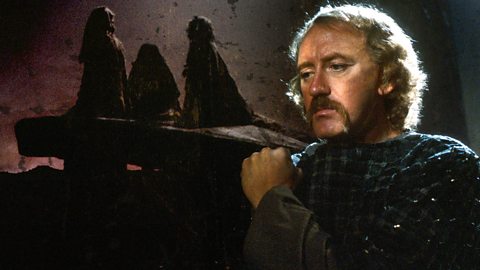
The BBC Television Shakespeare - Macbeth. video
Watch the tragedy by William Shakespeare about how ambition can corrupt.
Further study
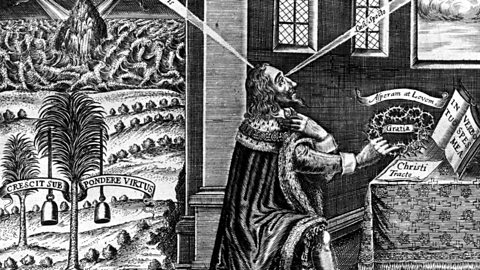
In Our Time - The Divine Right of Kings. podcast
Melvyn Bragg and guests discuss the Divine Right of Kings. The idea that kingly authority derives from God alone bit deep into the culture of 17th century Britain.
Bitesize GCSE English Literature - Macbeth. podcast
Jean Menzies and Carl Anka help you revise the plot, characters, and key themes of the play, and pick out the best quotes to use in your exams.
Shakespeare's life, work and legacy. collection
A collection of interactive articles exploring the life, work and legacy of the Bard.
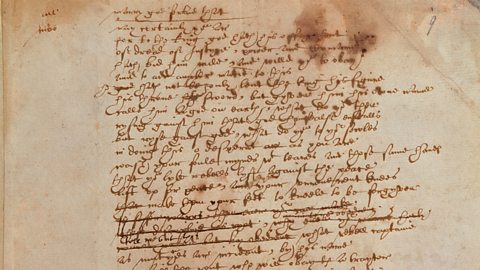
The study of Shakespeare, controlled assessment guidance. activity
Unit 3 of the CCEA GCSE English Literature qualification is a controlled assessment unit based on the study of a play by William Shakespeare.
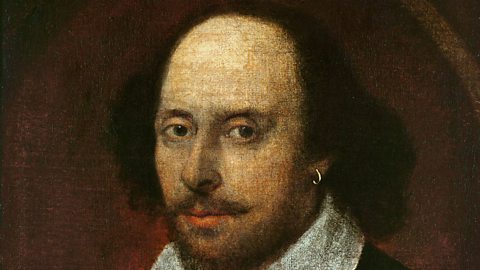
In our time - Macbeth. podcast
Melvyn Bragg and guests discuss Shakespeare's tragedy of ambition where Macbeth saves his King from one revolt only to murder and replace him, to fulfil a witches' prophecy.
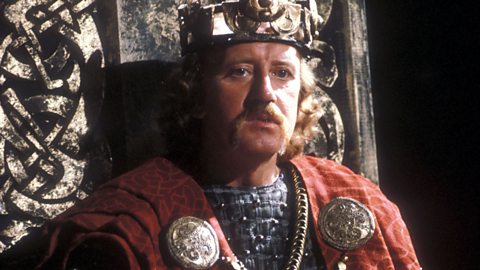
English File. video
Macbeth - Lady Macbeth in her historical context.
More on Macbeth
Find out more by working through a topic
- count5 of 5

- count1 of 5
- count2 of 5