Summary

  • Young people "are caught in a perfect storm", says the author of a report on Neets - 16 to 24-year-olds not in employment, education or training

  • The report comes as the number of Neets rises to more than one million, the highest it's been in 12 years, and there are fewer entry-level jobs - key takeaways

  • "This is more than an economic crisis, it is a moral one," says Alan Milburn, whose findings suggest Neets cost the UK an estimated £125bn a year - BBC Verify crunches the numbers

  • Analysis: There are several months before the second half of the report, containing recommendations, is unveiled - but there may be enough already to spark action on a problem that can cause lifelong scars

  • Wondering how to stand out when applying for jobs? A careers adviser shares some tips

  • Holly, 24, says she's been applying for more than 50 jobs a week but is lucky to "even get a rejection email", while 23-year-old Luke says it's "humiliating" to have applications rejected

  1. What you're saying: 'Demoralising' job hunts feel like 'luck of the draw'published at 16:16 BST

    Holly Jackson looking directly at the cameraImage source, Holly Jackson

    We've been hearing from young people from across the country about the difficulties they face in trying to find a job.

    Here's what they had to say.

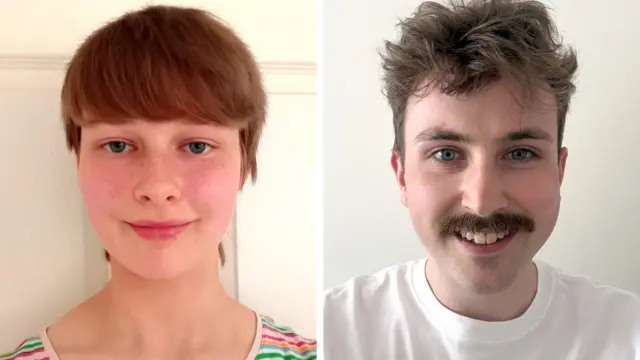
    • Holly Jackson, 24, from Seaford in East Sussex, says she's been applying for more than 50 jobs a week but is lucky to "even get a rejection email". She adds that it feels "like luck of the draw" and as if "you're just a number"
    • "It's humilitating", says 23-year-old Luke, who studied product design at Central Saint Martin, but cannot find a job. He has applied for more than 400 positions and has only had one interview as a cleaner, which he didn't get
    • Meanwhile, Andy Wilkins, 26, in Southend-on-Sea, Essex, says: "The job market simply doesn't exist for my current industry. It's demoralising but equally damaging"
    • "The more jobs I apply for and the more I get rejected, the worse I feel," says Chelsea Duke, 23, from Pontypridd in Wales
    • Niamh Heron, 21, from North Yorkshire, says she is selling crochet patterns and cards on Etsy while she looks for a part-time job after stopping work in September due to long-term poor health
    your voice banner
  2. What factors are putting employers off from hiring youth?published at 16:09 BST

    Baz Ramaiah is now being asked what hurdles employers are seeing to put them off employing young people.

    He says the simple cost of doing business is making it harder to employ young people.

    More young people also have mental health challenges and employers don't feel they have the resources to be able to support these needs, he adds.

    Ramaiah says that the government needs to be doing things to take away these risks for employers and take away the burden that comes with taking on more challenging and inexperienced young people.

    The Q&A has now ended, but keep following along as we bring you more info about today's report.

    The Your Voice logo is printed on a purple background
  3. So what's the solution?published at 16:06 BST

    Nick Eardley is asked the solutions are to the employment problems facing youth.

    He points out that today's report was not the final one and another will be released in autumn. He adds that Milburn says that he does not think there is an easy or quick solution.

    Eardley also highlights that Milburn has said that current reforms the government have introduced, including increasing the youth minimum wage and national insurance for employees have been issues brought up by employers. That issue will be raised with the chancellor, Rachel Reeves, he says.

    The words 'your voice' are written over a purple banner
  4. Isn't this a problem impacting everyone?published at 16:02 BST

    Nicola asks if this is a problem for all age groups. She says she is 36 and has a strong CV and career history, but is applying for jobs and hearing nothing back.

    Jordan Kenny from BBC Newsbeat says it's a similar story for many, but that there definitely isn't an "upper barrier" for who will experience difficulty in finding employment and finding jobs. Since today's report deals with specifically 16-24 year-olds, that has been the focus of the conversation, he adds.

    "It doesn't mean these issues apply exclusively to 16-24 year olds - people who are older may experience the same thing," he says.

    your voice banner
  5. What's the Netherlands doing differently?published at 15:58 BST

    Back at the Q&A, the BBC's Netherlands correspondent Anna Holligan is asked about the country being referenced in Milburn's report for tackling the Neet issue more effectively than the UK.

    Younger people in Holland are given "no space for dead ends or dropouts" because the system is designed to prevent that, she says.

    She explains that the alternative to education is "vocational training and education". This is when you spend one day a week in education on top of three to four days working as an apprentice.

    "And that seems to work here," says Holligan, adding that once young people in the Netherlands are out of the "tricky" 16-24 age bracket, they are kept in work and continue in employment.

    Purple banner reading 'Your Voice'
  6. PM says Neets report 'sobering'published at 15:55 BST

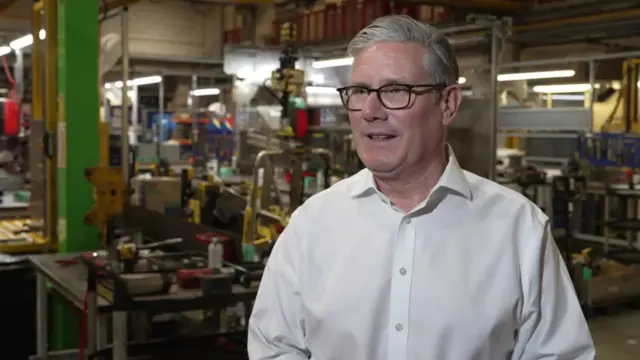
    Starmer speaking at a training facility in west LondonImage source, Pool

    Away from the Q&A, we've just heard from Prime Minister Keir Starmer.

    "This is a real sobering report, and we cannot afford, we will not allow, a lost generation," he says, stating that the government "clearly needs to [do] more"

    Speaking at a training facility in west London where he met with apprentices, the prime minister says Alan Milburn's report shows the issue of young people out of work is a "complex issue" with "no single thing" responsible.

    The PM says he is "pleased" by measures the government is putting in place to tackle the issue.

    "If a young person's been out of work for 18 months, we're guaranteeing a job for them for six months, we know from previous experience that that gives them a good chance of maintaining that job, so some of those measures are in place," Starmer says.

  7. Is an increased retirement age the cause?published at 15:50 BST

    Head of research at Youth Unemployment UK Baz Ramaiah is asked whether there is a correlation between no work for young people and an increase in the retirement age.

    He says that there may be a point there, seeing as while the number of people employed has decreased since 2000, the number of people over the age of 25 and under the retirement has increased.

    But Ramaiah says the reason a lot of people are out of work is related to health issues. Meanwhile, he adds, entry levels jobs are also decreasing.

    So the real issue is ensuring people have health support to get into work and providing working opportunities at an entry level for young people, he says.

    The Your Voice logo is seen on its purple backgroundImage source, bbc
  8. Why are numbers spiralling?published at 15:41 BST

    BBC political correspondent Nick Eardley is asked why the numbers have spiralled.

    He says there are many issues conspiring against young people.

    He says that opportunities are down, entry level jobs are down, apprenticeships in the UK are down and the conclusion of the report is that the bottom rungs of the work ladder are proving harder to climb than ever.

    A purple banner displays the words 'Your Voice'
  9. A very quick guide to the UK's Neetspublished at 15:37 BST

    While we wait to hear more from our experts, let's turn our attention for a moment to who Neets are, and how many young people in the UK are out of work.

    Here's a general refresher on what being Neet means, and the UK is trying to tackle the issue in different parts of the country.

    This Flourish post cannot be displayed in your browser. Please enable Javascript or try a different browser.

  10. Watch live as we answer your Neet-related questionspublished at 15:25 BST

    We have a host of experts answering your questions on the growing number of Neets in the UK - including our political correspondent Nick Eardley, our Netherlands-based correspondent Anna Holligan, Newsbeat reporter Jordan Kenny and head of research at Youth Unemployment UK Baz Ramaiah.

    They'll be tackling your questions about Alan Milburn's report and why the number of Neets is growing.

    To follow along, click watch live at the top of this page.

    your voice your bbc news banner. it reads 'your voice' in white across a purple background.
  11. Can Neets take comfort from the 'lost generation' of 2008?published at 15:16 BST

    Katie Williams
    Live reporter

    Scott Wilson-Laing poses with bottleImage source, Scott Wilson-Laing / WL Distillery
    Image caption,

    Scott Wilson-Laing graduated in 2008 and is now the founder and CEO of a distillery

    Scott Wilson-Laing graduated into the financial crisis in 2008. His original plan was to join the Royal Air Force - but recruitment for that was "upended", he tells me. Graduate openings also started to "quieten down".

    A strategic path of school, degree, then work "wasn’t really what happened to me and most people I graduated with," Wilson-Laing says.

    He describes various jobs over the years that followed, including in steel manufacturing and IT. No experience is bad experience, in his view. Just before the Covid pandemic, Wilson-Laing decided to set up his own distillery business.

    "Resilience" is his advice to young people today - although he appreciates it’s "a lot easier said than done". He also acknowledges that the world of work is "very different today" than it was in 2008.

    Bobby Seagull in classroom environment wearing suit and tieImage source, Bobby Seagull
    Image caption,

    Bobby Seagull is now a maths teacher, broadcaster and writer

    Maths teacher, broadcaster and writer Bobby Seagull graduated shortly before the financial crash and was working at Lehman Brothers as a trader at the time.

    He thinks the long-term impact is that people his age have had "very zigzaggy" careers. He says his friends have become everything from comedians to entrepreneurs.

    One positive, in his view, is that dislocation makes people "much more flexible in their thinking". That said, he adds: "I really do fear for the future of the job market."

  12. Just catching up? Here's what to knowpublished at 15:08 BST

    Jack Grey
    Live reporter

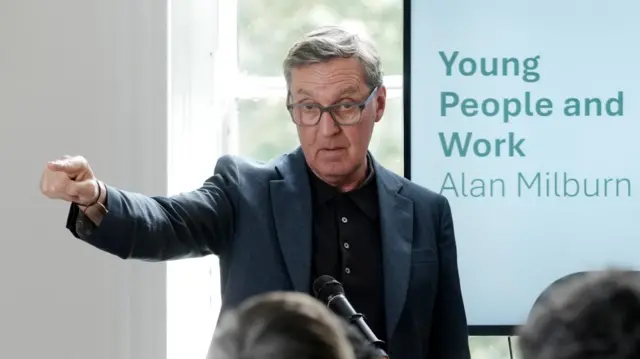
    Alan Milburn stands in front of a yellow sign at a press conference about the report.Image source, PA Media
    Image caption,

    Former cabinet minister Alan Milburn warns that young people not in employment, education or training are "probably the most significant challenge facing our country"

    There were 1,012,000 young people aged 16 to 24 not in education, employment or training (Neet) between January and March 2026, according to the latest data released earlier by the Office for National Statistics (ONS).

    If you're just catching up, we've compiled what you should know.

    The figures

    In the report, we learned that the number of Neets has increased by 89,000 compared with the same period last year. The figure is the highest it has been in 12 years - with the group representing 13.5% of all young people in the UK.

    The percentage is higher for young men (14.4%) than young women (12.5%) - but both have increased.

    The Milburn report

    After the release of the figures, we received a report on the issue authored by former cabinet minister Alan Milburn. He warned the number of young people who are Neet could rise to 1.25 million over the next five years.

    The report doesn't identify a single explanation for this, but listscontributing factors like fewer opportunities, mental and physical health and lack of support for those using the welfare system.

    It also estimates that the growing number of Neets could cost the UK £125bn annually.

    At a news conference after the report was published, Milburn said the issue is "probably the most significant challenge facing our country".

    What you're saying

    From selling crochet patterns to feeling like just a number, we've been hearing from youth throughout the day who are frustrated with job seeking. If you want to share your thoughts, you can get in touch here.

  13. 'Most applications lead to dead ends'published at 14:59 BST

    Kris Bramwell
    BBC News

    Savanna takes a selfie. She is wearing white framed glasses and a black top as well as a silver necklaceImage source, Savanna Cumberbatch

    Savanna Cumberbatch, 20, from Banbury in Oxfordshire has been unemployed for the last two years.

    She says she currently receives £316.98 a month in Universal Credit, and has applied for around 70 jobs in the last year in libraries, retail and hospitality.

    “The previous jobs I've had only lasted for about a month before the managers had to let me go," she says.

    “Because they were hospitality based, extremely intense and fast-paced, they felt I couldn't keep up... I knew that fast-paced environments weren't working for me due to my autism," she adds.

    Savanna says she has been working with a support worker and a work coach to help her apply for retail jobs, "but most lead to dead ends".

    Andy Wilkins wearing a black fleece, black glasses, and a white t-shirt.Image source, Andy Wilkins

    Meanwhile, Andy Wilkins, 26, in Southend-on-Sea in Essex has been out of work since leaving his last job six months ago.

    He has used up £2,000 in savings on "rising bills" and receives £400 a month through Universal Credit.

    He’s applied for entry-level jobs at supermarkets, retail stores and fast food chains.

    Wilkins, who spent four years studying Media and Communications at the University of East London, says: "The job market simply doesn't exist for my current industry. It's demoralising but equally damaging."

    Purple banner with your voice written on it in white
  14. The death of the Saturday jobpublished at 14:51 BST

    Paul Seddon
    Politics reporter

    A man in a white shirt stands at a coffee machine.Image source, Getty Images

    Much of today's report focuses on areas within the control of government – such as education, health and the welfare system.

    But Milburn is at pains to point out that longer-term trends in the economy have also worsened the employment prospects for young people.

    A huge proportion of youth employment, he says, is in sectors such as retail, accommodation and food services, areas that have seen a decline in jobs both due to the pandemic and the rise of online shopping.

    At the same time, he says that jobs in these sectors have become harder to access, with lower-level positions having become more complex and companies more likely to require prior experience, even for entry-level roles.

    Although it is not a big part of the report, Milburn says the rise of artificial intelligence and automation are only likely to create further pressure at the bottom end of the labour market.

  15. Where to find supportpublished at 14:43 BST

    If you're currently unemployed, out of work, education or training, you can use the resources below to find support - scroll through for details on each country's services.

    This Flourish post cannot be displayed in your browser. Please enable Javascript or try a different browser.

  16. BBC Verify

    How much more does it cost to hire a young person?published at 14:31 BST

    By Ben Chu, policy and analysis correspondent, and Nicholas Barrett

    The Milburn report notes that the cost and regulatory burden of employing young people has risen. The minimum wage, external for 21 to 24-year-olds has increased by 65% since 2019-2020 and currently stands at £12.71.

    For 18 to 20-year-olds it has increased by 76% and is now £10.85. And for under-18s it is up by 84% to £8.

    Chancellor Rachel Reeves also raised employers’ National Insurance Contributions (NICs) in her 2024 Budget which added to the cost to firms of employing workers.

    Some have linked these factors, external to rising rates of young people not in education, employment or training.

    However, a recent study by the Institute for Fiscal Studies (IFS), external concluded there is no clear evidence that higher minimum wages have been a “major driver” of young people becoming Neets.

    The IFS also pointed out that most young adults aged 18–20 are largely exempt from employer NICs, external.

    It also notes that the decline in employment among young people began at the end of 2022 – two years before the NICs changes were announced – so judges it unlikely to be the “primary cause” of increasing Neet rates.

  17. How politicians are reacting to reportpublished at 14:20 BST

    Kemi Badenoch
    Image caption,

    Conservative leader Kemi Badenoch

    We've been hearing reaction throughout the day from politicians around Westminster about today's report.

    Here's what they've had to say:

    Conservative Party leader Kemi Badenoch: "Labour entered government and hiked employers national insurance, hiked the minimum wage, loaded new regulations on businesses. The result? Employers stopped hiring young people"

    Former Health Secretary Wes Streeting: "Essential reading from Alan Milburn today ... Opportunity for young people must be a national cause."

    Reform UK's education spokesperson Suella Braverman: "Nearly a million young people not in work or education is a damning indictment of Labour policies which have crushed employers and made it easier for people to claim welfare than do a hard day’s work"

    Liberal Democrat Treasury spokesperson Daisy Cooper: "An entire generation of young people are seeing their hopes and dreams ripped away, just as they enter what is meant to be the best years of their life. Labour cannot claim they were not warned."

    The Green Party: "A parliamentary inquiry found 93% of student loan borrowers find repayment terms unreasonable. Education shouldn't mean decades of debt. The Green Party would scrap tuition fees entirely"

    Former Prime Minister Rishi Sunak: "Too many young people are finding the first rung of the jobs ladder further and further out of reach."

    Zack PolanskiImage source, PA Media
    Image caption,

    Green Party leader Zack Polanski

  18. Welfare takeaways - six ways the system fails young claimantspublished at 14:11 BST

    The report criticises the welfare system as having "badly designed incentives that deter participation and encourage benefit passivity".

    This failure, it says, plays out in six ways:

    1. 'Investment in benefits prioritised over employment support': Milburn estimates that in 2024/25, for every £1 spent on employment support for young people, around £25 was spent on benefits
    2. 'A failure to prioritise early intervention': The welfare system treats interactions with young people as administrative instead of as opportunities to make sure they're supported into work
    3. 'Insufficient practical help to enable young sick or disabled into work': Fitness-to-work assessments are criticised for failing to identify what barriers need to be removed to enable people to participate
    4. 'Support doesn't fit needs of job-seeking young sick or disabled': High caseloads for Jobcentre Plus coaches are cited as an issue, as they struggle to understand specific barriers facing claimants
    5. 'Incentives and process make participation less attractive for many': Claimants can be scared to risk income from benefits by seeking work, with no guarantee they'll get the same support if a job doesn't work out
    6. 'Assessment process locking in permanence on benefits': The welfare system for young people is dominated by those with mental health and neurodevelopmental conditions, but these often fluctuate, which is not reflected by capability assessments
  19. Neet disability gap is 'devastating', report sayspublished at 14:03 BST

    Emma Tracey
    Senior disability reporter

    Milburn makes clear that disabled people who cannot work should be supported by the benefits system, but describes the disability Neet gap as “devastating".

    He quotes recent figures showing that in 2024/2025, 29.6% of disabled young people were Neet in the UK compared with 8.7% of non-disabled peers. That’s a gap of 20.9 percentage points, which has barely changed in over a decade.

    Young disabled people described to him “almost without exception, systems that were not built for them".

    One autistic person shared that during an internship, they “really, really struggled with my neurodivergence there because it was not an environment that was made for people who are neurodivergent".

    Responding to the report, Abdi Mohamed, head of policy, research and influencing at disability equality charity Scope, says: “This report finally exposes how young disabled people in the UK have been failed on an unforgivable scale.

    “The Milburn Review now needs to develop bold recommendations with young disabled people, and the government must back them with the right support to fulfil their ambitions.”

  20. Milburn: 'It's not a silver bullet you need. It's a round of ammunition'published at 13:55 BST

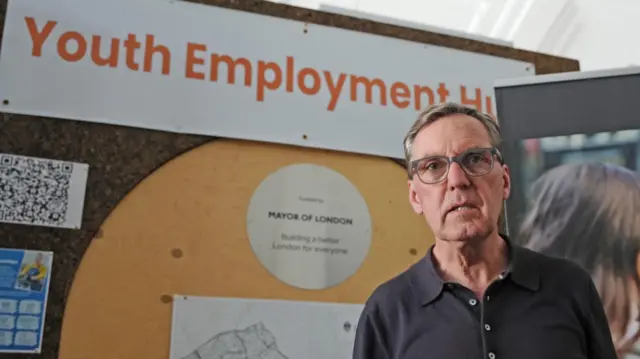
    Alan Milburn sits down during a broadcast interview. He is wearing a dark blue suit with a darker shirt underneath

    Alan Milburn has been speaking to the BBC following his news conference, and says "these problems go back decades".

    "We have got to stop saying: 'Here is the answer, here is the magic silver bullet.' It's not a silver bullet you need. It's a round of ammunition.

    "If you have not had a job by the time you are 24, you are probably not going to have a job by the time you are 34," he adds. "It just gets worse and worse."

    He says he's never seen an issue that resonates so strongly with the public in the decades he has spent working in politics and policy.