Summary

  • Young people "are caught in a perfect storm", says the author of a report on Neets - people aged 16-24 and not in employment, education or training

  • Alan Milburn says new figures, which show the number of Neets has risen to more than one million, are a "warning" that too many young people reach adulthood "to find the door of opportunity closed"

  • "This is more than an economic crisis, it is a moral one", says Milburn whose report estimates Neets cost the UK around £125bn a year - BBC Verify crunches the numbers

  • Analysis: The findings underscore how many young people want to work - but also how many are under-prepared for the world of work, and how that disadvantage may start from early childhood

  • Recommendations for potential reform and solutions won't come until the full report is released later this year

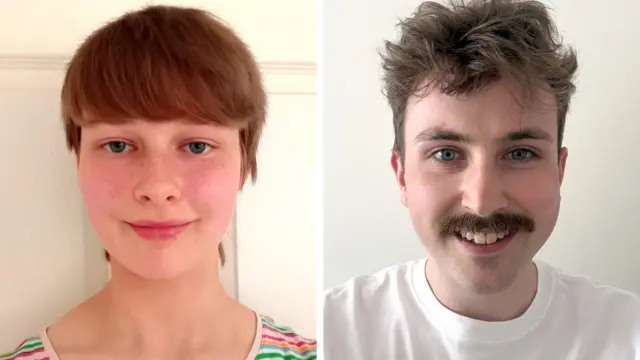
  • Zaynah, 24, says she has applied for more than 200 jobs in the past year, while Luke, 23, says it's "humiliating" to have 400 applications rejected - tell us your experience

  1. What is the government's current policy for encouraging young people into work?published at 12:57 BST

    Rachel Reeves looks on, with a black and blurred white background behind her.Image source, PA Media

    Following the release of Milburn's report on Neets, we've taken a look at the government's current policy for encouraging young people into work.

    In the November Budget, Chancellor Rachel Reeves announced £820m of funding to support 18 to 21-year-olds into education or paid employment.

    Those who have been Neet for more than 18 months were also to be given a six-month paid work placement. Anyone who refuses could risk being stripped of their benefits.

    The chancellor added that the government would fund a scheme to make apprenticeship training for under-25s at small and medium businesses "completely free".

    Association of Colleges head David Hughes said the money would enable colleges to support more young people so they do not end up not in education, employment or training.

    But he said more money was needed for adult education funding, and to ensure "millions of adults are not left behind by the tech and green revolutions we are seeing before our eyes".

  2. 'I'm selling crochet patterns online while looking for part-time work'published at 12:52 BST

    BBC Newsbeat

    Niamh Heron is currently out of work.

    The 21-year-old from North Yorkshire tells us she stopped working in September due to long-term poor health.

    "I am currently looking for part-time work that isn’t too physical. I make crochet and cards and I sell them to a local gift shop," Niamh says.

    "I sell crochet patterns on Etsy, I also am trying to get into UGC via TikTok and am interested in working in social media, just because it is so difficult to get a job."

    A man with his hands on his hips

    Aaron Diangienda, currently at college studying for a level 2 sports diploma, is also out of work.

    The 18-year-old from Brixton, south London has been looking for a job for a year and says he is keen to work in retail, but finding the right job has been tough.

    Aaron doesn’t want to go university and while he is looking for a job in sports specifically, he would gladly take any job.

    The teen is also re-taking his English and maths GCSE so he can improve his prospects.

    You can listen live to Newsbeat's Neet coverage at the top of the page.

  3. Listen: Young people share what it's like trying to get a jobpublished at 12:46 BST

    BBC Newsbeat

    BBC Newsbeat has been speaking to young people across the country today who are struggling with unemployment.

    They've been speaking to people currently studying and applying to jobs, as well as those with degrees failing to find jobs.

    You can listen live at the top of the page - as well as on Radio 1, Radio 1Xtra, Asian Network or catch up on BBC Sounds afterwards.

  4. Key figures from the report - at a glancepublished at 12:34 BST

    We've just heard from Alan Milburn following the release of his report into the number of young people who are Neet - not in employment, education or training, which he warns could rise to 1.25 million over the next five years.

    Here's some of the key statistics we've pulled out from the report:

    • Six in 10 Neets have never had a job. In 2005, this was four in 10, the report says
    • But 84% of Neet young people surveyed want a job or training, it adds
    • Entry-level jobs have sharply declined, with the number of mid- and lower-skilled jobs in the economy falling by around 1.6 million over the past 20 years - according to data from the Office for National Statistics (ONS)
    • Vacancies in hospitality have halved in the last four years alone, ONS data also shows
    • Citing a separate government report, apprenticeship starts among young people have fallen by 35% since 2017
    • The proportion of people who say they are Neet because of a work-limiting health condition has increased by 70% over the past decade, in data published by The Health Foundation
    • While the number of those citing a mental health condition has almost doubled to more than four in 10, according to the Youth Futures Foundation
    • Of people who became Neet for health reasons between 2017-2019, almost eight in 10 are still Neet more than two years later, the Resolution Foundation says
  5. Social media and smartphones may have an impact, Milburn sayspublished at 12:27 BST

    Milburn is asked how social media and smartphones have affected the issue.

    He says the evidence is that "young people are living a different life today".

    Milburn adds that disrupted sleep patterns, doomscrolling and being awake in the early hours seem to be having an impact.

    He says distress, anxiety and depression among young people are rising and "we have to really, really look" at mental health seriously as an issue.

    The news conference has now ended - we’ll bring you a recap of what we’ve just heard shortly.

  6. Is Milburn going to urge the government to rethink youth minimum wage?published at 12:23 BST

    The BBC asks Milburn if he is urging the government to rethink the increases in youth minimum wage and employee national insurance.

    Milburn says there is "no doubt" employers are concerned about this, but many already pay more than the youth minimum wage, so the change has had a "minimal impact" on them.

    He adds that things have become more difficult at the "margins".

    "What we've got to do, as I say, is make sure that if we want to have more young people in work, then we've got to minimise the risks for the employer, we've got to maximise their incentives.

    "But no one should pretend that the reason we've got the Neet problem today [...] that somehow or other that was triggered two years ago."

  7. Milburn compares UK and Dutch vocational education systemspublished at 12:14 BST

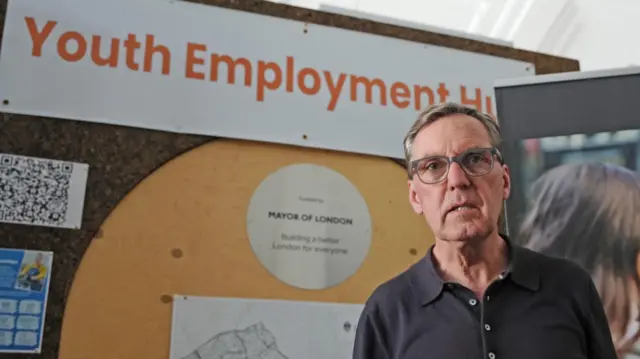
    Former health secretary Alan Milburn speaks to the media on the publication of the interim Milburn Report into Young People and Work, at West Library Youth Employment Hub, north LondonImage source, PA

    Asked whether drops in spending for further education have been part of the problem, Milburn responds, "yes it is".

    He goes on to compare the UK with other countries such as Holland - which has one third the Neet rate of the UK.

    Although there are some other differences, he says the main difference is fundamentally structural.

    Holland makes vocational education and investment in it a priority. The system is also "much more integrated", Milburn says.

    Although the UK can't simply adopt that system, he says there should be something to learn from it.

  8. Milburn: This cannot be just a 'boring report' but a 'change moment'published at 12:04 BST

    Milburn is asked whether businesses understand the current employment crisis.

    He says big businesses that employ lots of young people in entry-level jobs do understand what young people are facing and want to help.

    But, Milburn says, the real question is not whether they understand, but what they are going to do about it.

    He says this can't just be a "boring report" and has got to be a "change moment", adding that if society keeps ignoring this issue, "we will keep getting what we keep getting".

  9. Opportunities for young people need to be flexible, Milburn sayspublished at 11:55 BST

    Alan Milburn speaking to the press at an event in North London

    Milburn is now taking questions.

    He is asked whether he thinks there should be a return to some form of national service - not just military but civic service - to help young people develop their skills.

    Milburn says that opportunities need to be flexible and meet people halfway.

    "So we've got to think about what does that look like? Could be a job, could be an apprenticeship, could be a supported internship, could be some volunteering," he says.

    "That is something that we'll be exploring in the weeks and months ahead".

  10. BBC Verify

    Are Neets costing £125bn a year?published at 11:51 BST

    By Ben Chu, policy and analysis correspondent

    The Milburn report contains an estimate that the total annual cost to the country of just under one million young people not being in employment, education or training (Neet) is £125bn and claims this is more than the country spends on education.

    The details of the report show that the £125bn per year figure is mainly made up of estimates of the lost economic potential of young Neets, rather than direct state spending on benefits for the group.

    £38bn a year is ascribed to lost direct economic potential (the fact that they are not currently in full-time work) and £63bn a year to additional economic “scarring” (due to them being less likely to work in future).

    The direct cost of benefit spending on Neets is put at £3.2bn a year and £200m a year on increased health spending.

    There is also a figure of £2.7bn a year in estimated “wellbeing impacts” on the affected young people - including worse mental health and social isolation.

    The Institute for Fiscal Studies has estimated, external that total public spending on education in 2024-25 - including early years, schools and universities - was £122bn.

  11. Milburn says government effort 'deserves acknowledgement' but not enoughpublished at 11:48 BST

    Former health secretary Alan Milburn speaks to the media on the publication of the interim Milburn Report into Young People and Work, at West Library Youth Employment Hub, north London.Image source, PA

    Milburn says the government has made a start in trying to reset the system - pointing to apprenticeship reforms among other examples.

    He says the effort "deserves acknowledgement" but "no one should pretend they're enough - either in scale or design".

    Milburn says it's not a new programme that's needed - "new initiatives laid on top of a system that is broken cannot work" - and adds that the old welfare state was "built for a different age".

    He stresses there's still an obligation to protect those who cannot work, saying the system must be more than just a safety net - it should also be a springboard.

    Calling for a fundamental system reset, Milburn says this should be a priority for government, before he moves on to questions.

  12. Welfare system giving young people a cheque but not a plan - Milburnpublished at 11:39 BST

    Continuing his remarks, Milburn says the welfare system is "sucking more people in" and keeping them there for longer.

    If this continues, he predicts that one in 20 of today's five-year-olds will be on incapacity benefit by the time they are 22 years old.

    He adds that only one in five are getting meaningful support from the welfare system, saying it is writing "young people a cheque" but doesn't help them build a plan.

    "That is a catastrophic failure," he says.

  13. Milburn rejects 'caricature of a generation not interested in work'published at 11:36 BST

    Alan MilburnImage source, PA Media

    Milburn then says there is an elephant in the room - the question of "how much are young people themselves to blame?"

    He asks if they've become "softer, flakier, less resilient, more willing to blame mental health than actually suffer from it".

    "That is not what I've found," he says.

    Milburn says he does not accept the "caricature of a generation that is not interested in work".

    He says there is no shortage of effort from young people - "the shortage is of opportunity and of support".

  14. 'The great British promise for this generation is being broken'published at 11:34 BST

    Milburn says there is "deep concern bordering on a fear" about the future facing young people.

    He adds: "For decades it's been that each generation can do better than the last - that great British promise for this generation is being broken.

    "The one million young people who are Neet are its leading casualties."

    Milburn goes on to say that a jobs boom in recent decades "has largely passed young people by".

    He points to entry level jobs, Saturday jobs and apprenticeships all falling.

    He adds: "It's striking that almost one third of today's Neets have good GCSEs and 15% have a degree."

    He also says there has been a change in who is becoming Neet.

    "For the first time, in perhaps two centuries, changes in health, especially mental health, are impeding economic growth and causing a contraction in the supply of labour."

  15. Young people facing 'perfect storm', Milburn sayspublished at 11:29 BST

    Milburn says the problem with youth unemployment "is getting worse".

    He says young people are facing a "perfect storm", and their detachment from the labour market is no longer temporary, but becoming permanent.

    He adds that being Neet can have a "scarring impact", with the lifetime loss approaching £300,000. He says this "is a deposit never saved, home never bought, pension never built, hope of a good life never realised".

    Milburn says the question today is not whether the current position is unfortunate, but whether it is sustainable.

    He also says "this is more than an economic crisis, it is a moral one".

  16. Neet 'probably the most significant challenge facing our country' - Milburnpublished at 11:21 BST

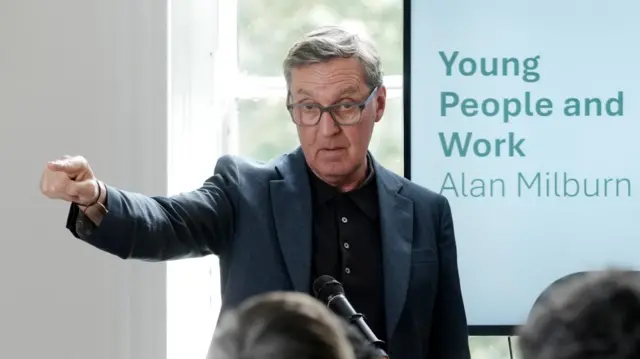
    Alan Milburn pointing with his right handImage source, PA Media

    Alan Milburn begins by saying the issue of young people who are Neet is "probably the most significant challenge facing our country".

    He describes today's figures as "a warning that far too many young people are reaching adulthood to find the door of opportunity closed".

    He says Neet is an "ugly term" with "ugly consequences", such as "aspirations thwarted" and "confidence drained".

    Milburn says "every young person has something to give [...] every one of them should have opportunity to learn or to earn".

  17. Crisis of opportunity facing young people 'ignored for too long', McFadden sayspublished at 11:17 BST

    Pat McFadden

    We're now turning to the news conference being held in North London following the report's release.

    Pat McFadden starts by calling the report "powerful".

    He says everyone is here because there's a "crisis of opportunity" facing young people that's been "ignored for too long".

    "I was struck by the proportion of young people not only not working but who had never experienced the sense of pride and purpose that comes with having a job."

  18. What will the recommendations be from the report's findings?published at 11:15 BST

    Paul Seddon
    Politics reporter

    Milburn says that detailed recommendations will come in his full report, expected in the autumn.

    But there are already some clues in the report about the likely direction of travel.

    One is on the welfare state – where it is clear he thinks the ever-rising sums paid out in health-related benefits are not being matched by appropriate support to help people find jobs that they are able to perform.

    Another is the NHS, which he says does not recognise youth employment as a “core health outcome”, and has done little to engage with employers about health-related workplace adjustments or how people with conditions can be phased back into jobs.

    He also says schools need to be more accountable for how well they prepare pupils for the workplace – pointing out that this does not currently form part of Ofsted reports.

    One area to watch closely will be what he says about devolution, which he says has so far led to “partial responsibility without full control”.

    New strategic council authorities, he says, have “huge potential to enact change” – but often lack the resources required to deliver this.

    And there is quite a critical note of the government’s ongoing shake-up of council areas, which he says has added “further uncertainty at the worst possible time”.

  19. Four things that stand out to me in the reportpublished at 11:12 BST

    Paul Seddon
    Politics reporter

    I’ve been combing through the report, here’s four things that jumped out to me:

    1. Mental health looms large – it’s a huge theme of the report, both to explain growing inactivity and, interestingly, a caution among companies when it comes to hiring young people. Milburn is keen to stress young people aren’t “inventing their distress”, but concludes they’re more likely to disclose conditions, with employers feeling ill-equipped to offer the right support
    2. Covid casts a long shadow – Milburn says the pandemic took away jobs in places such as bars and shops. It also disrupted schooling, worsened mental health and removed chances for workplace socialisation, he says
    3. The death of the Saturday job – as well as the pandemic, longer term trends such as online shopping mean fewer jobs in sectors like retail that employ a lot of younger people. At the same time, employers are also more likely to demand prior experience even for entry-level positions, the report finds
    4. Milburn treads carefully on Labour record – the former Labour minister singles out several areas of government policy for praise. But he’s more circumspect about more recent economic policies. For example, he acknowledges raising the youth minimum wage has increased the cost of hiring young people, but says the impact is “mixed and incomplete”
  20. Alan Milburn to speak shortly - watch livepublished at 11:09 BST

    The news conference has just begun with Work and Pensions Secretary Pat McFadden delivering some opening remarks.

    McFadden will speak briefly before the author of today's report, former minister Alan Milburn, begins.

    We'll bring you the key lines and you can watch along by clicking watch liveabove.