Summary

  • PM Keir Starmer says a report on Neets - 16 to 24-year-olds not in employment, education or training - is "sobering"

  • The review, authored by Alan Milburn, finds the number of Neets has risen to more than one million, the highest it's been in 12 years, and there are fewer entry-level jobs - other key takeaways

  • Earlier, Milburn said young people are "caught in a perfect storm" and described it as being "more than an economic crisis, it is a moral one"

  • The report also finds that Neets cost the UK an estimated £125bn a year - BBC Verify crunches the numbers

  • Analysis: There are several months before the second half of the report, containing recommendations, is unveiled - but there may be enough already to spark action on a problem that can cause lifelong scars

  • Wondering how to stand out when applying for jobs? A careers adviser shares some tips

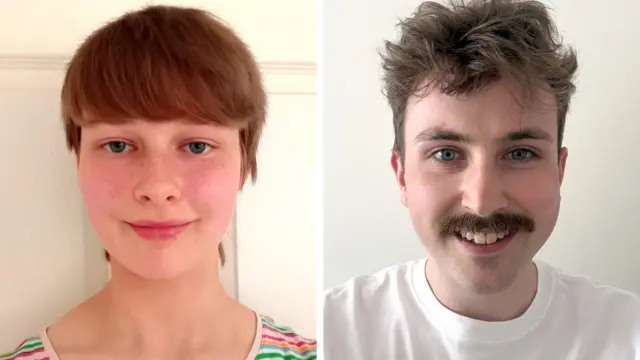
  • Holly, 24, says she's been applying for more than 50 jobs a week but is lucky to "even get a rejection email", while 23-year-old Luke says it's "humiliating" to have applications rejected

  1. 'No silver bullet' for Neet crisis: What we've heard todaypublished at 17:16 BST

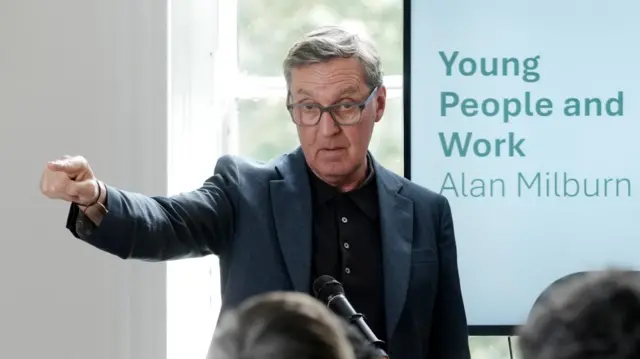
    Former heath secretary Alan Milburn points as he delivers a speech following his report looking at young people and workImage source, PA Media
    Image caption,

    Former heath secretary Alan Milburn has warned that the bottom rungs of the work ladder are proving harder to climb than ever before

    More than a million young people aged 16 to 24 are not in education, employment or training (Neet) according to the latest data from the Office for National Statistics (ONS) - with a new report warning that things are only "getting worse".

    Former Health Secretary Alan Milburn, the report's author, warns that one in six young people could be Neet in the next five years unless urgent action is taken. Our political reporter combs through the findings here.

    Throughout the day young people have been sharing their experiences with the BBC about just how difficult it has become to find work. One 24-year-old explains she is applying to over 50 jobs a week.Another has shared her worries about having to move back to her village and be trapped in a "minimum wage life".

    Milburn told the BBC that a "round of ammunition" is needed to solve the problem, rather than a "magic silver bullet".

    A second report on what can be done to address the issue is expected in a few months time.

    But there may be enough published already to spark action on a problem that can cause lifelong scars, writes our deputy economics editor.

    We are ending our live coverage here, but you can read more about the report and the ONS figures in our news article.


  2. Big disadvantage gap for students five years after their GCSEspublished at 17:13 BST

    Hayley Clarke
    Education reporter

    The Department for Education has also released figures today, on where students are after their GCSEs.

    Today’s figures look at where those who finished Year 11 in 2019 were in 2024.

    These show that there are “substantial differences” in outcomes for disadvantaged and non-disadvantaged students.

    The gap is widest five years after GCSEs, at 18.9 percentage points. Pupils are defined as disadvantaged if they were eligible for pupil premium when they were in Year 11 - including being eligible for free school meals or being a looked after child.

    Over a quarter of these disadvantaged students are recorded as not in education, apprenticeships or employment five years later, or 27.6%. This is compared to just under one in 10 non-disadvantaged students, or 9.4%.

    Responding, the Department for Education said today's data lays bare "years of failure" it inherited. It adds that it is taking decisive action to halve the disadvantage gap.

  3. Young people hurt by austerity, says former careers workerpublished at 17:03 BST

    Kay Gregory in Manchester worked in the careers service for 27 years, which later became known as Connexions.

    She says these services "worked closely with young people to support them into employment, education and training", but were cut under austerity.

    She adds: "Sadly, young people’s services have never recovered. I believe this has contributed to the current situation."

    But Jim Brown from Warwick says he struggles to find young people to work at his foundry - a factory where metals are poured.

    "They are not interested in industrial-type jobs, so my employees tend to be older," he says.

    He says it is "virtually impossible" for him to find employees as his workforce ages. He has an immigration licence and recruits people from overseas, he adds.

    Purple banner with "Your Voice" written on it in white font, with dark purple paintbrush strokes behind
  4. BBC Newsbeat inundated with messages from frustrated jobseekerspublished at 16:58 BST

    Jordan Kenny
    BBC Newsbeat presenter

    As BBC Newsbeat’s presenter today, I’ve been hearing from people all day telling me about difficulties they face getting a job and the challenges involved in securing regular work.

    We’ve been talking about Arsenal winning their first Premier League in ages this week and were at Radio 1’s Big Weekend music festival last weekend.

    But this is a story that’s cut through and resonated with our audience more than anything I can remember for a long time.

    The text console that listeners use to message into Radio 1, 1Xtra or Asian Network has been lighting up all day with loads of messages.

    During our 12:45 programme, I saw texts and WhatsApp messages come in, with our audience saying things like: “The job market is a joke.”

    Jess, a 22-year-old law masters graduate, said she was unable to get relevant work experience while studying and said the system was “set up to favour wealthier students”.

    Another person who supports young people in Wales with getting new opportunities said the lack of opportunities was a “huge problem”.

    “There is nothing out there for them, no funding, no apprenticeships,” they messaged in.

    We’ll be doing it all again in our 17:45 programme, where I’ll be hearing from jobseekers who’ve put in hundreds of applications, as well as others who are just fed up of trying.

    You can listen live to Newsbeat at 17:45 on Radio 1, 1Xtra and Asian Network or catch up on BBC Sounds afterwards.

  5. 'Punishing' job market and no help from schools, young people saypublished at 16:47 BST

    Composite image of Abigail Goodge and Joshua HopkinsImage source, Abigail Goodge/Joshua Hopkins
    Image caption,

    Abigail Goodge (L) and Joshua Hopkins (R)

    The job market is "punishing" for young people, says 26-year-old Joshua Hopkins from Glasgow.

    He recently started working at a law firm and is halfway through his three-year CIMA studies to qualify as a chartered accountant. But he describes the barriers as "relentless".

    "We’re told to be ambitious, get qualifications, build experience but the reality is that the support simply isn’t there," he says.

    What's needed in his view is "investment in apprenticeships, vocational training, and early‑career support".

    Meanwhile, 16-year-old Abigail Goodge in Worcestershire says finding work at her age is "impossible".

    There are "hardly any jobs" in her local area and the few that are available require you to be 18 or have experience, she says.

    "I think the failure also lies somewhat with the school system," she adds, describing little help with CV writing or interview skills.

    While some of these things are taught in her sixth form, she says those who want part-time jobs before then "have to figure it out alone".

    Purple banner with "Your Voice" written in white font with dark purple paintbrush strokes behind
  6. What are other countries doing differently?published at 16:36 BST

    Hayley Clarke
    Education reporter

    The number of young people out of work, training or education in the UK is three times higher than Holland and twice of Ireland, Milburn said.

    So, why might that be, and what are these countries doing differently?

    A report, external from the Youth Futures Foundation from 2025 looked into what they’re doing in the Netherlands.

    The Neet rate there is among the lowest in the EU and OECD countries, remaining steadily under 5% in the last decade, it found.

    The report says the Netherlands has implemented significant reforms to support youth unemployment over the past two decades, including employment incentives like wage subsidies.

    Interventions at national and regional levels include financial support, tailored career guidance, vocational training and structural reforms.

    Career guidance in the Netherlands is mandatory in secondary school, and includes information on vocational education.

    The charity says the success in the Netherlands is due to many variables – including effective implementation and coordination at local levels, and the availability of funding.

  7. BBC Verify

    Does the UK have the second-worst Neet rate in Europe?published at 16:27 BST

    By Ben Chu and Daniel Wainwright

    The Milburn report says that, among European Union countries, only Romania has a higher rate of young people, external not in employment, education or training - Neet - than the UK.

    The UK does now have a higher rate of Neets than most of the EU but differences in the data sources used make it difficult to show exactly where the country ranks.

    The EU figures come from Eurostat,, external which uses ages 15 to 24, while the UK’s come from the Office for National Statistics (ONS) and use a slightly different age range: 16 to 24.

    That means the EU countries’ rates could look better thanks to 15-year-olds being more likely to still be in school.

    A better comparison we can make is to look at figures for Neets aged 18 to 24, which are collected both by Eurostat, external and the ONS, external.

    The UK was in the bottom four with a similar rate to Lithuania and Bulgaria and was a bit better than Romania.

    The rankings change slightly depending on whether UK figures are based on all of 2025 (which Eurostat does for EU countries) or the end of 2025 (which Alan Milburn’s report does).

    But that doesn’t change the overall pattern - the UK has fallen from mid-table to below most EU member-states.

  8. What you're saying: 'Demoralising' job hunts feel like 'luck of the draw'published at 16:16 BST

    Holly Jackson looking directly at the cameraImage source, Holly Jackson

    We've been hearing from young people from across the country about the difficulties they face in trying to find a job.

    Here's what they had to say.

    • Holly Jackson, 24, from Seaford in East Sussex, says she's been applying for more than 50 jobs a week but is lucky to "even get a rejection email". She adds that it feels "like luck of the draw" and as if "you're just a number"
    • "It's humilitating", says 23-year-old Luke, who studied product design at Central Saint Martins, but cannot find a job. He has applied for more than 400 positions and has only had one interview as a cleaner, which he didn't get
    • Meanwhile, Andy Wilkins, 26, in Southend-on-Sea, Essex, says: "The job market simply doesn't exist for my current industry. It's demoralising but equally damaging"
    • "The more jobs I apply for and the more I get rejected, the worse I feel," says Chelsea Duke, 23, from Pontypridd in Wales
    • Niamh Heron, 21, from North Yorkshire, says she is selling crochet patterns and cards on Etsy while she looks for a part-time job after stopping work in September due to long-term poor health
    your voice banner
  9. What factors are putting employers off from hiring youth?published at 16:09 BST

    Baz Ramaiah is now being asked what hurdles employers are seeing to put them off employing young people.

    He says the simple cost of doing business is making it harder to employ young people.

    More young people also have mental health challenges and employers don't feel they have the resources to be able to support these needs, he adds.

    Ramaiah says that the government needs to be doing things to take away these risks for employers and take away the burden that comes with taking on more challenging and inexperienced young people.

    The Q&A has now ended, but keep following along as we bring you more info about today's report.

    The Your Voice logo is printed on a purple background
  10. So what's the solution?published at 16:06 BST

    Nick Eardley is asked the solutions are to the employment problems facing youth.

    He points out that today's report was not the final one and another will be released in autumn. He adds that Milburn says that he does not think there is an easy or quick solution.

    Eardley also highlights that Milburn has said that current reforms the government have introduced, including increasing the youth minimum wage and national insurance for employees have been issues brought up by employers. That issue will be raised with the chancellor, Rachel Reeves, he says.

    The words 'your voice' are written over a purple banner
  11. Isn't this a problem impacting everyone?published at 16:02 BST

    Nicola asks if this is a problem for all age groups. She says she is 36 and has a strong CV and career history, but is applying for jobs and hearing nothing back.

    Jordan Kenny from BBC Newsbeat says it's a similar story for many, but that there definitely isn't an "upper barrier" for who will experience difficulty in finding employment and finding jobs. Since today's report deals with specifically 16-24 year-olds, that has been the focus of the conversation, he adds.

    "It doesn't mean these issues apply exclusively to 16-24 year olds - people who are older may experience the same thing," he says.

    your voice banner
  12. What's the Netherlands doing differently?published at 15:58 BST

    Back at the Q&A, the BBC's Netherlands correspondent Anna Holligan is asked about the country being referenced in Milburn's report for tackling the Neet issue more effectively than the UK.

    Younger people in Holland are given "no space for dead ends or dropouts" because the system is designed to prevent that, she says.

    She explains that the alternative to education is "vocational training and education". This is when you spend one day a week in education on top of three to four days working as an apprentice.

    "And that seems to work here," says Holligan, adding that once young people in the Netherlands are out of the "tricky" 16-24 age bracket, they are kept in work and continue in employment.

    Purple banner reading 'Your Voice'
  13. PM says Neets report 'sobering'published at 15:55 BST

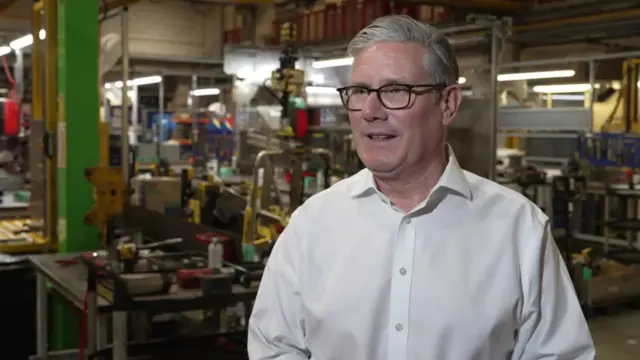
    Starmer speaking at a training facility in west LondonImage source, Pool

    Away from the Q&A, we've just heard from Prime Minister Keir Starmer.

    "This is a real sobering report, and we cannot afford, we will not allow, a lost generation," he says, stating that the government "clearly needs to [do] more"

    Speaking at a training facility in west London where he met with apprentices, the prime minister says Alan Milburn's report shows the issue of young people out of work is a "complex issue" with "no single thing" responsible.

    The PM says he is "pleased" by measures the government is putting in place to tackle the issue.

    "If a young person's been out of work for 18 months, we're guaranteeing a job for them for six months, we know from previous experience that that gives them a good chance of maintaining that job, so some of those measures are in place," Starmer says.

  14. Is an increased retirement age the cause?published at 15:50 BST

    Head of research at Youth Unemployment UK Baz Ramaiah is asked whether there is a correlation between no work for young people and an increase in the retirement age.

    He says that there may be a point there, seeing as while the number of people employed has decreased since 2000, the number of people over the age of 25 and under the retirement has increased.

    But Ramaiah says the reason a lot of people are out of work is related to health issues. Meanwhile, he adds, entry levels jobs are also decreasing.

    So the real issue is ensuring people have health support to get into work and providing working opportunities at an entry level for young people, he says.

    The Your Voice logo is seen on its purple backgroundImage source, bbc
  15. Why are numbers spiralling?published at 15:41 BST

    BBC political correspondent Nick Eardley is asked why the numbers have spiralled.

    He says there are many issues conspiring against young people.

    He says that opportunities are down, entry level jobs are down, apprenticeships in the UK are down and the conclusion of the report is that the bottom rungs of the work ladder are proving harder to climb than ever.

    A purple banner displays the words 'Your Voice'
  16. A very quick guide to the UK's Neetspublished at 15:37 BST

    While we wait to hear more from our experts, let's turn our attention for a moment to who Neets are, and how many young people in the UK are out of work.

    Here's a general refresher on what being Neet means, and the UK is trying to tackle the issue in different parts of the country.

    This Flourish post cannot be displayed in your browser. Please enable Javascript or try a different browser.

  17. Watch live as we answer your Neet-related questionspublished at 15:25 BST

    We have a host of experts answering your questions on the growing number of Neets in the UK - including our political correspondent Nick Eardley, our Netherlands-based correspondent Anna Holligan, Newsbeat reporter Jordan Kenny and head of research at Youth Unemployment UK Baz Ramaiah.

    They'll be tackling your questions about Alan Milburn's report and why the number of Neets is growing.

    To follow along, click watch live at the top of this page.

    your voice your bbc news banner. it reads 'your voice' in white across a purple background.
  18. Can Neets take comfort from the 'lost generation' of 2008?published at 15:16 BST

    Katie Williams
    Live reporter

    Scott Wilson-Laing poses with bottleImage source, Scott Wilson-Laing / WL Distillery
    Image caption,

    Scott Wilson-Laing graduated in 2008 and is now the founder and CEO of a distillery

    Scott Wilson-Laing graduated into the financial crisis in 2008. His original plan was to join the Royal Air Force - but recruitment for that was "upended", he tells me. Graduate openings also started to "quieten down".

    A strategic path of school, degree, then work "wasn’t really what happened to me and most people I graduated with," Wilson-Laing says.

    He describes various jobs over the years that followed, including in steel manufacturing and IT. No experience is bad experience, in his view. Just before the Covid pandemic, Wilson-Laing decided to set up his own distillery business.

    "Resilience" is his advice to young people today - although he appreciates it’s "a lot easier said than done". He also acknowledges that the world of work is "very different today" than it was in 2008.

    Bobby Seagull in classroom environment wearing suit and tieImage source, Bobby Seagull
    Image caption,

    Bobby Seagull is now a maths teacher, broadcaster and writer

    Maths teacher, broadcaster and writer Bobby Seagull graduated shortly before the financial crash and was working at Lehman Brothers as a trader at the time.

    He thinks the long-term impact is that people his age have had "very zigzaggy" careers. He says his friends have become everything from comedians to entrepreneurs.

    One positive, in his view, is that dislocation makes people "much more flexible in their thinking". That said, he adds: "I really do fear for the future of the job market."

  19. Just catching up? Here's what to knowpublished at 15:08 BST

    Jack Grey
    Live reporter

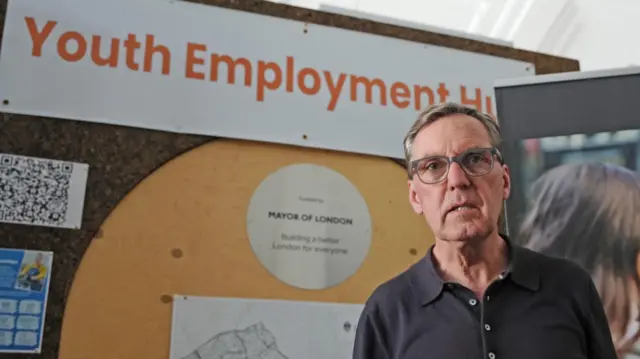
    Alan Milburn stands in front of a yellow sign at a press conference about the report.Image source, PA Media
    Image caption,

    Former cabinet minister Alan Milburn warns that young people not in employment, education or training are "probably the most significant challenge facing our country"

    There were 1,012,000 young people aged 16 to 24 not in education, employment or training (Neet) between January and March 2026, according to the latest data released earlier by the Office for National Statistics (ONS).

    If you're just catching up, we've compiled what you should know.

    The figures

    In the report, we learned that the number of Neets has increased by 89,000 compared with the same period last year. The figure is the highest it has been in 12 years - with the group representing 13.5% of all young people in the UK.

    The percentage is higher for young men (14.4%) than young women (12.5%) - but both have increased.

    The Milburn report

    After the release of the figures, we received a report on the issue authored by former cabinet minister Alan Milburn. He warned the number of young people who are Neet could rise to 1.25 million over the next five years.

    The report doesn't identify a single explanation for this, but listscontributing factors like fewer opportunities, mental and physical health and lack of support for those using the welfare system.

    It also estimates that the growing number of Neets could cost the UK £125bn annually.

    At a news conference after the report was published, Milburn said the issue is "probably the most significant challenge facing our country".

    What you're saying

    From selling crochet patterns to feeling like just a number, we've been hearing from youth throughout the day who are frustrated with job seeking. If you want to share your thoughts, you can get in touch here.

  20. 'Most applications lead to dead ends'published at 14:59 BST

    Kris Bramwell
    BBC News

    Savanna takes a selfie. She is wearing white framed glasses and a black top as well as a silver necklaceImage source, Savanna Cumberbatch

    Savanna Cumberbatch, 20, from Banbury in Oxfordshire has been unemployed for the last two years.

    She says she currently receives £316.98 a month in Universal Credit, and has applied for around 70 jobs in the last year in libraries, retail and hospitality.

    “The previous jobs I've had only lasted for about a month before the managers had to let me go," she says.

    “Because they were hospitality based, extremely intense and fast-paced, they felt I couldn't keep up... I knew that fast-paced environments weren't working for me due to my autism," she adds.

    Savanna says she has been working with a support worker and a work coach to help her apply for retail jobs, "but most lead to dead ends".

    Andy Wilkins wearing a black fleece, black glasses, and a white t-shirt.Image source, Andy Wilkins

    Meanwhile, Andy Wilkins, 26, in Southend-on-Sea in Essex has been out of work since leaving his last job six months ago.

    He has used up £2,000 in savings on "rising bills" and receives £400 a month through Universal Credit.

    He’s applied for entry-level jobs at supermarkets, retail stores and fast food chains.

    Wilkins, who spent four years studying Media and Communications at the University of East London, says: "The job market simply doesn't exist for my current industry. It's demoralising but equally damaging."

    Purple banner with your voice written on it in white