Summary

  1. Watch live as we answer your Neet-related questionspublished at 15:25 BST

    We have a host of experts answering your questions on the growing number of Neets in the UK - including our political correspondent Nick Eardley, our Netherlands-based correspondent Anna Holligan, Newsbeat reporter Jordan Kenny and head of research at Youth Unemployment UK Baz Ramaiah.

    They'll be tackling your questions about Alan Milburn's report and why the number of Neets is growing.

    To follow along, click watch live at the top of this page.

    your voice your bbc news banner. it reads 'your voice' in white across a purple background.
  2. Can Neets take comfort from the 'lost generation' of 2008?published at 15:16 BST

    Katie Williams
    Live reporter

    Scott Wilson-Laing poses with bottleImage source, Scott Wilson-Laing / WL Distillery
    Image caption,

    Scott Wilson-Laing graduated in 2008 and is now the founder and CEO of a distillery

    Scott Wilson-Laing graduated into the financial crisis in 2008. His original plan was to join the Royal Air Force - but recruitment for that was "upended", he tells me. Graduate openings also started to "quieten down".

    A strategic path of school, degree, then work "wasn’t really what happened to me and most people I graduated with," Wilson-Laing says.

    He describes various jobs over the years that followed, including in steel manufacturing and IT. No experience is bad experience, in his view. Just before the Covid pandemic, Wilson-Laing decided to set up his own distillery business.

    "Resilience" is his advice to young people today - although he appreciates it’s "a lot easier said than done". He also acknowledges that the world of work is "very different today" than it was in 2008.

    Bobby Seagull in classroom environment wearing suit and tieImage source, Bobby Seagull
    Image caption,

    Bobby Seagull is now a maths teacher, broadcaster and writer

    Maths teacher, broadcaster and writer Bobby Seagull graduated shortly before the financial crash and was working at Lehman Brothers as a trader at the time.

    He thinks the long-term impact is that people his age have had "very zigzaggy" careers. He says his friends have become everything from comedians to entrepreneurs.

    One positive, in his view, is that dislocation makes people "much more flexible in their thinking". That said, he adds: "I really do fear for the future of the job market."

  3. Just catching up? Here's what to knowpublished at 15:08 BST

    Jack Grey
    Live reporter

    Alan Milburn stands in front of a yellow sign at a press conference about the report.Image source, PA Media
    Image caption,

    Former cabinet minister Alan Milburn warns that young people not being in employment, education or training as "probably the most significant challenge facing our country"

    There were 1,012,000 young people aged 16 to 24 not in education, employment or training (Neet) between January and March 2026, according to the latest data released earlier by the Office for National Statistics (ONS).

    If you're just catching up, we've compiled what you should know.

    The figures

    In the report, we learned that the number of Neets has increased by 89,000 compared with the same period last year. The figure is the highest it has been in 12 years - with the group representing 13.5% of all young people in the UK.

    The percentage is higher for young men (14.4%) than young women (12.5%) - but both have increased.

    The Milburn report

    After the release of the figures, we received a report on the issue authored by former cabinet minister Alan Milburn. He warned the number of young people who are Neet could rise to 1.25 million over the next five years.

    The report doesn't identify a single explanation for this, but listscontributing factors like fewer opportunities, mental and physical health and lack of support for those using the welfare system.

    It also estimates that the growing number of Neets could cost the UK £125bn annually.

    At a news conference after the report was published, Milburn said the issue is "probably the most significant challenge facing our country".

    What you're saying

    From selling crochet patterns to feeling like just a number, we've been hearing from youth throughout the day who are frustrated with job seeking. If you want to share your thoughts, you can get in touch here.

  4. 'Most applications lead to dead ends'published at 14:59 BST

    Kris Bramwell
    BBC News

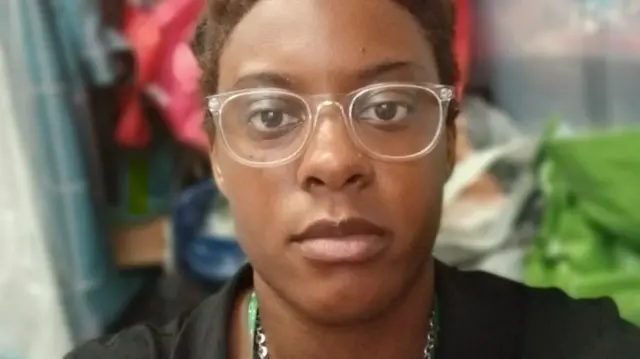
    Savanna takes a selfie. She is wearing white framed glasses and a black top as well as a silver necklaceImage source, Savanna Cumberbatch

    Savanna Cumberbatch, 20, from Banbury in Oxfordshire has been unemployed for the last two years.

    She says she currently receives £316.98 a month in Universal Credit, and has applied for around 70 jobs in the last year in libraries, retail and hospitality.

    “The previous jobs I've had only lasted for about a month before the managers had to let me go," she says.

    “Because they were hospitality based, extremely intense and fast-paced, they felt I couldn't keep up... I knew that fast-paced environments weren't working for me due to my autism," she adds.

    Savanna says she has been working with a support worker and a work coach to help her apply for retail jobs, "but most lead to dead ends".

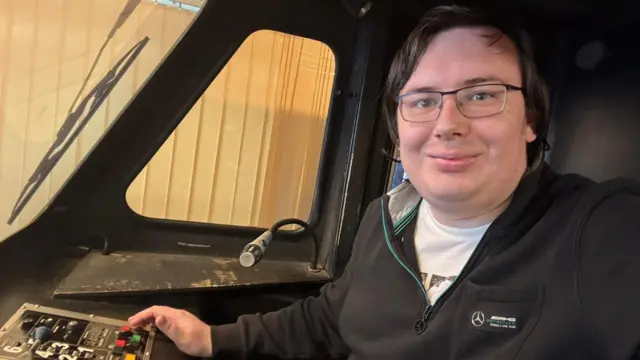
    Andy Wilkins wearing a black fleece, black glasses, and a white t-shirt.Image source, Andy Wilkins

    Meanwhile, Andy Wilkins, 26, in Southend-on-Sea in Essex has been out of work since leaving his last job six months ago.

    He has used up £2,000 in savings on "rising bills" and receives £400 a month through Universal Credit.

    He’s applied for entry level jobs at supermarkets, retail stores and fast food chains.

    Wilkins, who spent four years studying Media and Communications at the University of East London, says: "The job market simply doesn't exist for my current industry. It's demoralising but equally damaging."

    Purple banner with your voice written on it in white
  5. The death of the Saturday jobpublished at 14:51 BST

    Paul Seddon
    Politics reporter

    A man in a white shirt stands at a coffee machine.Image source, Getty Images

    Much of today's report focuses on areas within the control of government – such as education, health and the welfare system.

    But Milburn is at pains to point out that longer-term trends in the economy have also worsened the employment prospects for young people.

    A huge proportion of youth employment, he says, is in sectors such as retail, accommodation and food services, areas that have seen a decline in jobs both due to the pandemic and the rise of online shopping.

    At the same time, he says that jobs in these sectors have become harder to access, with lower-level positions having become more complex and companies more likely to require prior experience, even for entry-level roles.

    Although it is not a big part of the report, Milburn says the rise of artificial intelligence and automation are only likely to create further pressure at the bottom end of the labour market.

  6. Where to find supportpublished at 14:43 BST

    If you're currently unemployed, out of work, education or training, you can use the resources below to find support - scroll through for details on each country's services.

    This Flourish post cannot be displayed in your browser. Please enable Javascript or try a different browser.

  7. BBC Verify

    How much more does it cost to hire a young person?published at 14:31 BST

    By Ben Chu, policy and analysis correspondent, and Nicholas Barrett

    The Milburn report notes that the cost and regulatory burden of employing young people has risen. The minimum wage, external for 21 to 24-year-olds has increased by 65% since 2019-2020 and currently stands at £12.71.

    For 18 to 20-year-olds it has increased by 76% and is now £10.85. And for under-18s it is up by 84% to £8.

    Chancellor Rachel Reeves also raised employers’ National Insurance Contributions (NICs) in her 2024 Budget which added to the cost to firms of employing workers.

    Some have linked these factors, external to rising rates of young people not in education, employment or training.

    However, a recent study by the Institute for Fiscal Studies (IFS), external concluded there is no clear evidence that higher minimum wages have been a “major driver” of young people becoming Neets.

    The IFS also pointed out that most young adults aged 18–20 are largely exempt from employer NICs, external.

    It also notes that the decline in employment among young people began at the end of 2022 – two years before the NICs changes were announced – so judges it unlikely to be the “primary cause” of increasing Neet rates.

  8. How politicians are reacting to reportpublished at 14:20 BST

    Kemi Badenoch
    Image caption,

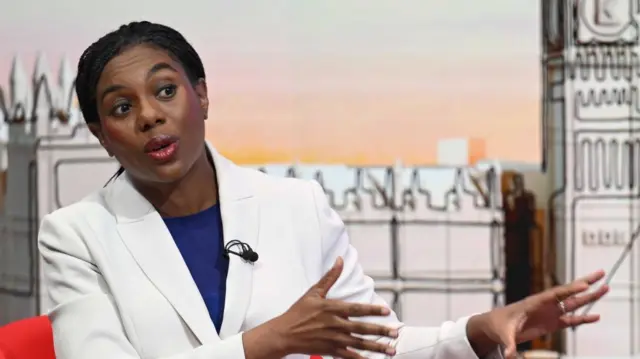
    Conservative leader Kemi Badenoch

    We've been hearing reaction throughout the day from politicians around Westminster about today's report.

    Here's what they've had to say:

    Conservative Party leader Kemi Badenoch: "Labour entered government and hiked employers national insurance, hiked the minimum wage, loaded new regulations on businesses. The result? Employers stopped hiring young people"

    Former Health Secretary Wes Streeting: "Essential reading from Alan Milburn today ... Opportunity for young people must be a national cause."

    Reform UK's education spokesperson Suella Braverman: "Nearly a million young people not in work or education is a damning indictment of Labour policies which have crushed employers and made it easier for people to claim welfare than do a hard day’s work"

    Liberal Democrat Treasury spokesperson Daisy Cooper: "An entire generation of young people are seeing their hopes and dreams ripped away, just as they enter what is meant to be the best years of their life. Labour cannot claim they were not warned."

    The Green Party: "A parliamentary inquiry found 93% of student loan borrowers find repayment terms unreasonable. Education shouldn't mean decades of debt. The Green Party would scrap tuition fees entirely"

    Former Prime Minister Rishi Sunak: "Too many young people are finding the first rung of the jobs ladder further and further out of reach."

    Zack PolanskiImage source, PA Media
    Image caption,

    Green Party Leader, Zack Polanski

  9. Welfare takeaways - six ways the system fails young claimantspublished at 14:11 BST

    The report criticises the welfare system as having "badly designed incentives that deter participation and encourage benefit passivity".

    This failure, it says, plays out in six ways:

    1. 'Investment in benefits prioritised over employment support': Milburn estimates that in 2024/25, for every £1 spent on employment support for young people, around £25 was spent on benefits
    2. 'A failure to prioritise early intervention': The welfare system treats interactions with young people as administrative instead of as opportunities to make sure they're supported into work
    3. 'Insufficient practical help to enable young sick or disabled into work': Fitness-to-work assessments are criticised for failing to identify what barriers need to be removed to enable people to participate
    4. 'Support doesn't fit needs of job-seeking young sick or disabled': High caseloads for Jobcentre Plus coaches are cited as an issue, as they struggle to understand specific barriers facing claimants
    5. 'Incentives and process make participation less attractive for many': Claimants can be scared to risk income from benefits by seeking work, with no guarantee they'll get the same support if a job doesn't work out
    6. 'Assessment process locking in permanence on benefits': The welfare system for young people is dominated by those with mental health and neurodevelopmental conditions, but these often fluctuate, which is not reflected by capability assessments
  10. Neet disability gap is 'devastating', report sayspublished at 14:03 BST

    Emma Tracey
    Senior disability reporter

    Milburn makes clear that disabled people who cannot work should be supported by the benefits system, but describes the disability Neet gap as “devastating".

    He quotes recent figures showing that in 2024/2025, 29.6% of disabled young people were Neet in the UK compared with 8.7% of non-disabled peers. That’s a gap of 20.9 percentage points, which has barely changed in over a decade.

    Young disabled people described to him “almost without exception, systems that were not built for them".

    One autistic person shared that during an internship, they “really, really struggled with my neurodivergence there because it was not an environment that was made for people who are neurodivergent".

    Responding to the report, Abdi Mohamed, head of policy, research and influencing at disability equality charity Scope, says: “This report finally exposes how young disabled people in the UK have been failed on an unforgivable scale.

    “The Milburn Review now needs to develop bold recommendations with young disabled people, and the government must back them with the right support to fulfil their ambitions.”

  11. Milburn: 'It's not a silver bullet you need. It's a round of ammunition'published at 13:55 BST

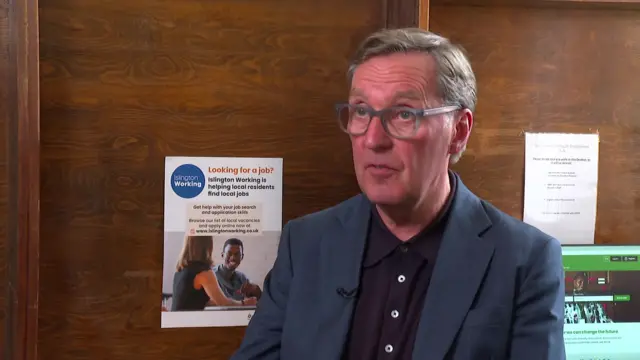
    Alan Milburn sits down during a broadcast interview. He is wearing a dark blue suit with a darker shirt underneath

    Alan Milburn has been speaking to the BBC following his news conference, and says "these problems go back decades".

    "We have got to stop saying: 'Here is the answer, here is the magic silver bullet.' It's not a silver bullet you need. It's a round of ammunition.

    "If you have not had a job by the time you are 24, you are probably not going to have a job by the time you are 34," he adds. "It just gets worse and worse."

    He says he's never seen an issue that resonates so strongly with the public in the decades he has spent working in politics and policy.

  12. 'You're not a real person you're just a number'published at 13:50 BST

    Rozina Sini
    BBC News

    Holly Jackson

    Holly Jackson, 24, has been applying to over 50 jobs a week but is struggling to find work.

    The 24-year-old who lives in Seaford says she was offered very little career advice when she left university in 2023 and it's been "almost impossible to find a job" since.

    "I’m lucky if I even get a rejection email," she says, explaining it feels like "luck of the draw more than anything".

    "Employers don’t want to train people anymore, and apprenticeship schemes are asking for three plus years experience."

    She adds that it feels like "you're not a real person you're just a number".

    Katie takes a selife with Westminster in the backgroundImage source, Katie

    Despite having six years of job experience Katie, 24, also describes how it has been "extremely difficult to find a job".

    Katie says she has been waiting for an opportunity at two local hospitals near where she lives in Telford but she has been rejected from around 10 different NHS roles.

    "I've applied for everything, from cleaning to office work, and just this morning I got an email from one application saying they aren't going to take my application further," she explains.

    She says she has had one interview out of 30 job applications.

    "I know six young people in my family that are actively seeking employment opportunity in my area and it's extremely upsetting knowing they have very little chance of finding employment," she adds.

    A purple banner displays the words 'Your Voice'
  13. As a young jobseeker, how can you stand out?published at 13:44 BST

    Josh McLaughlin
    South East

    Emily Huns sits for a photo in the University of Sussex's Student Life Centre lobby and communal area. She is wearing full-rimmed glasses, a t-shirt and a blazer, with her hair slicked back. Students in the background sit at tables studying.Image source, BBC/Josh McLaughlin

    Emily Huns, head of careers and entrepreneurship at the University of Sussex, advises young people to submit "fewer high-quality, authentic applications" rather than "identical, poorly researched" ones.

    "[Employers] don't want an AI-generated version of job applicants," she tells the BBC. "Human-centric skills are in demand in the workplace."

    She says she has also noticed "household name employers" getting more applications than small and medium-sized ones who "struggle to find talent".

    Huns says her university has created a "menu of programmes" to connect students and graduates to them.

  14. Five tips to help your teenager in the job marketpublished at 13:37 BST

    A female member of bar staff pulls a pint of bear in a half-crowded bar.Image source, Getty Images

    If you're a parent, BBC Bitesize has some tips on what you can do to help your teenager find work.

    They're provided by writer, educationalist and former headteacher Peter Hyman, who has co-authored a report that feeds into Milburn's wider report being published today:

    • Understand the unique challenges this generation faces - including the fallout from Covid, a difficult labour market, and the implications of AI
    • Help your child recognise their own unique skillset - they have skills and experiences they may not realise they have, such as competing in sports teams or taking part in extra-curricular activities
    • Encourage your teenager to get some work experience - anything from gardening and babysitting to local volunteering services
    • Work on communication skills with your teenager - including by encouraging family dinner times without screens or time spent outside the house with others
    • Change the narrative on what a "good" career and education looks like - instead of focusing solely on the exam-based route, there are other options out there

    Read more from BBC Bitesize on how to help your teenager find work.

  15. BBC Verify

    More than six in 10 Neets have never workedpublished at 13:29 BST

    By Daniel Wainwright

    An estimated 61.6% of young people who are not in employment, education or training - Neets - have never had any paid work.

    Data released as part of Alan Milburn’s review of the issues , externalaffecting 16 to 24-year-olds suggests this number has been growing over the past two decades. Before 2013, fewer than half of young people in this situation had never worked.

    The report says how what is “often described as the decline of the Saturday job” is part of a change involving fewer flexible jobs and part-time work that young people could do while studying to gain experience and employer references they may need later on.

    And it talks of jobs that disappeared because the economy changed - such as fewer young people delivering newspapers. But it also points to changes in the rules around hiring people, “which have made casual roles less attractive to offer”.

    This Flourish post cannot be displayed in your browser. Please enable Javascript or try a different browser.

  16. How unemployment is affecting young people's mental healthpublished at 13:19 BST

    Emily Holt
    Education reporter

    Young people are feeling "shut out of the opportunities that work can bring", which is impacting young people's mental health, a leading UK employment and social action charity says.

    Shaw Trust says: "Unemployment is taking its toll on young people's mental health and there's a lot of evidence to back this up. We're also seeing this on the front line: young people are telling us that without work, days lack structure and meaning.

    "They're feeling shut out of the opportunities that work can bring. This would influence anybody, but at this stage of life, confidence and wellbeing takes a real hit. We need to reframe the relationship between work and wellbeing.

    "When young people feel shut out of the job market, the opposite is true. We need to back young people's potential. That means providing the right support to get them work-ready."

    Tina McKenzie, policy chair of the Federation of Small Businesses, says that health policy should factor in “what ill-health means for a young person’s ability to work”.

    She adds: "We should treat the condition and consider the knock-on effects on confidence, routine, and prospects. For many young people, work is as much a part of recovery and stability as any clinical intervention. Health policy designed with that in mind will do more good for more people."

  17. Aspirations, shortage of support and welfare issues - what Alan Milburn told the presspublished at 13:10 BST

    Dan Woodland
    Live reporter

    Following the publication of his Neets report, former cabinet minister Alan Milburn spoke to the press to go over its contents. Here's a recap of what he said:

    We'll continue to bring you live coverage and analysis, stick with us.

  18. What is the government's current policy for encouraging young people into work?published at 12:57 BST

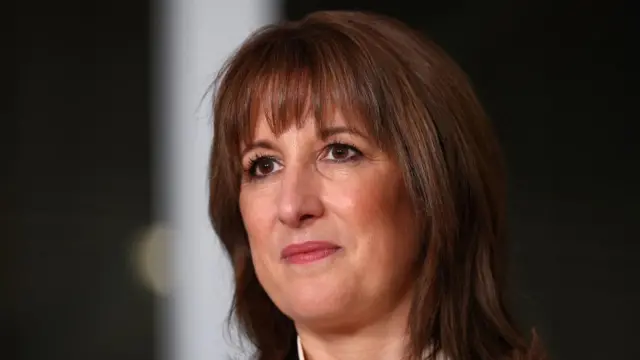
    Rachel Reeves looks on, with a black and blurred white background behind her.Image source, PA Media

    Following the release of Milburn's report on Neets, we've taken a look at the government's current policy for encouraging young people into work.

    In the November Budget, Chancellor Rachel Reeves announced £820m of funding to support 18 to 21-year-olds into education or paid employment.

    Those who have been Neet for more than 18 months were also to be given a six-month paid work placement. Anyone who refuses could risk being stripped of their benefits.

    The chancellor added that the government would fund a scheme to make apprenticeship training for under-25s at small and medium businesses "completely free".

    Association of Colleges head David Hughes said the money would enable colleges to support more young people so they do not end up not in education, employment or training.

    But he said more money was needed for adult education funding, and to ensure "millions of adults are not left behind by the tech and green revolutions we are seeing before our eyes".

  19. 'I'm selling crochet patterns online while looking for part-time work'published at 12:52 BST

    BBC Newsbeat

    Niamh Heron is currently out of work.

    The 21-year-old from North Yorkshire tells us she stopped working in September due to long-term poor health.

    "I am currently looking for part-time work that isn’t too physical. I make crochet and cards and I sell them to a local gift shop," Niamh says.

    "I sell crochet patterns on Etsy, I also am trying to get into UGC via TikTok and am interested in working in social media, just because it is so difficult to get a job."

    A man with his hands on his hips

    Aaron Diangienda, currently at college studying for a level 2 sports diploma, is also out of work.

    The 18-year-old from Brixton, south London has been looking for a job for a year and says he is keen to work in retail, but finding the right job has been tough.

    Aaron doesn’t want to go university and while he is looking for a job in sports specifically, he would gladly take any job.

    The teen is also re-taking his English and maths GCSE so he can improve his prospects.

    You can listen live to Newsbeat's Neet coverage at the top of the page.

  20. Listen: Young people share what it's like trying to get a jobpublished at 12:46 BST

    BBC Newsbeat

    BBC Newsbeat has been speaking to young people across the country today who are struggling with unemployment.

    They've been speaking to people currently studying and applying to jobs, as well as those with degrees failing to find jobs.

    You can listen live at the top of the page - as well as on Radio 1, Radio 1Xtra, Asian Network or catch up on BBC Sounds afterwards.