What you need to know about hay fever season

- Published
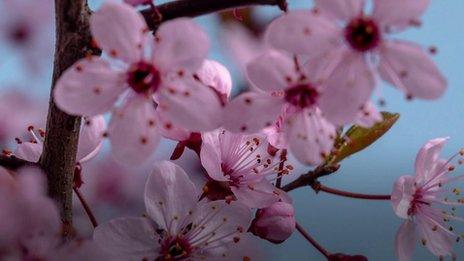
Signs of spring are appearing all around us. Flowers and trees are bursting into colour and daylight is stretching into the evening.
The sun is also beginning to offer a little more warmth as it strengthens quite noticeably from late March onwards and UV levels creep into the moderate range.
But alongside these familiar seasonal markers comes a side to nature that is less welcome for many.
The pollen season is beginning its steady rise, starting to affect more people.
For an estimated 10 million people, these springtime awakenings, signals the return of hay fever — and the onset of symptoms that can make the fine weather months more challenging.
When does the pollen season begin?
Whilst the official start of the Met Office's UK pollen‑season forecasts is mid March, many notice symptoms — from sneezing to itchy, irritated eyes — many weeks earlier.
Tree pollen is recognised as the first stage of the pollen season in the UK, and affects 25-35% of hay fever sufferers.
It runs from March to early June for most trees - however it can be as early as January because some trees produce pollen earlier.
Depending on where you live in the UK, these dates will vary slightly.
The different pollen seasons - tree, grass and weed - do overlap, which can heighten the suffering.
What are the different pollen types by month? Video, 00:01:20
- Published31 March 2021
The grass pollen season runs roughly from late April to July, and affects nearly all sufferers - maybe 95%.
But of course there are regional differences. Start times are later and the seasons shorter in the cooler north of the UK.
Weed pollen starts in late April, with the main season from late May until the end of September.
Where there is less vegetation, such as in towns and cities, pollen yields will be smaller than in rural areas. Western coastal fringes may have fewer high risk days.
Does weather play a part?
Weather can play a role in how much pollen is produced and how and where it spreads. It can even alter the timings of the various pollen seasons, their peaks, and differences in levels from day to day.
Rainfall - rainy days often suppress pollen.
Temperature - warmer days means greater pollen emission and if sunny, dry and breezy are notoriously the trickiest days for allergy sufferers. However, on the hottest days the grasses reduce pollen emission.
Wind - it's a little complicated: on calm days, some pollen will barely lift into the air, staying at nose height. Very windy days reduce the pollen concentrations by lifting it up high. Pollen species vary in size and weight, with the lighter, finer grains dispersed more easily by gentle winds.
Sunlight - sunlight amounts are important for pollen. There tends to be less pollen on cloudy days unless it is very warm.

Bees spread pollen, as do wasps, butterflies, moths and some beetles
Do seasonal changes influence the pollen season?
Seasonal weather patterns can influence pollen production.
A warm spring with enough rain often gives a high grass pollen yield in the summer.
A very dry spring works against grass pollen being produced, and very hot and dry weather inhibits grass growth.
Tree pollen is made the previous summer, so if June and July are very warm, more pollen is made and stored ready for the coming year.
Could our changing climate impact the pollen season?
Research by the University of Worcester found that the important birch tree pollen season is getting more severe, oak and grass pollen are starting earlier, but that the grass pollen season is not getting more severe, as may have been suspected.
The impact of climate change on pollens is likely to be mixed and vary considerably across the UK for different species and based on the level of warming.
The study says these trends are in line with research from some European countries.
Increasing spring and summer temperatures were found to be driving these trends, as well as some changes in land-use, such as increasing woodland, and urbanisation reducing grassland areas.
- Published1 May

- Published21 April 2022