
The Arctic Ocean - Beluga whales in the fjords of Svalbard

Locations
The Arctic Ocean
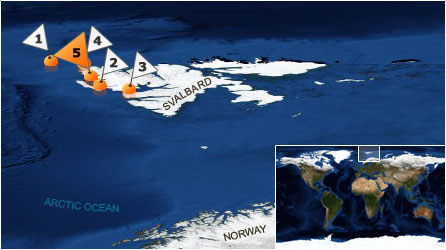
Location map
Introduction
With much of it covered in ice all year round and with no daylight from October to March, the Arctic Ocean is one of the world's most remarkable oceans. It's home to a multitude of unique life forms, all highly adapted to cope with the extreme and seasonal conditions. The impacts of climate change are more strongly felt here than anywhere else in the world.
Beluga whales in the fjords of Svalbard
Overview
The white beluga whale is a very distinctive species. Unlike other cetaceans their vertebrae are not fused so they are able move their heads laterally. A strange melon-like lump on their forehead helps them with echolocation. They are also missing the dorsal fin.
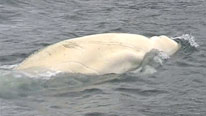
An extremely shy species, belugas are difficult to find around Svalbard. But we do know that in the summer months they visit to the fjords of Svalbard to mate. During this time of year they also shed their outer layer of thick waxy cork skin.
| Importance: | A rare encounter with a distinctive Arctic species. |
| Dive category: | Belugas are so shy it would take a lot of luck to swim with one. |
| Access: | A cautious, very quick moving creature, few people get to see belugas around Svalbard. |
Interesting for
- A vulnerable species
- The IUCN's listing for the vulnerable beluga whale.
- Delphinapterus leucas
- One of the most distinctive cetaceans
- ARKive gives all the key facts and figures about the white whale.
- Beluga whale
BBC related content
- Oceans presenter biography: Philippe Cousteau
- Oceans presenter biography: Lucy Blue
- Oceans image gallery: The Arctic Ocean
- Oceans Arctic expedition: White whales
Episode region
BBC iD
BBC iDBBC navigation
BBC links

BBC © 2014The BBC is not responsible for the content of external sites. Read more.
This page is best viewed in an up-to-date web browser with style sheets (CSS) enabled. While you will be able to view the content of this page in your current browser, you will not be able to get the full visual experience. Please consider upgrading your browser software or enabling style sheets (CSS) if you are able to do so.
