Summary

  1. Why the heat makes some medication less effectivepublished at 16:31 BST

    Beth Rose
    Disability affairs reporter
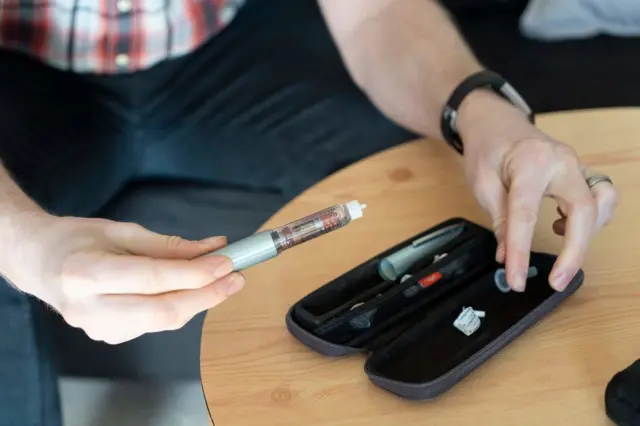
    A diabetic man prepares his insulin pen to inject himselfImage source, Getty Images
    Image caption,

    Insulin, which is used by diabetics, is one of the medications that can become less effective due to heat

    As temperatures rise, the effectiveness of medications can change.

    The Medicines and Healthcare products Regulatory Agency (MHRA) says heat damage can break down active ingredients in medicine.

    That can stop or alter how much the body absorbs when it comes to tablets, inhalers, hormone patches, insulin, blood glucose monitors and EpiPens.

    Dr Alison Cave, MHRA’s chief safety officer, says some medicines can also make you more likely to "burn in the sun, feel dizzy, or get dehydrated", especially if you’re taking diuretics or have a condition like asthma, heart disease or diabetes.

    She says most medicines need to be stored at temperatures below 25C - but cars, trains and even bags and pockets could get warm enough to cause problems and keeping them in a cool bag could be useful.

    She adds: "If your medicine has changed colour, developed an unusual smell, changed texture, or looks different in any way, this could signal heat damage. Ask your pharmacist for advice."

  2. Travel disruption - what's the latest?published at 16:25 BST

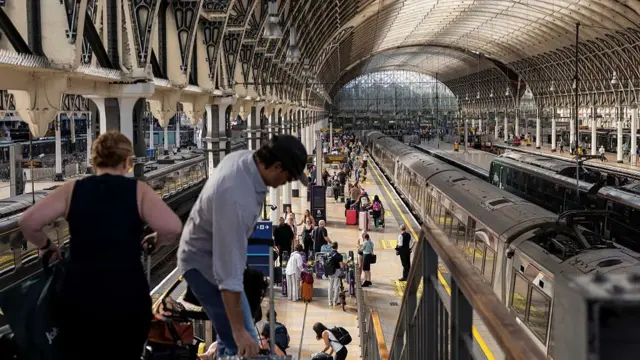
    People at the top of steps with suitcases, below them are trains.Image source, Getty Images
    Image caption,

    Passengers heading to a train in Paddington train station in London

    With the hot weather comes the possibility of disruption to travel.

    Today, a number of train lines are experiencing disruption after passengers in areas affected by the red warnings were asked to only travel if their journeys were essential.

    Here's a look at the latest disruption:

    On the trains

    • Avanti West Coast is running fewer trains on some routes - with a reduction of one train per hour on Birmingham New Street, Manchester Piccadilly and Liverpool Lime Street routes
    • The operator is also warning services running between Carlisle and Motherwell may be terminated at Preston
    • Chiltern Railways are running reduced services on some of its routes while the CrossCountry network has cut some of its services including between Reading and York. There are also a number of cancellations on c2c services
    • LNER has altered its timetable particularly affecting services to and from Leeds and to and from Lincoln
    • Meanwhile, on the West Midlands Railway and London Northwestern Railway, trains are not running between Leamington Spa and Nuneaton - following a rail buckling in the heat - or between Liverpool Lime Street and Crewe
    • Transport for Wales is running fewer services on some routes, while those between Chester and Wrexham General, between Pontypridd and Cardiff Bay and between Shrewsbury and Birmingham International are among those that have been cancelled until the end of the day
    • AndElizabeth line services are not able to call at terminals at Heathrow airport due to issues with infrastructure caused by the heat

    Commuters travel on a London Underground tube carriage, during a heatwave.Image source, Getty Images
    Image caption,

    Commuters had a sweaty journey on the Tube yesterday - some lines are still experiencing delays today

    On the Tubes and Overground

    There are minor delays on the District Line due to hot weather mitigation - other London Underground lines including Central, Circle and Metropolitan are experiencing delays due to train cancellations.

    While on the London Overground, the Mildmay and Suffragette lines are seeing severe delays following an earlier signal failure.

  3. Hospital facilities under 'extra pressure' during heatwavepublished at 16:13 BST

    Hospitals in England say their facilities are being stretched and equipment is being impacted due to the extreme heat.

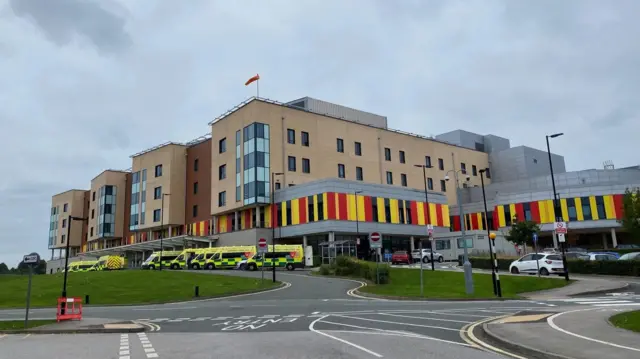
    Services at two hospitals in Stafford, the Royal Stoke University Hospital and County Hospital, have been "unable to operate at normal capacity in the heat and humidity".

    The high temperatures are affecting operating theatres, testing labs and MRI scanners, according to the NHS Trust which runs both hospitals.

    Meanwhile, a spokesperson for St George’s University Hospitals NHS Foundation Trust, which runs two hospitals in south west London, told the BBC its facilities are also under “extra pressure” due to the heat.

    “Our ageing buildings weren’t designed for these temperatures, but we are doing everything we can to keep people safe and comfortable,” they added.

    A hospital with ambulances parked outside it. The hospital building is several storeys high, and has red and yellow cladding on the lower part.
    Image caption,

    The Royal Stoke University Hospital is "unable to operate at normal capacity" due to the extreme temperatures

  4. Temperatures far higher than 1.5C warming target - how does that work?published at 16:05 BST

    Matt McGrath
    Environment correspondent

    Your Voice banner

    Anna in London says 1.5C of warming compared to pre-industrial times doesn’t sound like much, but this heatwave is way warmer above normal than that. Can you explain how these two connect?

    You raise a very interesting and often confusing issue, Anna.

    The 1.5C figure refers to a global average of temperatures compared to what they were before the industrial period began in around 1850 - when we started burning fossil fuels and adding greenhouse gases to the atmosphere.

    The figure includes day and night temperatures from all over the world, from mountains to oceans and everything in between.

    Essentially it is a long-term measure of the whole Earth's fever, not a reading of any one day in any one place.

    A heatwave like the one we’re experiencing is the opposite: one corner of the planet, on land, in high summer, at the hottest point of the day.

    So the two numbers aren't measuring the same thing, and there's no reason they'd match.

    But a brutal heatwave can run many degrees above what's normal for the season, precisely because small changes in the global average can have major effects on our local weather - as we are now seeing in the UK and Europe this week.

  5. Anglian Water urges customers to 'avoid using hosepipes' - but doesn't enforce banpublished at 16:03 BST

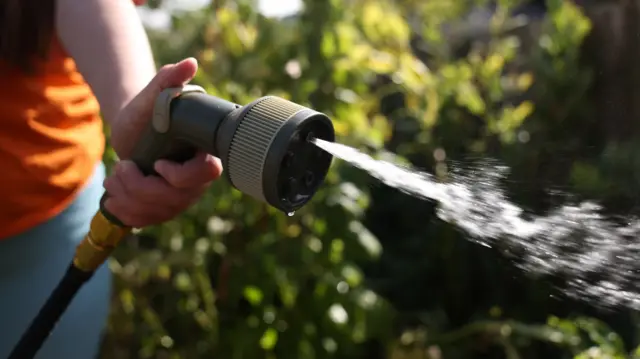
    A hosepipe sprays water in a garden, held by the hand of a person whose face is not shown.Image source, EPA/Shutterstock

    Anglian Water is urging customers to use less water as increased usage puts pressure on the company's network.

    On Wednesday, it put a record 1,600 million litres of water in supply, which is a third higher than its typical distribution of 1,200 million litres.

    Ian Rule, director of water services, says Anglian Water has "no plans to introduce a hosepipe ban", but higher-than-usual water consumption can lead to issues "such as bursts and low pressure".

    "We're having to produce more water than ever before to keep everyone on supply, so we'd urge customers to avoid using hosepipes and use less water wherever they can," he says in an update posted to the company's website.

  6. Tips for keeping coolpublished at 15:59 BST

    Michelle Roberts
    Health editor

    There are lots of things that you can do to cope with the heat:

    If you are outdoors, stay in the shade and wear light-coloured loose-fitting clothing, ideally made of cotton or linen that allow air flow and let sweat evaporate. Wear high protection sunscreen and apply it often.

    Stay hydrated by drinking plenty of water - around six to eight glasses or more. Diluted squash, fruit juice and iced-tea or coffee also count.

    Keep your home cool. Close windows, curtains and blinds during the day and open them at night when the temperature outside has gone down.

    Turn off any lights or electrical equipment that you don't need as they can make your home feel hotter. Electric fans can help though.

    Babies who breastfeed should get all the water they need from breast milk and don not need any extra, the NHS says - but they may want to feed more than normal.

    And take things slowly. Don't rush or do anything too physical if you are hot.

    If you or someone else feels unwell with a high temperature during hot weather, seek medical advice.

    This Flourish post cannot be displayed in your browser. Please enable Javascript or try a different browser.

  7. Hottest ever June day for Walespublished at 15:53 BST
    Breaking

    Wales has recorded its hottest ever June day with a provisional temperature of 34.2C recorded in Bute Park, Cardiff.

    Previously, the highest temperature for Wales in June stood at 33.7C - recorded in 2000.

    It comes after the record for the hottest June day in the UK has been broken again after Yeovilton in Somerset recorded a provisional temperature of 36.4C - higher then yesterday's 36.1C in Hampshire.

    We're looking through the latest set of provisional temperatures as a heatwave continues to grip the UK, stay with us.

  8. Will the UK ever roll out air conditioning?published at 15:45 BST

    Esme Stallard
    Senior climate and science reporter

    Purple banner which says Your Voice

    Lornawants to know: when will the UK roll out air conditioning across all infrastructure - including schools and transport?

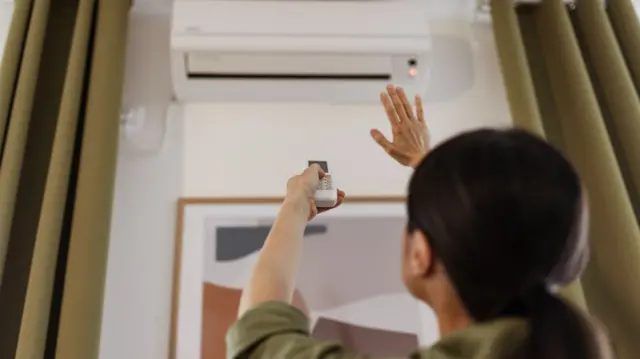
    Data on the percentage of homes with air-conditioning in the UK is limited - previous government estimates, external have put it at single figures.

    But it is fair to say it is not the norm in the UK. We’re used to average summer temperatures of 16C., external

    The UK Climate Change Committee (CCC) - independent experts that advise the government on all things climate - has recently estimated that 22% of homes in the UK will need some sort of "active" cooling measure such as air-conditioning in the future as the world gets warmer.

    This issue has been hotly debated in politics recently.

    The Conservative Party said there is a de facto ban on air-conditioning in new homes under building regulations. That isn’t quite true.

    The regulations call for developers to consider all passive options first - i.e. things that will bring down the temperature without you having to do anything. This is to limit the use of extra energy.

    Passive measures includes things like proper insulation, shading on windows, and increased green space.

    Regulations have also been updated recently to reduce the amount of glass in new buildings to try and stop temperatures becoming unbearable in offices and homes.

    At the beginning of the 21st century, glass skyscrapers were springing up across our cities. But it has been accepted that this has increased the risk of overheating.

    Woman holding remote control air-conditioner in houseImage source, Getty Images
  9. Europe's heatwave is shifting east - how it's looking across the continentpublished at 15:39 BST

    Paul Kirby
    Europe digital editor

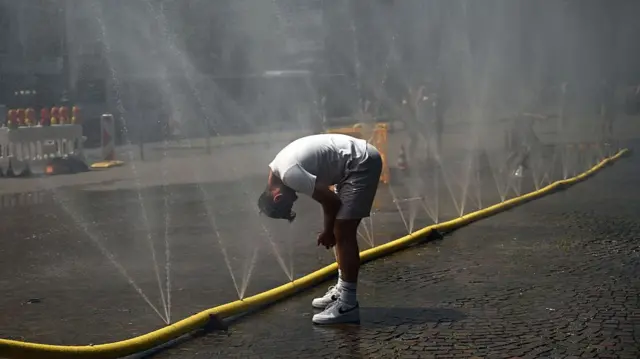
    A man cools his head at water hoses spilling water to provide relief from the summer heat in Cologne, GermanyImage source, Getty Images
    Image caption,

    A man cools his head at water hoses spilling water to provide relief from the summer heat in Cologne, Germany

    Heatwave conditions that have left Spain, France and the UK sweltering are set to shift to the east in the coming days.

    Temperatures in Germany could hit 40C in some western and south-western areas today, and across the country on Friday.

    An extreme weather warning is now in place in much of the Czech Republic.

    In France, which recorded its hottest day on Wednesday, Prime Minister Sébastien Lecornu announced the health alert level is being raised to its highest, to boost hospital staffing and protect the vulnerable.

    Much of northern and southern Switzerland was put on maximum weather alert by MeteoSuisse, which warned of a "significant drought situation".

    Although temperatures in Spain are set to peak at 38-39C in some areas today, forecasters say a cooler mass of Atlantic air is coming in.

    An amber heat warning will remain in effect until 21:00 GMT in parts of England on Saturday, before temperatures cool on Sunday.

  10. Your heatwave questions answered - watch livepublished at 15:36 BST

    Our panel of experts are answering your questions as a red extreme heat warning is extended to Friday for London and parts of south-east England.

    You can follow along by clicking watch live at the top of this page.

  11. London Ambulance Service records its highest number of life-threatening emergenciespublished at 15:26 BST

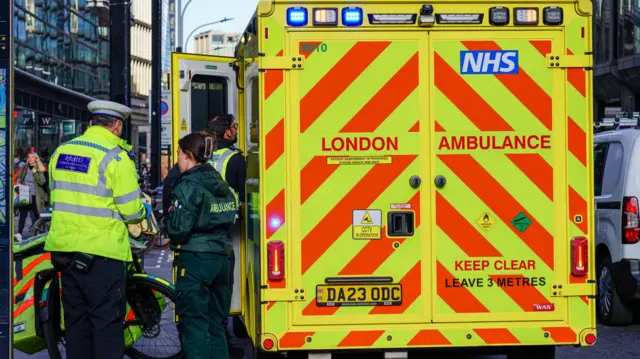
    Two people in uniform stood by a London Ambulance van.Image source, Getty Images

    The London Ambulance Service responded to the highest number of life-threatening emergencies in its history on Wednesday.

    Temperatures soared to 36.1C in parts of the UK on Wednesday, and that record for June has been broken again today.

    Ambulance crews responded to 642 calls relating to category 1 incidents - those that include the most serious, life-threatening injuries and illnesses such as cardiac arrests and patients who are not breathing.

    Chief Executive Jason Killens KAM said this was "driven by the extreme heat across London".

  12. Will next year be even hotter?published at 15:15 BST

    Mark Poynting
    Climate reporter

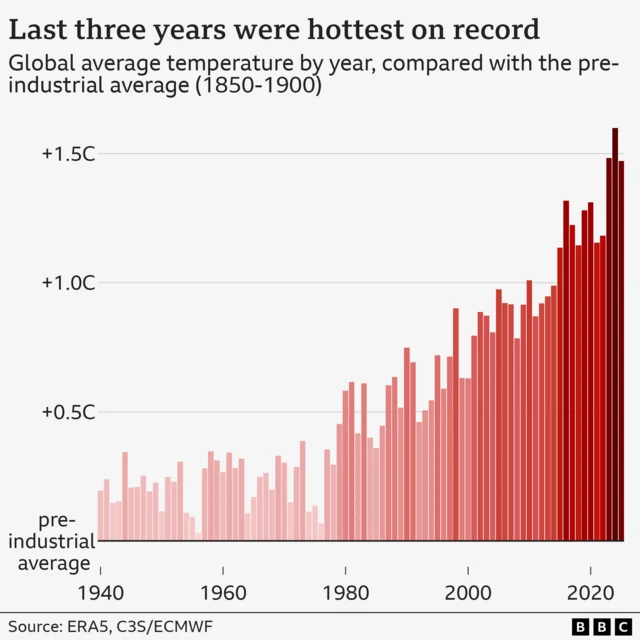
    The widespread expectation is that 2027 will become the world’s hottest year on record.

    Part of the reason is that a natural weather phenomenon called El Niño has begun in the Pacific Ocean.

    These events tend to peak in strength around Christmas time and boost global temperatures into the following year.

    And this El Niño will happen on a planet that is much hotter anyway because of human-caused climate change.

    Bar chart showing global average temperature by year compared with pre-industrial average (1850-1900)
  13. Two reasons why this heatwave might feel particularly badpublished at 15:10 BST

    Matt McGrath
    Environment correspondent

    A Your Voice banner

    As we've just reported, the record for the hottest June day has been broken again.

    Turning back to our climate experts, Bev in Dorset asks whether this hot spell will feel worse than 2022’s due to high humidity.

    There are two aspects to this heatwave that are making it feel worse than previous hot spells - the air is unusually humid, and the nights are barely cooling down.

    Humidity measures moisture in the air - the higher the level, the harder it is for us to cool down. Sweating works when it can evaporate from skin, this is made harder when the air is already laden with moisture.

    The Dew Point - which is a gauge of how much water the air is holding - is an important number to consider.

    The Met Office says it could reach around 22C on Wednesday and Thursday. During the record-breaking July 2022 heatwave, when the UK first passed 40C, Dew Points were only in single figures. The air then was bone dry.

    The second factor is the lack of overnight relief. Across much of England and Wales, temperatures are not expected to fall below 20C at night - what forecasters call a tropical night.

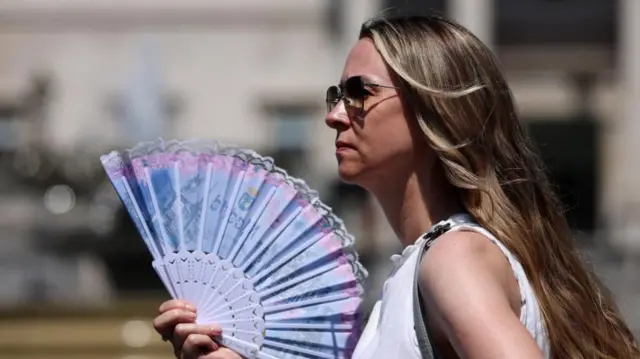
    A woman uses a fan to cool down in London, 24 June 2026Image source, EPA
  14. The record temperatures across the UK - how do they compare?published at 15:06 BST

    The Somerset village of Yeovilton has recorded the highest June day temperature ever.

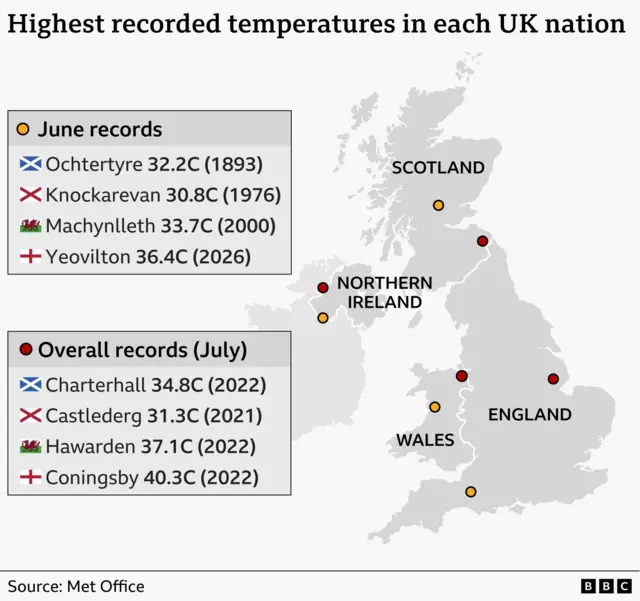
    Across the UK, here's a look at the highest temperatures recorded in each UK nation.

    The June records for Scotland, Northern Ireland and Wales were recorded in 1893, 1976 and 2000, respectively.

    Today's record also only applies to June - the hottest temperature ever recorded in the UK was 40.3C in Coningsby, Lincolnshire, in July 2022.

    A graphic showing the heat record for each country in June and July.
  15. More than 2,400 schools closed or disrupted in England and Walespublished at 14:57 BST

    Hazel Shearing
    Education correspondent

    At least 1,600 schools in England have experienced closures and disruption during this week’s heatwave. That’s on top of 840 in Wales.

    The Department for Education doesn’t publish a list of schools that have closed during the heatwave, so the figure for England is only an estimate.

    We’ve been looking at individual councils’ websites in areas most affected by the heatwave, and counted 1,691 that have fully or partially closed, or that have offered parents the option to pick their children up early.

    The actual number is likely to be higher, not least because councils aren’t required to publish this data and some schools might not appear on their lists.

    Most schools have stayed open, although academy trusts have reported lower attendance over the heatwave.

    Earlier, Prime Minister Keir Starmer said "each school will gauge for themselves the measures that are appropriate".

  16. The latest temperaturespublished at 14:55 BST

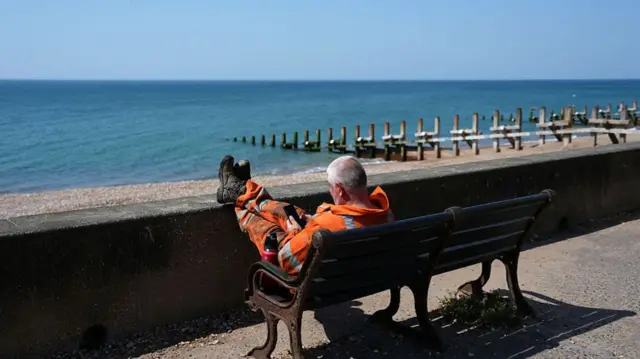
    A worker takes a break from working in the heat sat on a bench with feet up, near a beach and the sea.Image source, Getty Images

    We've just reported that the Met Office recorded a provisional temperature of 36.4C in Yeovilton - making it the hottest June day on record.

    Here are the latest provisional temperatures across other parts of the UK, as of 14:00 BST:

    • Otterbourne, Hampshire - 35C
    • Wiggonholt, West Sussex - 34.3C
    • Bournemouth Airport - 34C
    • Boscombe Down, Wiltshire - 34C
    • Bute Park, Cardiff - 33.3C
  17. Hottest June day record broken againpublished at 14:36 BST
    Breaking

    The Met Office has recorded a provisional temperature of 36.4C at Yeovilton, Somerset, making it the hottest June day on record.

    This beats yesterday's hottest June temperature record of 36.1C in Hampshire, which broke the longstanding record from 1976.

    A dog in Pilton, Somerset, earlier todayImage source, Philbert Nut / BBC Weather Watchers
    Image caption,

    A dog in Pilton, Somerset, earlier today

  18. It's very hot - here are four reasons whypublished at 14:31 BST

    Helen Willetts
    BBC Weather

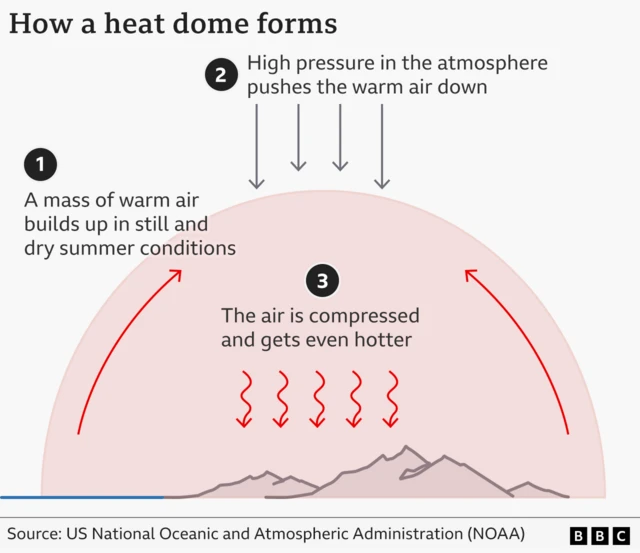
    A 'heat dome' has developed

    At the centre of this is a large, slow‑moving area of high pressure that has effectively produced a "heat dome".

    The high pressure causes air to sink, and as it sinks it compresses and warms.

    At the same time, it suppresses cloud formation, allowing long hours of strong sunshine. Because the system is slow to move, heat builds up day after day and becomes trapped beneath this “lid” of stable air.

    Strong summer sunshine

    At this time of year, we have what’s called a "positive energy balance" - meaning more energy is coming in from the sun than is escaping back into space at night.

    Under clear skies, that energy builds quickly, driving temperatures higher by day and with short nights, less energy is lost at night.

    Hot air being drawn in from the south

    The position of this high pressure is also key. It’s pulling up very warm air from southern Europe and beyond.

    So we’re not just heating the air locally — we’re importing already hot air, where temperatures are also widely extreme and red warnings have been and are still in force. On Tuesday, France broke its all time temperature record, reaching 44.3C.

    Dry ground intensifying the heat

    Although there has been some recent rain, the ground has dried out rapidly.

    That means less of the sun’s energy is being used to evaporate moisture, and more goes directly into heating the surface and the air above it — further boosting temperatures.

    In short, the reason it's so hot is acombination of a persistent high pressure evolving into a heat‑trapping dome, strong sunshine, imported heat, and dry ground that’s driving this exceptional spell.

    Infographic titled “How a heat dome forms,” explaining the process in three labelled steps. A large dome shape sits over a landscape, representing trapped hot air. Step 1: “A mass of warm air builds up in still and dry summer conditions.” Step 2: “High pressure in the atmosphere pushes the warm air down,” shown by downward arrows above the dome. Step 3: “The air is compressed and gets even hotter,” illustrated with wavy heat lines beneath the dome. Curved arrows along the sides show air circulating within the dome, and ground features such as hills or mountains appear underneath. Source is the US National Oceanic and Atmospheric Administration (NOAA), with a BBC logo at the bottom.
  19. How are official temperatures measured?published at 14:28 BST

    Helen Willetts
    BBC Weather

    A purple banner which says 'your voice'

    Jamesgot in touch from "sweltering" Barwell in Leicestershire. He wants to know how the Met Office and BBC measure temperature.

    All official UK air temperatures are measured in a standardised way which allows readings to be comparable across the country and over time.

    Across the UK there is a network of Met Office weather stations where the air temperature along with other observations are recorded.

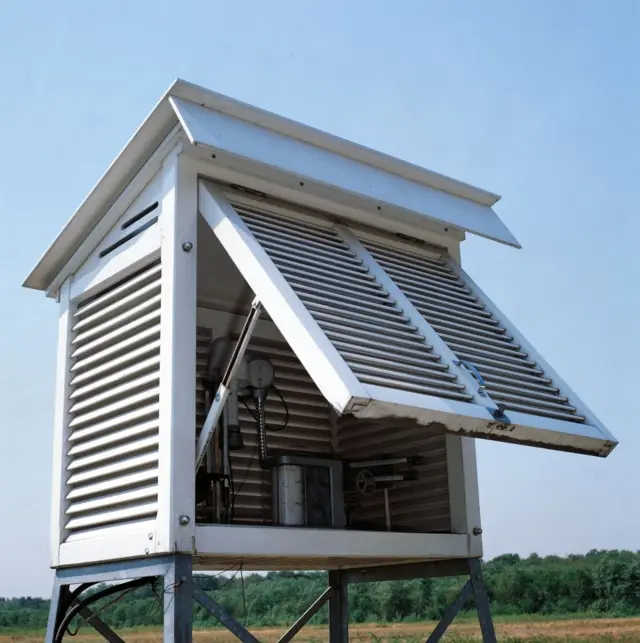
    These thermometers live within a Stevenson screen to avoid direct heat. These boxes are painted white to reflect direct sun and louvred to ventilate.

    In order to take a true air temperature, not a ground one, the screens sit 1.25m above the ground.

    There are also strict rules about location, for example, not on concrete and away from buildings.

    So when we say it’s 35C, that’s the standardised temperature not a reading influenced by direct sunshine or a hot surface.

    A stevenson screenImage source, Getty Images
    Image caption,

    An example of a Stevenson screen

  20. Is El Niño playing a role?published at 14:24 BST

    Mark Poynting
    Climate reporter

    Purple banner which says Your Voice

    Rob, 28, says many people will blame this extreme weather on the El Niño weather pattern. Can you explain how climate change may be contributing to the extreme heat as well?

    It’s a good question, but scientists aren’t blaming this heat on El Niño.

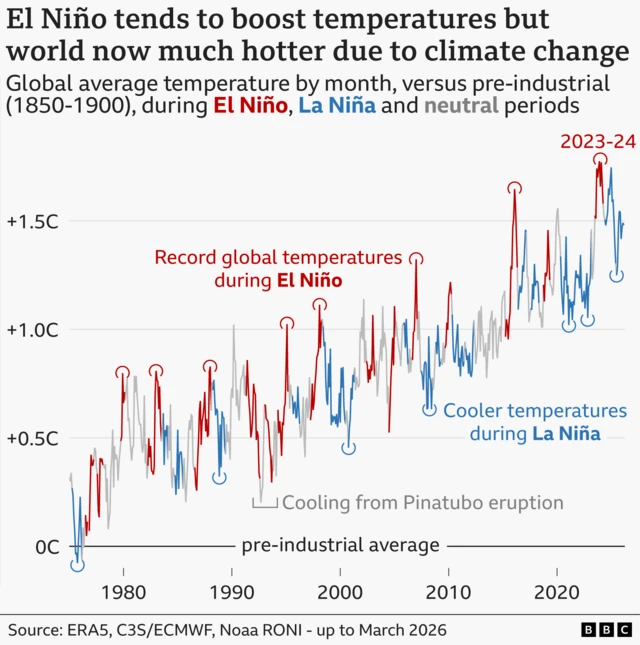
    Let’s recap: El Niño is a natural weather phenomenon which develops when a change in wind patterns allows warmer waters to spread across the tropical Pacific Ocean. It happens every two to seven years, roughly.

    Earlier this month, scientists declared that a new phase of El Niño had begun.

    El Niño typically boosts global temperatures and can fuel heatwaves in South America, South East Asia and parts of Australia.

    But there is no clear or consistent link between past El Niño events and summer heatwaves in the UK.

    Instead, scientists are putting this week’s heat down to a combination of a strong high-pressure system and climate change.

    Line graph showing monthly global temperatures since 1975 compared with pre-industrial levels of the late 19th Century. Temperatures show a long-term rising trend - the result of climate change. But temperatures tend to spike in El Niño periods, shown in red, and fall in La Niña periods, shown in blue.