Summary

  1. Iran's new approach as war creates new kind of conflictpublished at 11:51 BST

    Lyse Doucet
    Chief international correspondent

    It used to be said that Iran prided itself on “strategic patience”, responding to actions against it at a time of its own choosing.

    A new approach is playing out now in its attacks on Israel and its response to Israeli actions in Lebanon. The new leadership which emerged in Tehran this year took a lesson from last year’s 12-day war with Israel: restraint will be seen as weakness.

    “They’re accusing us of being naïve,” an Iranian official told me of the hardliners’ criticism shortly after that confrontation ended.

    Now those critics are calling the shots. Iran’s cautious supreme leader, Ayatollah Ali Khamenei, assassinated on the first day of this war, no longer sets the rules.

    Iran, which had long tried to avoid a direct war with Washington, has now seen that war close-up.

    Even more, despite its major military and economic cost, Tehran survived.

    And, after decades of a “forward defence” strategy which relied on proxies and partners like Lebanon’s Hezbollah to prevent conflicts from reaching Iran, now Tehran is attacking in defence of its ally.

    War is creating a new kind of conflict.
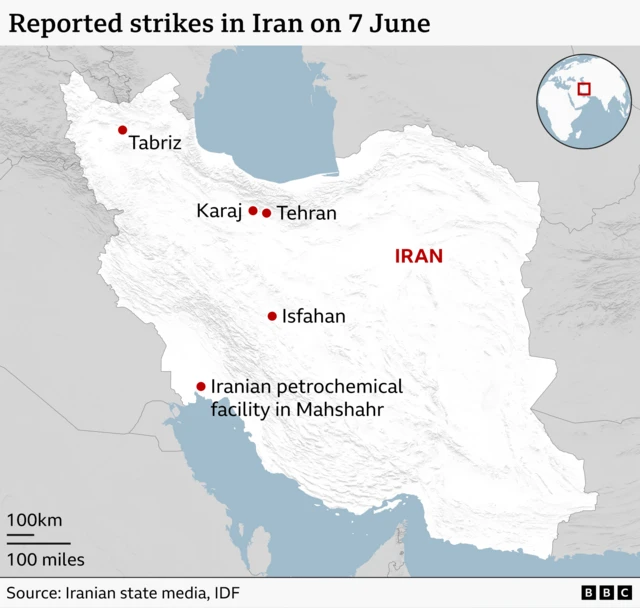
    Map of Iran titled “Reported strikes in Iran on 7 June.” Red dots mark locations of reported strikes at Tabriz in the northwest; Karaj and Tehran close together in the north; Isfahan in central Iran; and an Iranian petrochemical facility in Mahshahr in the southwest near the Gulf coast. A small inset map shows Iran’s location in the Middle East. Scale bar indicates 100 km/100 miles
  2. Israel and Iran looking for an immediate ceasefire, says Trumppublished at 11:40 BST
    Breaking

    US President Donald Trump has said final negotiations on "peace" are proceeding but are "subject to ignorance or stupidity getting in its way".

    He says in a post on Truth Social: "Both sides, Israel and Iran, are looking to do an immediate CEASEFIRE!"

    "The Blockade will remain in place, and in full force and effect, until a 'Final Deal' is reached. Things should move quickly," he adds.

  3. Starmer 'deeply concerned' as he calls on Iran and Israel to stop violencepublished at 11:19 BST

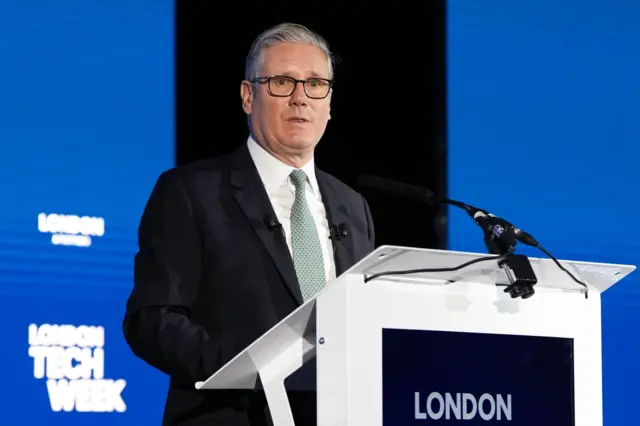
    Keir Starmer stands at a white podium wearing a black suits and glasses as he gives a speech on stage at the London Tech Week expositionImage source, EPA
    Image caption,

    Starmer's comments came shortly after he delivered a speech at the London Tech Week exhibition

    Prime Minister Keir Starmer has called for Iran and Israel to "get back to a ceasefire" after strikes resumed between the two countries.

    Starmer says he is "deeply concerned about the resumption of violence" in the Middle East, adding that "serious negotiations" are going on towards "a lasting peace".

    The conflict is having "a huge impact across the world", including in the UK, Starmer says.

    "So I say to all parties, we all have a responsibility to get back to that ceasefire and it’s really important we’re very clear about that.”

  4. Hezbollah says it launched retaliatory attack on Israeli soldiers in Lebanonpublished at 11:04 BST

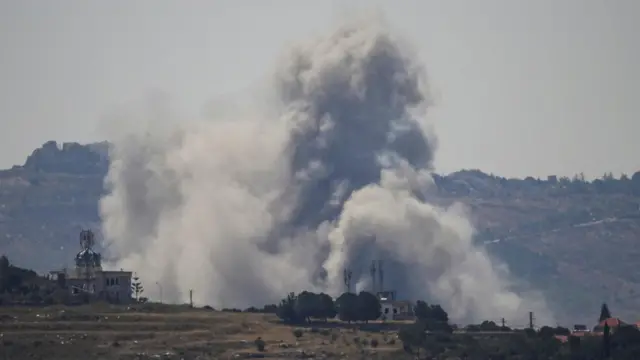
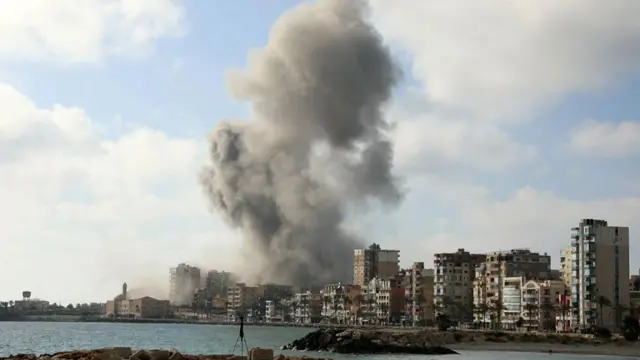
    Smoke billows from southern Lebanon, following Israeli strikes, as seen from Nabatieh, Lebanon, June 8, 2026Image source, Reuters
    Image caption,

    Smoke billows from southern Lebanon, following Israeli strikes, as seen from Nabatieh, Lebanon

    Hezbollah says it fired a rocket barrage at a group of Israeli army vehicles and soldiers in southern Lebanon earlier this morning.

    In an update on Telegram, Hezbollah claims it targeted a "gathering" of military personnel on the outskirts of Beit Yahoun in response to Israel's "violation of the ceasefire and its attacks on villages in southern Lebanon".

    Israel has not yet commented and the extent of any damage or injuries is currently unclear.

    The Israeli military is carrying out ground operations in southern Lebanon in what it says is an attempt to stop Hezbollah firing rockets at northern Israel.

  5. No sign turmoil is easing in Middle Eastpublished at 10:57 BST

    The BBC's international editor Jeremy Bowen says "the Middle East is in turmoil on every level right now and there is no sign that that turmoil is easing".

    You can listen to his report on the US-Israel war with Iran and the consequences it could have for years to come in the video below.

  6. Israel and Iran must stop 'shooting' immediately - Trumppublished at 10:38 BST
    Breaking

    US President Donald Trump says Israel and Iran must immediately stop “shooting", in a new post on Truth Social.

    Prior to Israel's retaliatory strikes, US President Donald Trump told several US and international media outlets that he was urging Israeli Prime Minister Benjamin Netanyahu not to retaliate against Iran's attack.

  7. BBC Verify

    Verified footage shows missiles launched from Iranpublished at 10:28 BST

    By Shayan Sardarizadeh and Paul Brown

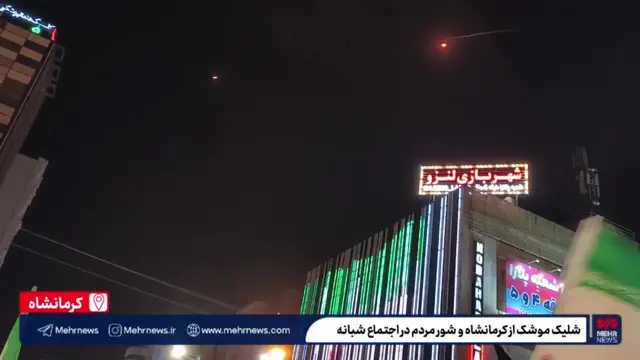
    BBC Verify has been looking at two videos showing what appears to be the launch of Iranian missiles heading towards Israel last night.

    One clip, filmed from a pro-government rally in the city of Kermanshah in western Iran, shows two projectiles in the sky as a crowd waving Iranian and Hezbollah flags chant “Allahu Akbar” in approval.

    Another video, also filmed from the same pro-government rally, shows a projectile flying over the city.

    We’ve checked that both of these videos are new and they have not been created or manipulated with AI.

    A still from a video showing two projectiles in the sky with a crowd below waving Iranian and Hezbollah flagsImage source, Mehr News Agency
  8. Iranian air defences down drone over Tehran - Mehr reportspublished at 10:12 BST

    Iranian air defences have reportedly downed a drone that was flying over Tehran, according to Iranian news agency Mehr.

    It follows reports of multiple explosions being heard in the Iranian capital.

  9. US 'bears responsibility' for Israeli aggression, says Iran's foreign ministrypublished at 10:09 BST

    We can now bring you more from Iran's foreign ministry spokesman.

    Esmali Baghaei told a press conference that the US bears responsibility for aggression from Israel, according to a translation from Iranian state media.

    Islamic Republic of Iran Broadcasting quotes Baghaei as saying the actions of Israel and conflicting stances from US officials "have cast a shadow over the negotiation atmosphere".

    The state-run Islamic Republic news agency also reports that the spokesman said the consequences of escalating tensions will "also be on the US".

    Before Israel's strikes, US President Donald Trump told several US and international media outlets that he was urging Israeli Prime Minister Benjamin Netanyahu not to retaliate against Iran's attack on Sunday night.

  10. Iran and US ‘had not stopped’ exchanging messages - Iran's foreign ministrypublished at 09:32 BST

    Ghoncheh Habibiazad
    Senior reporter, BBC Persian

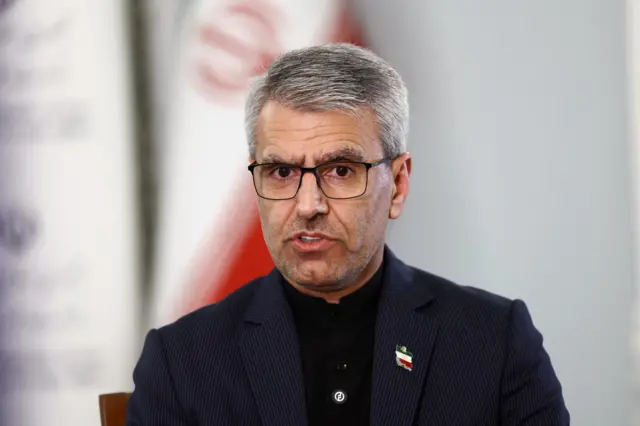
    Iran's Foreign Ministry spokesman Esmaeil Baghaei speaks during an interview, amid the U.S.-Israeli conflict with Iran, in TehranImage source, Reuters

    Esmail Baghaei, Iran’s foreign ministry spokesman, said during a press conference today that the exchange of messages between Iran and the US “had not stopped”.

    Baghaei did not clarify whether the exchange of messages has been happening since yesterday or not.

    He added that one of the reasons that Pakistan’s Interior Minister Mohsin Naqvi arrived in Tehran two days ago was to “help continue the talks and carry out mediation-related matters".

    Pakistan has been a key mediator between Iran and the US, and Naqvi reportedly delivered a written message from Pakistani leaders to Iran's Supreme Leader Mojtaba Khamenei.

    There had been some reports since 1 June on Iranian outlets close to the IRGC (Islamic Revolutionary Guards Corps) that Iran will halt exchanging messages with the US in protest at Israeli strikes in Lebanon.

    Tehran and Washington have been reportedly exchanging messages since the ceasefire on 8 April in order to reach a memorandum of understanding (MoU) in the initial stage.

    One round of negotiations in person between Iran and US delegations mediated through Pakistan happened in person on 11-12 April in Islamabad.

  11. Explosions heard in Tehranpublished at 09:20 BST
    Breaking

    We're receiving reports that several explosions have been heard in the Iranian capital, Tehran.

    It is unclear if these are related to the latest attacks from Israel, which has been launching strikes against the country in recent hours.

  12. IRGC says it attacked chemical plant in Israel’s Haifa in retaliationpublished at 09:15 BST

    Iran's Islamic Revolutionary Guards Corps (IRGC) has claimed it has launched a missile attack on a petrochemical plant in Haifa, northern Israel, according to a statement reported by Iranian Tasnim news agency.

    Tasnim quotes the IRGC as saying the attacks were in response to an earlier attack by Israel on an Iranian petrochemical facility in Mahshahr, in the south-west of the country.

    It warned Israel has started a "dangerous game" and further attacks on non-military and energy targets in the region would have consequences for the global economy.

  13. Israeli embassy spokesperson says 'job is not done' in Iranpublished at 09:04 BST

    Alex Gandler, spokesperson for Israeli embassy in the UK, has just been speaking to our colleagues on Radio 4's Today programme.

    Gandler says the country wants a ceasefire with Lebanon and would "welcome" an agreement between the US and Iran "if it's a good deal".

    He states Hezbollah "attacked us" while a ceasefire agreement between Lebanon and Israel was in place.

    The conditions of the ceasefire agreement were made between the state of Israel and the state of Lebanon, "not the state of Iran of the pseudo-state of Hezbollah", he adds.

    Gandler says "the job isn't done in Iran" and claims the country is "a patron of a terrorist organisation that is attacking Israel and using Lebanese civilians as cover".

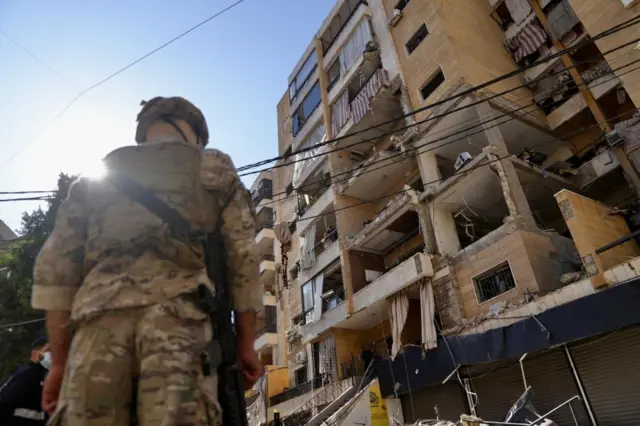
    An soldier stands at the site of an Israeli air strike on an apartment in the southern suburbs of Beirut on SundayImage source, EPA
    Image caption,

    An soldier stands at the site of an Israeli air strike on an apartment in the southern suburbs of Beirut on Sunday

  14. Israeli military says 'dozens' of fighter jets hit Iranian defence systemspublished at 08:55 BST
    Breaking

    The Israeli Defense Forces (IDF) says it has "completed a large-scale strike" on "strategic defence systems" in Iran.

    In a new statement, it says that "dozens of Israeli Air Force fighter jets" were involved in the attacks in central and western Iran, adding that the systems had been dismantled.

    "These strikes further enhance the Israeli Air Force's freedom of action in Iranian air space," the IDF says.

  15. Israeli emergency services report no casualties following Iranian attackspublished at 08:33 BST

    Earlier, we reported the Israeli Defence Forces (IDF) as saying Iran had launched another wave of missiles towards Israel and that defence systems were operating to "intercept the threat".

    Israel's emergency service organisation has since said "no casualties are known" at this stage.

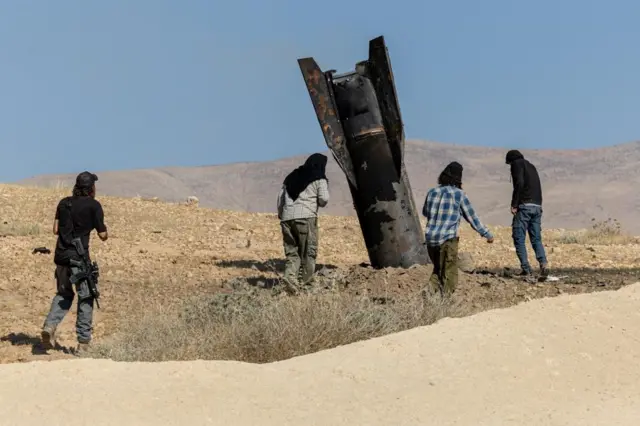
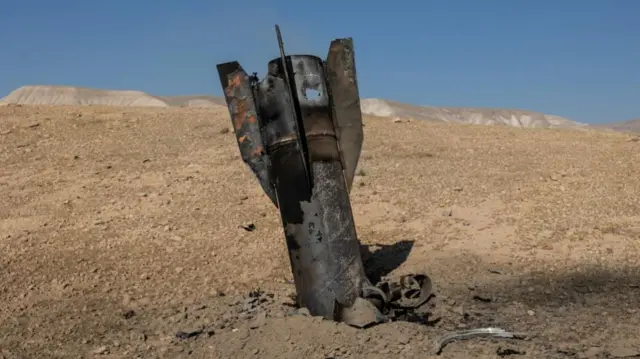
    Part of a missile protrudes from the ground in the Israel-occupied West Bank, following earlier strikes from IranImage source, Reuters
    Image caption,

    Part of a missile protrudes from the ground in the Israel-occupied West Bank, following earlier strikes from Iran

  16. Analysis

    Israel's Netanyahu under growing pressure at homepublished at 08:19 BST

    Hugo Bachega
    Middle East correspondent

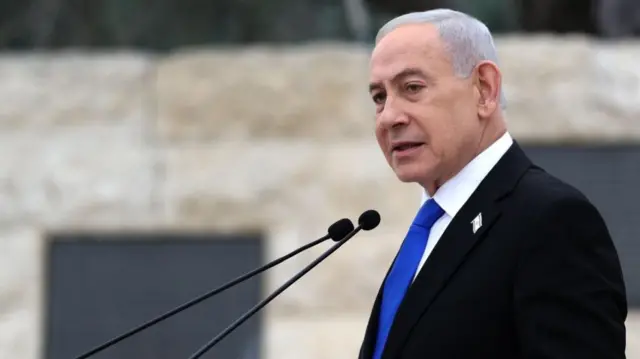
    Benjamin NetanyahuImage source, EPA

    This war has weakened the Iranian regime - described by Israeli Prime Minister Benjamin Netanyahu as an existential threat to Israel - but has not led to its collapse.

    In fact, the leadership appears to have become more confident and perhaps more confrontational.

    The indications are that Netanyahu is concerned about the potential deal between the US and Iran, considering it to be disadvantageous for Israel, and many suspect he is trying to create a situation for the war to resume.

    Netanyahu is under growing pressure at home.

    Amid discontent with Hezbollah’s continued attacks, there is support for the war in Lebanon to continue, although it is not clear what else Israel’s attacks can achieve in degrading the group as President Trump has limited Israeli actions in an attempt to de-escalate the conflict.

    Finally, elections in Israel are due to be held before October, and the prime minister may lose his job.

  17. Oil prices jump after new Iran-Israel strikespublished at 08:07 BST

    Osmond Chia
    Business reporter

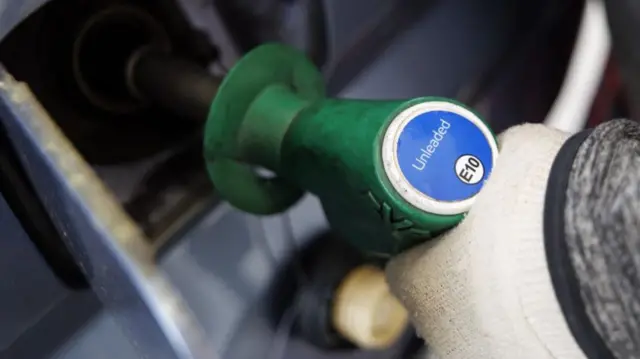
    Petrol pump UKImage source, EPA
    Image caption,

    The average price for unleaded petrol is now over £1.58 a litre in the UK, according to the RAC

    Oil prices have continued to climb after Iran and Israel fired missiles at each other for the first time since a ceasefire was agreed between the sides and the US in April.

    The price of the global benchmark Brent was up by 4.5% at $97.30 (£73) a barrel, while US-traded crude gained by 4.3% to around $94.50.

    It is too early to say whether the strikes mark a full escalation of the war, but traders are again pricing in risks to global oil markets, said Associate Professor Jiajia Yang from James Cook University in Australia.

    Asian markets fell sharply on Monday, with major indexes like South Korea's Kospi falling by nearly 8%.

  18. Israel reports new Iranian missile attackpublished at 07:49 BST

    The Israeli Defence Forces (IDF) says Iran launched missiles towards Israel "a short while ago".

    "Defense systems are operating to intercept the threat" and members of the public living "in the relevant areas" have been alerted, it added in a statement.

    Earlier, the Islamic Revolutionary Guards Corps (IRGC) said it had targeted two Israeli air bases in Nevatim and Tel Nof, according to Iranian state media.

    Part of a missile protrudes from the ground, from the ground, following strikes from Iran, in the central Israeli-occupied West BanImage source, Reuters
    Image caption,

    Part of a missile protrudes from the ground in the Israel-occupied West Bank, following earlier strikes from Iran

  19. Houthi confirms attack on Israel as group 'bans' Israeli shipping in Red Seapublished at 07:47 BST

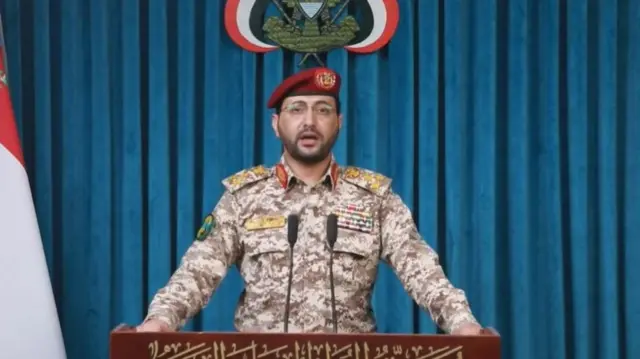
    A man speaking into two mics in a military uniform in front of a blue pleated curtainImage source, Reuters
    Image caption,

    Yahya Sarea, speaking today

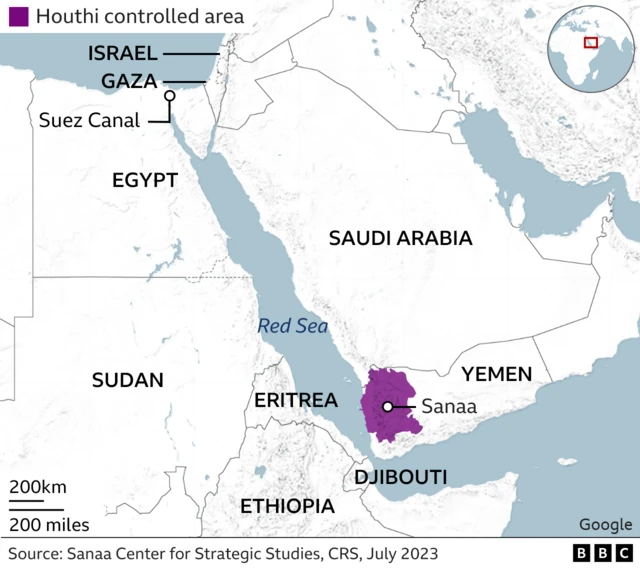
    The Houthis - the Iran-backed militia in Yemen - say they will ban all Israeli maritime navigation in the Red Sea, and any movement will be considered a target for them.

    The Houthis have continually attacked Israeli ships travelling through the Red Sea throughout the conflict.

    In a statement from spokesperson Yahya Sarea, the group also confirms it has attacked Israel with missiles.

    A map showing Yemen and surrounding countries, including neighbouring Saudi Arabia and Eritrea and Djibouti, which are across the Red Sea from Yemen.
  20. Lebanon is an obstacle in Donald Trump's efforts to strike a deal with Iranpublished at 07:17 BST

    Hugo Bachega
    Middle East correspondent, reporting from Beirut

    Smoke rises from the site of an Israeli air strike in the southern Lebanese coastal city of Tyre on SundayImage source, Getty Images
    Image caption,

    Smoke rises from the site of an Israeli air strike in the southern Lebanese coastal city of Tyre on Sunday

    The latest developments are another sign of how fragile the situation in the region is and could further complicate President Trump’s efforts to strike a deal with Iran.

    This war is unpopular in the US, where many still struggle to understand why it happened in the first place, while Iran’s closure of the Strait of Hormuz has led to an economic shock being felt around the world.

    One of the obstacles in the negotiations is the conflict in Lebanon, where the Iranian-backed militia and political party Hezbollah is based.

    The group started attacking Israel again after the killing of the Iranian supreme leader at the start of the war. Israel, in response, has carried out a devastating bombing campaign, killing more than 3,000 people including many civilians, and occupying a significant part of southern Lebanon.

    Iran says the ceasefire there includes the conflict here, and had threatened to strike Israel if it attacked the southern suburbs of Beirut known as Dahieh, where Hezbollah is based.

    Israel rejects that Lebanon is part of the truce, saying its war against Hezbollah continues.

    The group is increasingly isolated domestically but has rejected calls to disarm, something the Lebanese government says can only be achieved through diplomacy, not war.