Summary

  1. Iran 'will not retreat in the face of any threat' - President Pezeshkianpublished at 13:12 BST
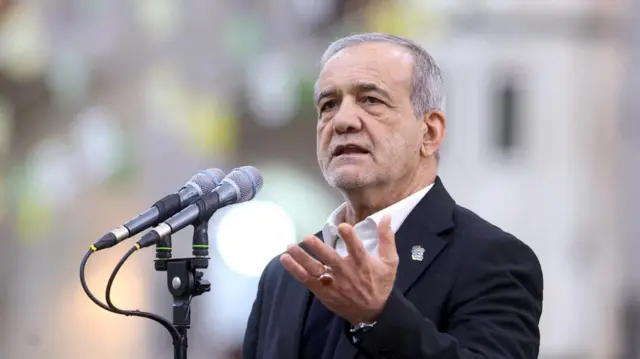
    Iranian President Masoud Pezeshkian holds up his hand while giving a speech. He is wearing a dark suit and talking into two microphones.Image source, Reuters

    Iran's president says the country has "neither abandoned the field nor the negotiating table".

    Masoud Pezeshkian says in a post on X that the country's priority is "national security and the peace of our people", adding that it would "not retreat in the face of any threat".

    The comments came after Iran’s top military command Khatam al-Anbiya central headquarters announced the cessation of its "armed forces operations", adding that it would respond "more severe and forceful than before" if attacks continued.

  2. Internet in Iran remains online after months of digital darknesspublished at 13:04 BST

    Siavash Ardalan
    BBC Persian senior reporter

    The only positive aspect of direct hostilities between Iran and Israel resuming for ordinary Iranians was that the internet has not been automatically cut off.

    It remains online after only a week of connectivity following three months of digital darkness.

    The other good news is that no civilian casualties have been reported so far.

    Only the loud sounds of distant explosions suggest that the focus of the Israeli attacks has been military bases outside Iran’s urban centres.

    The only non-military target so far has been an Iranian petrochemical plant in the province of Khuzestan, which was also hit in the previous round of fighting, resulting in no reported casualties.

    Iran said it responded by firing missiles at Israel’s petrochemical plant in the city of Haifa.

  3. Iran announces end of current attacks after exchanging fire with Israelpublished at 12:51 BST

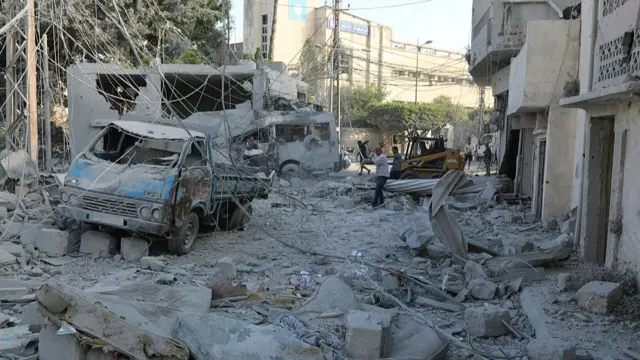
    Workers clean debris of buildings hit by missiles - telephone wires have crashed and a car has been crushedImage source, AFP via Getty Images
    Image caption,

    Workers clean debris following Israeli air strikes in southern Lebanon on Sunday

    Iran’s top military command Khatam al-Anbiya central headquarters has just announced the end of current attacks on Israel.

    But they have warned that if Israeli attacks continue, "including in southern Lebanon," Iran will respond "more severe and forceful than before."

    Let's look back at the key developments of the last day.

    Israel and Iran exchanged strikes last night and into today after Iran announced military operations in response to Israel's air strikes on Beirut in Lebanon on Sunday.

    Hezbollah said this morning that it had fired rockets at a group of Israeli soldiers in southern Lebanon, where the Israel Defense Forces (IDF) is carrying out ground operations in what it says is an attempt to stop Hezbollah firing rockets at northern Israel.

    Iran's Islamic Revolutionary Guards Corps (IRGC) claimed it launched a missile attack on a petrochemical plant in northern Israel, according to state media, after the Israeli military said it launched strikes on "several targets" at an Iranian petrochemical facility.

    The IDF also said it had completed a large-scale strike on "strategic defence systems" in Iran, while the IRGC said it had targeted two Israeli air bases in Israel, according to Iranian media.

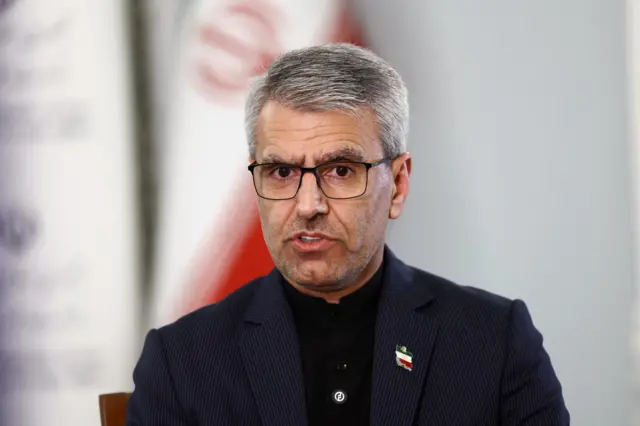
    Iran's foreign ministry spokesperson Esmail Baghaei says the US bears responsibility for aggression from Israel and that consequences of escalating tensions will "also be on the US".

    He also said that the exchange of messages between Iran and the US "had not stopped", but did not clarify whether the exchange of messages has been happening since yesterday or not.

    Earlier today Donald Trump said Israel and Iran are looking to do an "immediate ceasefire" and that things should move quickly. He previously said that Iran and Israel must stop "shooting" immediately.

  4. Iranian military says it's stopping strikes on Israelpublished at 12:31 BST
    Breaking

    Ghoncheh Habibiazad
    Senior reporter, BBC Persian

    Iran’s top military command Khatam al-Anbiya central headquarters has said in a statement that “the cessation of armed forces operations is hereby announced”.

    But they have warned in the same statement that if the attacks continue, “including in southern Lebanon,” Iran will respond “more severe and forceful than before".

    Iran started its operations yesterday in response to Israel attacking southern Beirut. Israel retaliated by attacking Iran.

    Senior Iranian political and military officials had issued warnings yesterday evening that Iran would respond militarily to what they described as breaches of ceasefire.

    Iran has maintained that they see the ceasefire in Lebanon as part of the ceasefire with Iran as well.

  5. BBC Verify

    Verified videos shows aftermath of Israeli strikes on Iranian chemical plantpublished at 12:19 BST

    By Sarah Jalali and Shayan Sardarizadeh

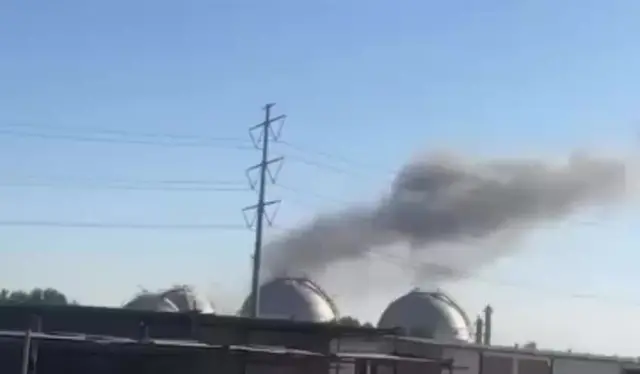
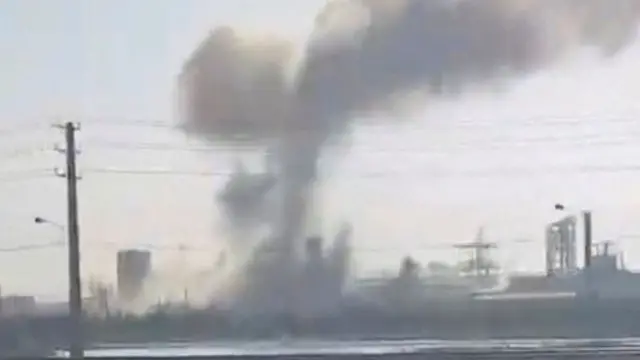
    We’ve just verified two videos showing a cloud of smoke rising over a petrochemical plant in south-western Iran after Israeli strikes.

    In one video, taken from inside a moving vehicle, we can see smoke billowing out from the Karun plant in the port city of Bandar-e Mahshahr. In another clip filmed nearby, smoke can be seen rising rising over four of the site’s spherical storage tanks.

    As we just reported, the Israel Defence Forces confirmed that it targeted the plant in a post on X, claiming that it is “producing raw materials for the Iranian terror regime's missile program”.

    The governor of Khuzestan province told Iranian media that the plant had sustained damage after the strike, but no casualties had been reported.

    A still from a video showing a cloud of smoke rising over a petrochemical plantImage source, X
  6. Israel says it hit Iranian missile production sitepublished at 12:08 BST

    The Israel Defense Forces (IDF) says its strikes on an Iranian petrochemical facility in Mahshahr were aimed at destroying infrastructure involved in the production of missiles.

    It claims the site was used by Iranian armed forces "to produce and export raw materials for weapons production" and these materials "serve as critical components for the development of ballistic missiles".

    The strikes on Mahshahr, in the south-west of Iran, were confirmed by the IDF and Iranian state media, although neither have commented on whether there were any casualties.

    Smoke can be seen rising into the sky near Mahshahr petrochemical complex in a photo taken alongside a nearby roadImage source, Reuters
    Image caption,

    Smoke rises near Mahshahr petrochemical complex after reported Israeli attack

  7. What questions do you have about the situation in Iran?published at 12:00 BST

    A purple banner that reads 'Your Voice'

    Our colleagues on the BBC News channel will be running a special programme from 15:30 BST, answering your questions, which you'll be able to stream live on this page.

    You can get in touch in the following ways: 

     Please read our terms & conditions and privacy policy.

    In some cases a selection of your comments and questions will be published, displaying your name and location as you provide it unless you state otherwise. Your contact details will never be published.

  8. Iran's new approach as war creates new kind of conflictpublished at 11:51 BST

    Lyse Doucet
    Chief international correspondent

    It used to be said that Iran prided itself on “strategic patience”, responding to actions against it at a time of its own choosing.

    A new approach is playing out now in its attacks on Israel and its response to Israeli actions in Lebanon. The new leadership which emerged in Tehran this year took a lesson from last year’s 12-day war with Israel: restraint will be seen as weakness.

    “They’re accusing us of being naïve,” an Iranian official told me of the hardliners’ criticism shortly after that confrontation ended.

    Now those critics are calling the shots. Iran’s cautious supreme leader, Ayatollah Ali Khamenei, assassinated on the first day of this war, no longer sets the rules.

    Iran, which had long tried to avoid a direct war with Washington, has now seen that war close-up.

    Even more, despite its major military and economic cost, Tehran survived.

    And, after decades of a “forward defence” strategy which relied on proxies and partners like Lebanon’s Hezbollah to prevent conflicts from reaching Iran, now Tehran is attacking in defence of its ally.

    War is creating a new kind of conflict.

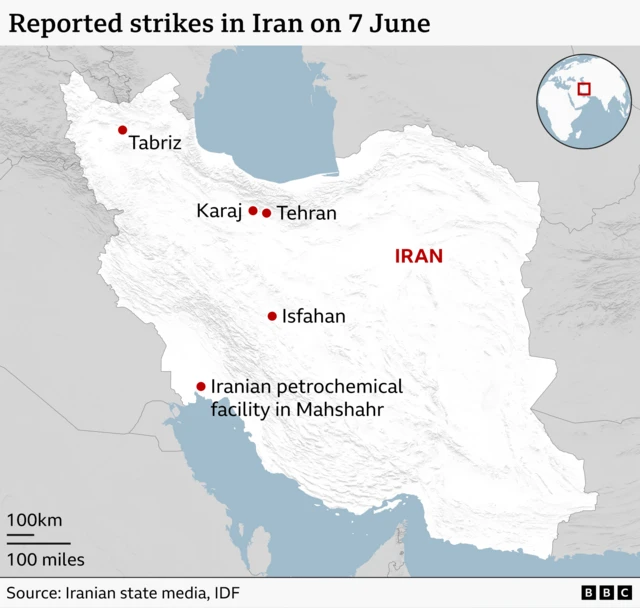
    Map of Iran titled “Reported strikes in Iran on 7 June.” Red dots mark locations of reported strikes at Tabriz in the northwest; Karaj and Tehran close together in the north; Isfahan in central Iran; and an Iranian petrochemical facility in Mahshahr in the southwest near the Gulf coast. A small inset map shows Iran’s location in the Middle East. Scale bar indicates 100 km/100 miles
  9. Israel and Iran looking for an immediate ceasefire, says Trumppublished at 11:40 BST
    Breaking

    US President Donald Trump has said final negotiations on "peace" are proceeding but are "subject to ignorance or stupidity getting in its way".

    He says in a post on Truth Social: "Both sides, Israel and Iran, are looking to do an immediate CEASEFIRE!"

    "The Blockade will remain in place, and in full force and effect, until a 'Final Deal' is reached. Things should move quickly," he adds.

  10. Starmer 'deeply concerned' as he calls on Iran and Israel to stop violencepublished at 11:19 BST

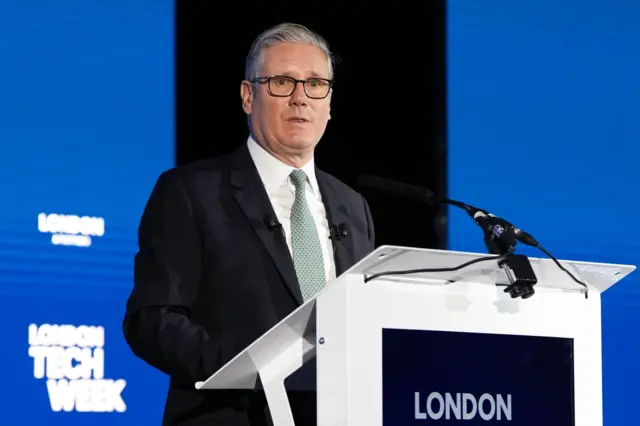
    Keir Starmer stands at a white podium wearing a black suits and glasses as he gives a speech on stage at the London Tech Week expositionImage source, EPA
    Image caption,

    Starmer's comments came shortly after he delivered a speech at the London Tech Week exhibition

    Prime Minister Keir Starmer has called for Iran and Israel to "get back to a ceasefire" after strikes resumed between the two countries.

    Starmer says he is "deeply concerned about the resumption of violence" in the Middle East, adding that "serious negotiations" are going on towards "a lasting peace".

    The conflict is having "a huge impact across the world", including in the UK, Starmer says.

    "So I say to all parties, we all have a responsibility to get back to that ceasefire and it’s really important we’re very clear about that.”

  11. Hezbollah says it launched retaliatory attack on Israeli soldiers in Lebanonpublished at 11:04 BST

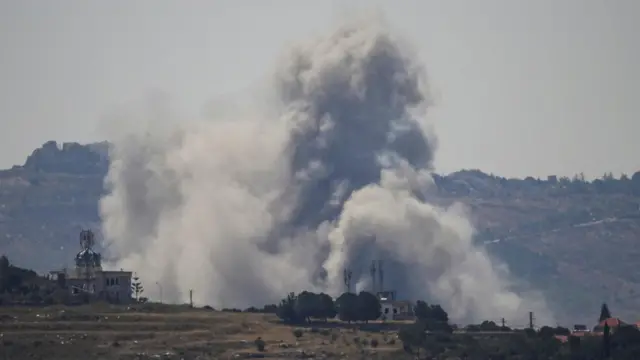
    Smoke billows from southern Lebanon, following Israeli strikes, as seen from Nabatieh, Lebanon, June 8, 2026Image source, Reuters
    Image caption,

    Smoke billows from southern Lebanon, following Israeli strikes, as seen from Nabatieh, Lebanon

    Hezbollah says it fired a rocket barrage at a group of Israeli army vehicles and soldiers in southern Lebanon earlier this morning.

    In an update on Telegram, Hezbollah claims it targeted a "gathering" of military personnel on the outskirts of Beit Yahoun in response to Israel's "violation of the ceasefire and its attacks on villages in southern Lebanon".

    Israel has not yet commented and the extent of any damage or injuries is currently unclear.

    The Israeli military is carrying out ground operations in southern Lebanon in what it says is an attempt to stop Hezbollah firing rockets at northern Israel.

  12. No sign turmoil is easing in Middle Eastpublished at 10:57 BST

    The BBC's international editor Jeremy Bowen says "the Middle East is in turmoil on every level right now and there is no sign that that turmoil is easing".

    You can listen to his report on the US-Israel war with Iran and the consequences it could have for years to come in the video below.

  13. Israel and Iran must stop 'shooting' immediately - Trumppublished at 10:38 BST
    Breaking

    US President Donald Trump says Israel and Iran must immediately stop “shooting", in a new post on Truth Social.

    Prior to Israel's retaliatory strikes, US President Donald Trump told several US and international media outlets that he was urging Israeli Prime Minister Benjamin Netanyahu not to retaliate against Iran's attack.

  14. BBC Verify

    Verified footage shows missiles launched from Iranpublished at 10:28 BST

    By Shayan Sardarizadeh and Paul Brown

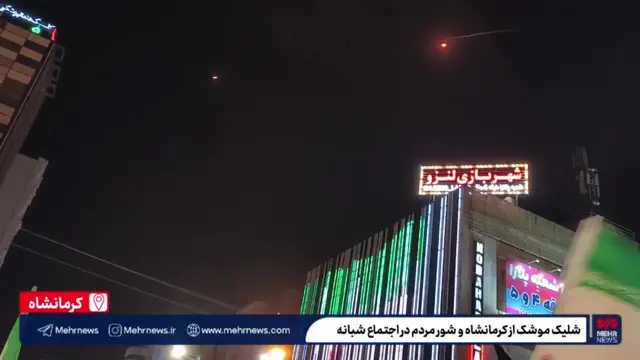
    BBC Verify has been looking at two videos showing what appears to be the launch of Iranian missiles heading towards Israel last night.

    One clip, filmed from a pro-government rally in the city of Kermanshah in western Iran, shows two projectiles in the sky as a crowd waving Iranian and Hezbollah flags chant “Allahu Akbar” in approval.

    Another video, also filmed from the same pro-government rally, shows a projectile flying over the city.

    We’ve checked that both of these videos are new and they have not been created or manipulated with AI.

    A still from a video showing two projectiles in the sky with a crowd below waving Iranian and Hezbollah flagsImage source, Mehr News Agency
  15. Iranian air defences down drone over Tehran - Mehr reportspublished at 10:12 BST

    Iranian air defences have reportedly downed a drone that was flying over Tehran, according to Iranian news agency Mehr.

    It follows reports of multiple explosions being heard in the Iranian capital.

  16. US 'bears responsibility' for Israeli aggression, says Iran's foreign ministrypublished at 10:09 BST

    We can now bring you more from Iran's foreign ministry spokesman.

    Esmail Baghaei told a press conference that the US bears responsibility for aggression from Israel, according to a translation from Iranian state media.

    Islamic Republic of Iran Broadcasting quotes Baghaei as saying the actions of Israel and conflicting stances from US officials "have cast a shadow over the negotiation atmosphere".

    The state-run Islamic Republic news agency also reports that the spokesman said the consequences of escalating tensions will "also be on the US".

    Before Israel's strikes, US President Donald Trump told several US and international media outlets that he was urging Israeli Prime Minister Benjamin Netanyahu not to retaliate against Iran's attack on Sunday night.

  17. Iran and US ‘had not stopped’ exchanging messages - Iran's foreign ministrypublished at 09:32 BST

    Ghoncheh Habibiazad
    Senior reporter, BBC Persian

    Iran's Foreign Ministry spokesman Esmaeil Baghaei speaks during an interview, amid the U.S.-Israeli conflict with Iran, in TehranImage source, Reuters

    Esmail Baghaei, Iran’s foreign ministry spokesman, said during a press conference today that the exchange of messages between Iran and the US “had not stopped”.

    Baghaei did not clarify whether the exchange of messages has been happening since yesterday or not.

    He added that one of the reasons that Pakistan’s Interior Minister Mohsin Naqvi arrived in Tehran two days ago was to “help continue the talks and carry out mediation-related matters".

    Pakistan has been a key mediator between Iran and the US, and Naqvi reportedly delivered a written message from Pakistani leaders to Iran's Supreme Leader Mojtaba Khamenei.

    There had been some reports since 1 June on Iranian outlets close to the IRGC (Islamic Revolutionary Guards Corps) that Iran will halt exchanging messages with the US in protest at Israeli strikes in Lebanon.

    Tehran and Washington have been reportedly exchanging messages since the ceasefire on 8 April in order to reach a memorandum of understanding (MoU) in the initial stage.

    One round of negotiations in person between Iran and US delegations mediated through Pakistan happened in person on 11-12 April in Islamabad.

  18. Explosions heard in Tehranpublished at 09:20 BST
    Breaking

    We're receiving reports that several explosions have been heard in the Iranian capital, Tehran.

    It is unclear if these are related to the latest attacks from Israel, which has been launching strikes against the country in recent hours.

  19. IRGC says it attacked chemical plant in Israel’s Haifa in retaliationpublished at 09:15 BST

    Iran's Islamic Revolutionary Guards Corps (IRGC) has claimed it has launched a missile attack on a petrochemical plant in Haifa, northern Israel, according to a statement reported by Iranian Tasnim news agency.

    Tasnim quotes the IRGC as saying the attacks were in response to an earlier attack by Israel on an Iranian petrochemical facility in Mahshahr, in the south-west of the country.

    It warned Israel has started a "dangerous game" and further attacks on non-military and energy targets in the region would have consequences for the global economy.

  20. Israeli embassy spokesperson says 'job is not done' in Iranpublished at 09:04 BST

    Alex Gandler, spokesperson for Israeli embassy in the UK, has just been speaking to our colleagues on Radio 4's Today programme.

    Gandler says the country wants a ceasefire with Lebanon and would "welcome" an agreement between the US and Iran "if it's a good deal".

    He states Hezbollah "attacked us" while a ceasefire agreement between Lebanon and Israel was in place.

    The conditions of the ceasefire agreement were made between the state of Israel and the state of Lebanon, "not the state of Iran of the pseudo-state of Hezbollah", he adds.

    Gandler says "the job isn't done in Iran" and claims the country is "a patron of a terrorist organisation that is attacking Israel and using Lebanese civilians as cover".

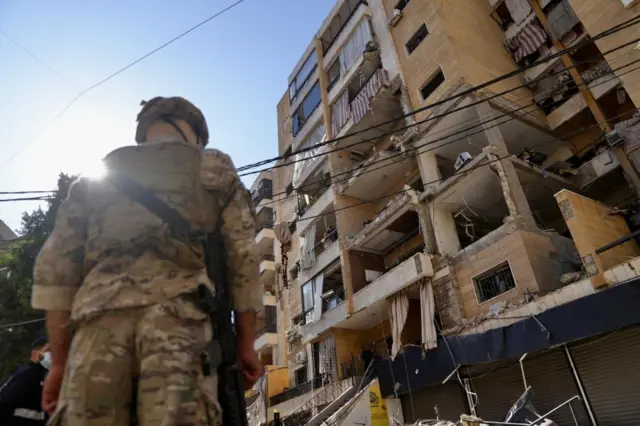
    An soldier stands at the site of an Israeli air strike on an apartment in the southern suburbs of Beirut on SundayImage source, EPA
    Image caption,

    An soldier stands at the site of an Israeli air strike on an apartment in the southern suburbs of Beirut on Sunday