

EXPLORE EPISODE EIGHT - 12 to 9
Local Navigation

Bringing to life spectacles of natural wonder on our doorstep
No.11
Flocks of Pink-footed Geese
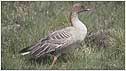
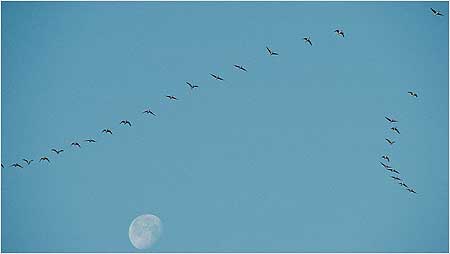
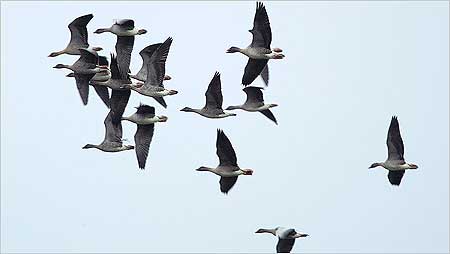
Flocks of geese are one of the most spectacular sights in the animal kingdom due to their sheer numbers and swooping patterns in the skies above. Pink-footed Geese are particularly impressive when they take to the air en masse. As many as 8,000 birds can fly in and out at any one time resulting in a spectacular aerial display.
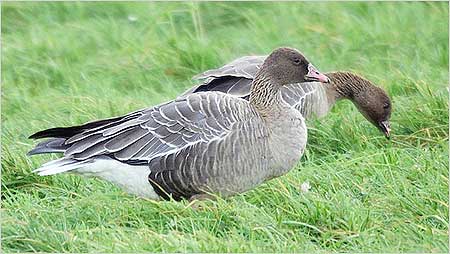
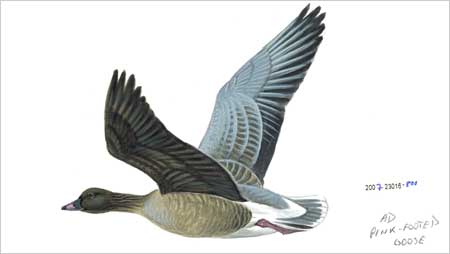
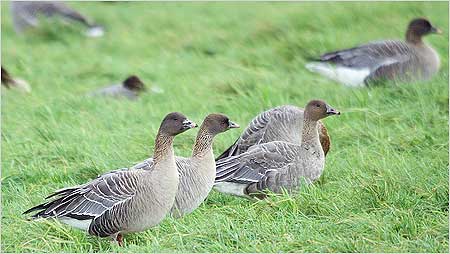
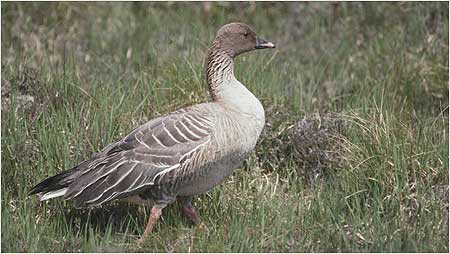
The Pink-footed Goose is, as its name suggests, characterised by its pink bill and pink feet. It also has a chocolate brown head which distinguishes it from other geese such as the White-fronted Goose, the Greylag and the Bean Goose.
This medium-sized goose is 'daintier' than other geese. Although this bird does not breed in the British Isles, large numbers spend the winter along our coastlines. They fly in from their breeding grounds in Spitsbergen, Iceland and Greenland - and winter numbers can reach 240,000 individual birds.
Web links
The BBC is not responsible for the content of external internet sites.
Photo gallery
Watch and Listen
Watch the impressive sight of Pink-footed Geese arriving en masse over Norfolk with presenter Mike Dilger:
Listen to the sound of a Pink-footed Goose on the RSPB website:
Help playing audio/video
Tips
Tips for viewing this species:
- Winter is the best season for watching massive flocks of geese. The birds return to their breeding grounds in spring and summer. The best months are late September-March.
- Watch for the birds feeding on fields - the remains of a harvested sugar beet crop is a favourite food. Find a freshly harvested beet field and you'll find the birds.
- One of the best places to see the Pink-footed Geese flocks is RSPB Snettisham on the north Norfolk coast.Get here early morning for the best views of the geese flying in. There's also a fly back to the coast at night which can be just as spectacular. Winter numbers in Norfolk can reach 100,000.
- Another good spot for geese flocks is Holkham on the north Norfolk coast.
- Don't forget your binoculars and scope for a closer view although the flocks are so large that they can be seen easily with the naked eye.
- Choose the correct time. The best time to watch the geese is at first light when they fly in to north Norfolk to feed from their roosts on The Wash.
- Listen for the geese's wings beating on masse and the honking noise of the individual birds.
Habitat
The main habitats forPink-footed Geese are wetlands, coastal areas and estuaries. North Norfolk is one of the best spots in the British Isles for a sensational display of these birds flying en masse - especially around Snettisham on the coast. One hundred thousand birds, half of the world's population, converges on the area every winter on their migration from Iceland.
The birds fly out at first light daily and head to nearby fields to feed on the tops of the sugar beet crop. As the birds fly in, there is an spectacular aerial display.
Prior to 1975 large flocks of geese were a rare sight on the north Norfolk coast. However, as sugar beet production exploded so did the numbers of geese attracted by this high energy food supply.
The lead bird in a flock is usually a mature adult leading juveniles and other adult birds. The front bird takes the wind and is buffeted for a few miles before transferring to the back of the group - when another bird then takes the front spot to save energy for the group as a whole.
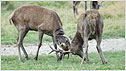
No. 12 - Rutting deer
One of nature's great spectacles is deer rutting. Red Deer mate between late September and November when the mature stags seek out female hinds.
Best places to see - Lyme Park (Cheshire), New Forest, Galloway Forest.
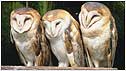
No. 10 - Barn Owls hunting
The Barn Owl is one of the UK’s most popular birds with its stunning heart-shaped white face and gold-beige plumage. Look out for them hunting.
Best places to see - Norfolk, Great Ouse (The Wash) and farming areas.
.
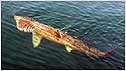
No. 9 - Basking Sharks
The Basking Shark is distantly related to the Great White Shark and can be spotted all around the British Isles coast.
Best place to see - Hebrides (Scotland).


Also on Nature's Top 40
BBC Nature & Wildlife
More from bbc.co.uk nature

BBC iD
BBC iDBBC navigation
BBC links

BBC © 2014The BBC is not responsible for the content of external sites. Read more.
This page is best viewed in an up-to-date web browser with style sheets (CSS) enabled. While you will be able to view the content of this page in your current browser, you will not be able to get the full visual experience. Please consider upgrading your browser software or enabling style sheets (CSS) if you are able to do so.
