

EXPLORE EPISODE SIX - 20 to 17
Local Navigation

Bringing to life spectacles of natural wonder on our doorstep
No.19
Autumn colours
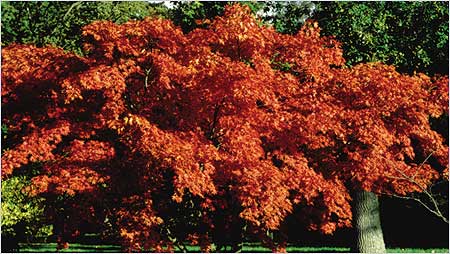
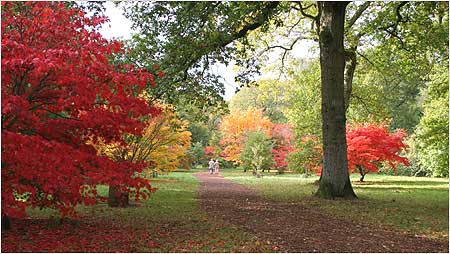
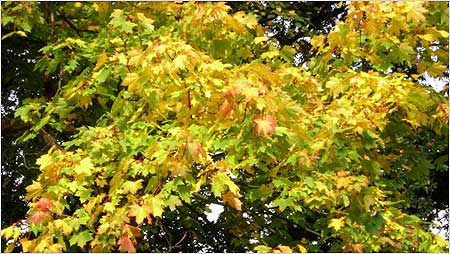
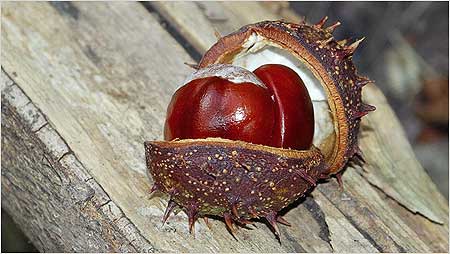
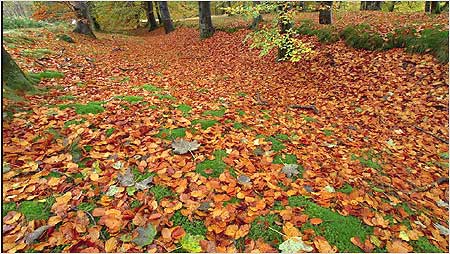
Autumn is the season of stunning tree colours with spectacular russets, oranges, yellows and browns.
But why do leaves change colour? Early in the year, when there is lots of light, a tree's leaves produce chlorophyll which is used to convert sunlight into energy which the leaf stores as sugar.
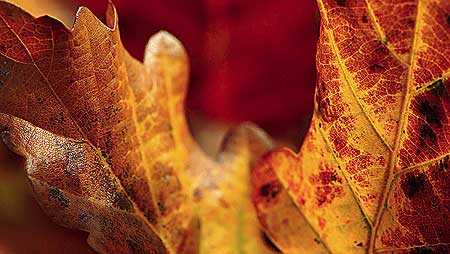
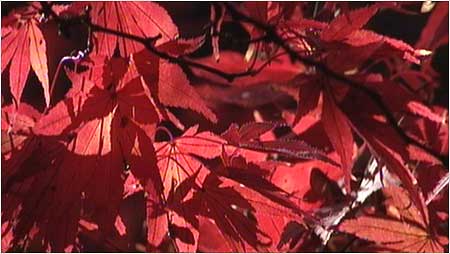
As the light fades and temperatures drop at the end of summer, the leaves stop making chlorophyll which gives them their green pigment, revealing the colours underneath. Some tree species, notably Beech and Maple, have more of a pigment called anthocyanin, resulting in red leaves in autumn. Hazel and Birch have more of the carotene pigment resulting in yellow leaves.
The intensity of colour in the leaves is controlled by how concentrated the stored sugar is. The more concentrated the sugar, the greater the intensity of the colours. Hot dry September nights with cool temperatures can result in spectacular autumn tints and hues.
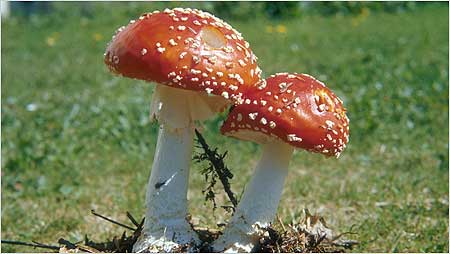
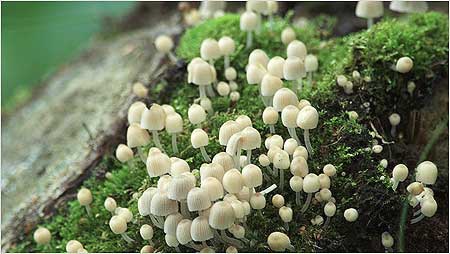
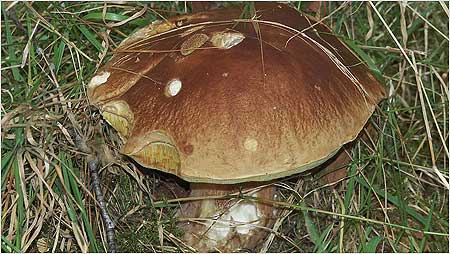
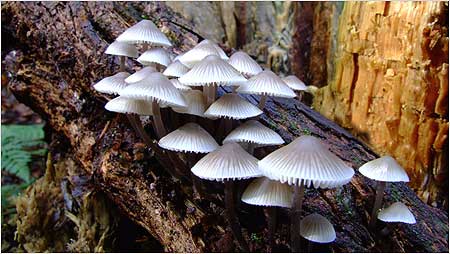
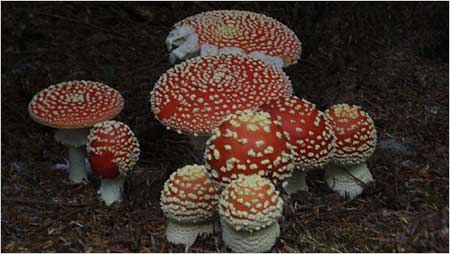
Autumn is also the best season for fantastic fungi displays. There are around 12,000 species of fungi in the UK. One of the best known is the red and white spotted Fly Agaric.
Waxcaps are grassland fungi which can be yellow, orange, tawny or white in colour - all with waxy caps. They rely heavily on rainfall because they don’t grow near trees which would normally provide them with moisture. Waxcaps don’t like frost and can only survive about four frosty spells before they disappear.
Photo credits
Photographs courtesy of Jaybee/North East Wildlife and Westonbirt Arboretum.
Web links
Friends of Westonbirt Arboretum
The BBC is not responsible for the content of external internet sites.
Photo gallery
Watch and Listen
Enjoy an autumn extravaganza of colour at Thorp Perrow in Yorkshire and Longshaw Estate in Derbyshire with presenter Mike Dilger:
Help playing audio/video
Tips
Tips for viewing this species:
- The intensity of autumn tree colours is dependant on the weather. The brightest autumn colours are produced when dry sunny days leading up to the beginning of autumn are followed by cool dry nights.
- The best time to see autumn colour varies every year. It depends on the weather, day length and geography. The full onset of autumn tints can differ from the north to south of Britain.
- The Woodland Trust's records show the average date for leaves taking on their first autumn tints. Mid-September is best for Horse Chestnuts. The last week in September is generally a good time for Beech, Field Maple, Rowan and Silver Birch. And the first week in October is excellent for Ash and Oak.
- Full autumn colours occur, on average, two to three weeks later than these dates. Weather variations can affect the onset of these full colours so check for seasonal changes!
- Get out and about in your local woodland. There are more than 1,000 Woodland Trust sites around the UK which are open free to the public.
- Check the Woodland Trust's interactive map featuring some of the best places to find autumn colours across Britain.
- Good places to look for autumn colours include Thorp Perrow (North Yorkshire), Longshaw (Derbyshire), Westonbirt (Gloucestershire), Grizedale Forest (Cumbria), and Dawyck Arboretum (Scottish Borders).
- Autumn is a great season to see fungi with their fruiting bodies - the combination of wet but mild weather provides perfect conditions. Take a good tree and fungi identification book with you on your autumn walks. Certain types of fungi only grow with specific tree species which is helpful in identifying them.
- Waxcap fungi are best seen from October onwards in pastures where there has been no ploughing or artificial fertilisation.
- Beware - some species of fungi are poisonous!
Habitat
Deciduous woodlands, country estates and parks with woods are fantastic habitats for stunning autumn tree colours.
Some of the best woodlands for autumn colours and fungal forays are:
* Thorp Perrow (Bedale, North Yorkshire) - 85 acres of woodland, providing excellent opportunities for spectacular autumn walks. A walk around the site is like a journey through the flora and fauna of the world. Highlights include Beeches, the Chinese Spindle Tree with its pale pink waxy flowers with bleached leaves, and the Smokebush with its gorgeous reddy purple leaves.
* Longshaw (Peak District, Derbyshire) - a good place for autumn trees and fungi especially waxcaps.
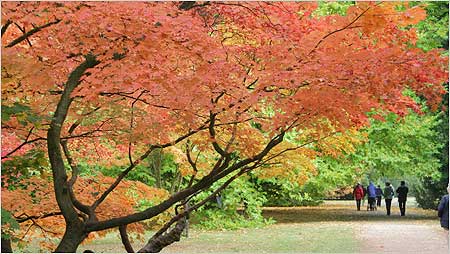
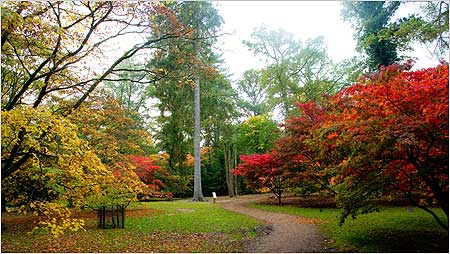
* Westonbirt (Gloucestershire) - renowned for its spectacular autumn colours. Look out for Japanese Maple, Paperback Maple, Incense Cedar, Beech, Tulip Tree and Horse Chestnut. The arboretum also boasts over 1,000 species of fungi.
* Harlow Carr Gardens (Harrogate, North Yorkshire) - a fine collection of red, yellow and orange-coloured acers.
* Dawyck Arboretum (Peebles, Scottish Borders) - Maples, Rowans, Birches and Cherries.
Fungi are commonly found in woodlands but some can also be found in grassland and heathland habitats. They grow by absorbing water and food from their surroundings, usually from living and dead plants and animals. Many types of fungi have a symbiotic or mycorrhizal association with plants and trees where the fungus colonizes the roots of a host plant.
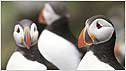
No. 20 - Puffins
Puffins are often described as comical looking birds - they've been nicknamed 'sea parrots' and 'the clown of seabirds'.
Best places to see - Isle of May (Scotland), Farne Islands (Northumberland), Skomer (Wales).
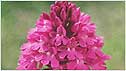
No. 18 - Wild Orchids
Orchids are arguably the most glamorous and mysterious of Britain's wild plant families. Summer is a great time to see wild orchids in proliferation.
Best places to see - Kenfig (South Wales), Kent Downs.
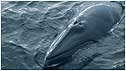
No. 17 - Minke Whales
Go whale watching and read our top tips on how to see one of Britain's largest mammals in the waters around our coasts.
Best places to see - Mallaig (West Scotland).


Also on Nature's Top 40
BBC Nature & Wildlife
More from bbc.co.uk nature

BBC iD
BBC iDBBC navigation
BBC links

BBC © 2014The BBC is not responsible for the content of external sites. Read more.
This page is best viewed in an up-to-date web browser with style sheets (CSS) enabled. While you will be able to view the content of this page in your current browser, you will not be able to get the full visual experience. Please consider upgrading your browser software or enabling style sheets (CSS) if you are able to do so.
