

EXPLORE EPISODE SIX - 20 to 17
Local Navigation

Bringing to life spectacles of natural wonder on our doorstep
No.18
Wild Orchids
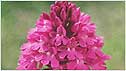
Orchids are arguably the most glamorous and mysterious of Britain's wild plant families. There are around 50 orchids native to Britain and Ireland. Orchids have extraordinary lifecycles and sometimes bloom only once in a decade.
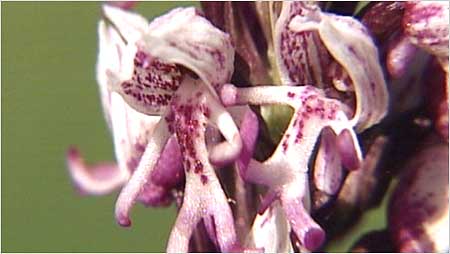
Orchids are pollinated by insects which they attract either by their smell or by resembling insects. The flowers of some orchids exaggerate the most appealing features of the insect they are trying to attract, effectively creating irresistible mates in petal form. A male insect is tricked into thinking it’s a female - and goes on to visit other flowers, thereby transferring pollen and ensuring cross fertilisation.
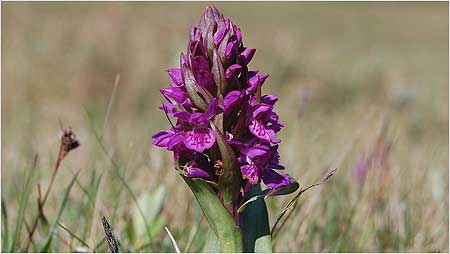
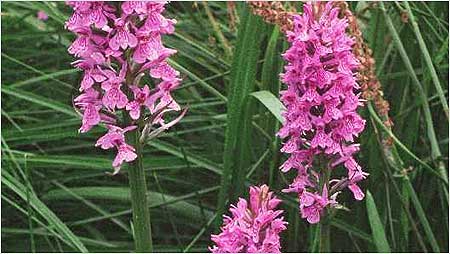
The Common Spotted Orchid is the most frequent British orchid and is found in a wide variety of habitats. It can vary in colour from almost pure white to deep pink and ranges in height from a few inches to two feet. This orchid is spectacular because it is very colourful and can appear in large numbers – often thousands.
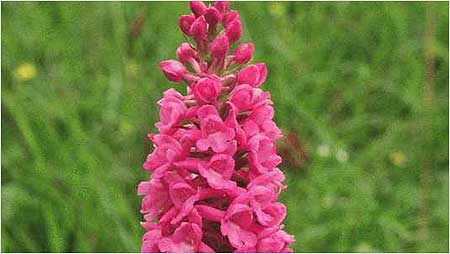
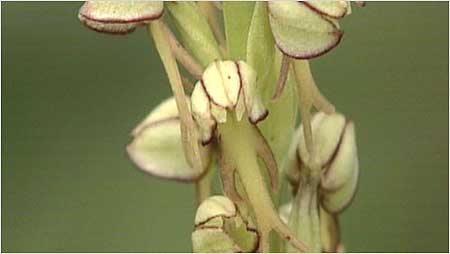
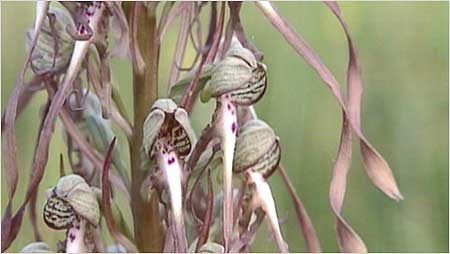
Other impressive varieties are the Pyramidal Orchid, with its striking purple flowers, and the Bee Orchid which resembles a bee.
Orchid seeds are very small - when they are spread by the wind, they need to land somewhere that has ideal conditions of light, moisture and warmth. Orchids also need to be infected with a mycorrhizal fungus from the soil if they are to survive. The fungus attacks the orchid but the flower breaks down the fungal cells from which it derives the soil nutrients which it is unable to obtain for itself.
Orchids are perennial - during the winter they die back to an underground tuber or root system from which fresh leaves arise each spring.
Spotted Orchids and Marsh Orchids take five or six years to mature and flower for the first time.
Photo credits
Photographs courtesy of Natural England and Bridgend Tourism.
Web links
Kenfig National Nature Reserve
The BBC is not responsible for the content of external internet sites.
Photo gallery
Watch and Listen
Enjoy an Orchid orgy in Buckinghamshire with presenter Chris Packham:
Help playing audio/video
Tips
Tips for viewing this species:
- June is the best month for orchids when they are in full bloom.
- Look for a profusion of colour and use your sense of smell - a strong perfumed odour is a good clue!
- Don't forget to take an orchid identification book and note pad when going on an orchid safari. A magnifying glass can be helpful if you want to see the flowers close up.
- Orchids can be very difficult to identify - there is often considerable variation in colour and markings within any large population of a single species.
- Expect the unexpected! One of the most interesting things about orchids is their unpredictability – thousands of them can suddenly pop up somewhere when the conditions are right. Some sites are much more reliable than others.
- Look very carefully when you're trying to identify an orchid. Orchids will hybridise – two different species will cross. This produces a new plant that will have characteristics of both species which can make identification difficult.
- Don't pick the orchids! Be careful where you're walking - keep to paths and tracks to avoid trampling on the flowers.
- The South of England is one of the richest part of the British Isles for orchids due to its mild climate and chalk grasslands. Great places to go orchid spotting include Kent Downs, Murlough (Northern Ireland), Kingcombe Meadows (Dorset), Martin Down National Nature Reserve, Fontmell Down (Dorset), Cuckmere Haven (East Sussex) and Ditchling Beacon (Sussex).
- Kenfig in South Wales boasts an orchid orgy in the summer.
Habitat
Orchids can thrive in a variety of habitats but prefer grasslands, wet coastal dunes, scrub and woodlands. The majority of orchids are found in southern England and Wales.
The Common Spotted Orchid is widespread in calcareous (chalk or limestone) grasslands. It is also found in open woodlands, old quarries, railway banks and road verges through Britain and Ireland. It will even colonise waste ground and abandoned industrial sites.
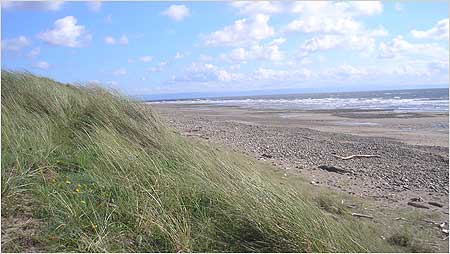
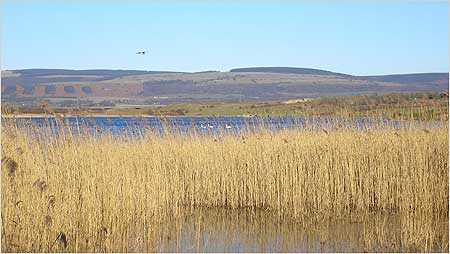
The Kenfig National Nature Reserve at Port Talbot in South Wales is one of the best places to see wild orchids. It boasts 15 different species, some in huge numbers. The profusion of orchids is largely the result of the mosaic of habitats on this coastal reserve from wet dune areas to dry grassland and woodland. Look for its pink carpet of Pyramidal Orchids, the stunning Bee Orchids, and the beautiful Marsh Helleborine in the dune areas.
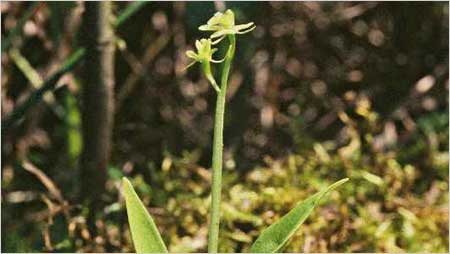
The jewel in the botanical crown of Kenfig is the Fen Orchid - there are between 300 and 400 of them, 95% of British population. It isn't the most stunning orchid but it is one of the rarest and fussiest.
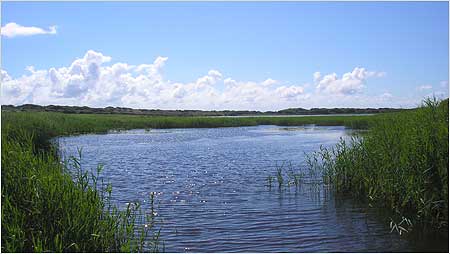
The dune 'slacks' at Kenfig are watery areas lying between the high dunes on the reserve. Some orchid varieties love these humid, high moisture content areas especially helleborines.
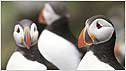
No. 20 - Puffins
Puffins are often described as comical looking birds - they've been nicknamed 'sea parrots' and 'the clown of seabirds'.
Best places to see - Isle of May (Scotland), Farne Islands (Northumberland), Skomer (Wales).
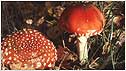
No. 19 - Autumn colours
Autumn is the season of stunning tree colours with spectacular russets, oranges, yellows and browns.
Best places to see - Thorp Perrow (North Yorks), Westonbirt (Glos), Longhaw (Sheffield).
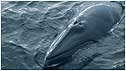
No. 17 - Minke Whales
Go whale watching and read our top tips on how to see one of Britain's largest mammals in the waters around our coasts.
Best places to see - Mallaig (West Scotland).


Also on Nature's Top 40
BBC Nature & Wildlife
More from bbc.co.uk nature

BBC iD
BBC iDBBC navigation
BBC links

BBC © 2014The BBC is not responsible for the content of external sites. Read more.
This page is best viewed in an up-to-date web browser with style sheets (CSS) enabled. While you will be able to view the content of this page in your current browser, you will not be able to get the full visual experience. Please consider upgrading your browser software or enabling style sheets (CSS) if you are able to do so.
