

EXPLORE EPISODE SIX - 20 to 17
Local Navigation

Bringing to life spectacles of natural wonder on our doorstep
No.17
Minke Whales
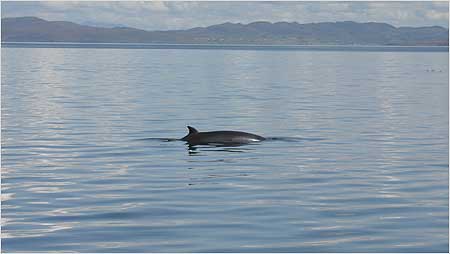
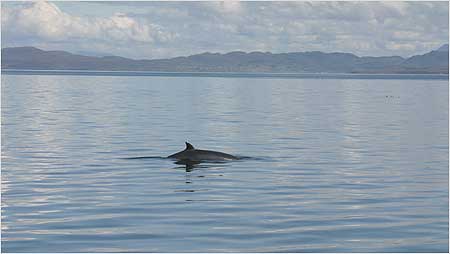
The Minke Whale isone of Britain's largest mammals although it's small in size in relation to other members of the whale family. They are around 25 feet long and can weigh 10 tonnes.
The name Minke reflects the animal's history. Minke was an 18th Century Norwegian whaler infamous for breaking the rules about the size of whales he was permitted to hunt. Soon all the small whales became known as Minkes and eventually the name was formally adopted as the name for this species.
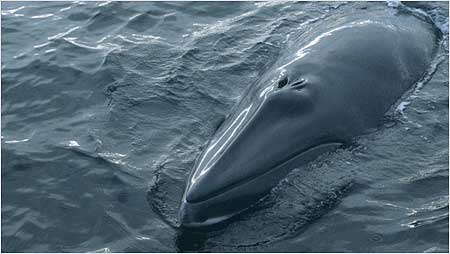
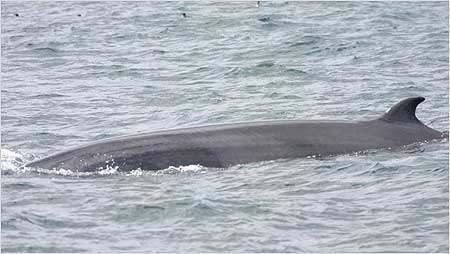
Today the Minke is Britain's most common whale. It has a sharply pointed snout hence its nickname - pikehead. It is dark grey or black but its underside is white and it has a distinctive white band on its flippers, which can be seen below the surface.
These mammals get air into their lungs through blowholes and therefore have to surface. However they can remain underwater for 20 minutes or more.
The Minke is a baleen whale which means that it is a filter feeder. The term baleen refers to the series of plates that hang down from the whale's top jaw - these act like a sieve catching fish and shrimps from the water.
Some Minkes return each year to their favourite summer feeding areas. They’re sleek and fast swimmers, reaching speeds of 40 kms an hour.
Minkes have a fascinating range of behaviour. A common activity is 'spy hopping' when a whale puts its head above water to get a better look at a boat and those on board!
Like other whales and dolphins Minkes also 'breach' – they throw themselves clear of the water and then dive head first or land with a spectacular splash. Why they do this isn’t known but it’s one of the most sights in the animal kingdom.
Photo credits
Photographs courtesy of the Hebridean Whale and Dolphin Trust. Visit their website to find out how to become a whale recorder - or why not adopt a whale?
Web links
Seawatch Foundation
Hebridean Whale and Dolphin Trust
The BBC is not responsible for the content of external internet sites.
Photo gallery
Watch and Listen
Go whale watching off the west coast of Scotland with presenter Sanjida O'Connell and watch a pod of Minke Whales:
Listen to the sound of Minke Whales captured by a marine biologist:
Help playing audio/video
Tips
Tips for viewing this species:
- Getting great views of Minke Whales is about being in the right place at the right time. The best time to watch the whales is between July and September.
- Look out for organised boat trips and whale watching excursions. A great starting point is the west coast of Scotland where visitors can take the ferry from Mallaig to the Sound of Sleet (and the Isle of Skye or Rum and Eigg). Alternatively take a smaller boat to get even better views. Also look out for Killer Whales and the occasionally Hump Back.
- Another good whale watching spot is the Pembrokeshire coast in Wales. Take to the seas! One of the best ways of seeing Puffins during the summer is to take a boat to the Farne Islands where thousands of the birds can be seen on sea and land. Visitors can disembark on Inner Farne, run by the National Trust, where a pathway takes wildlife watchers close to the Puffins and their nests.
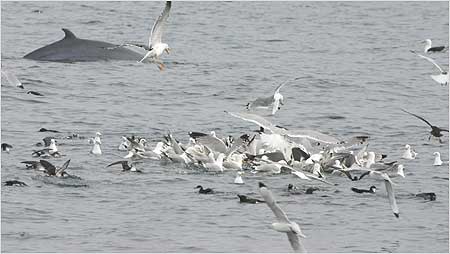
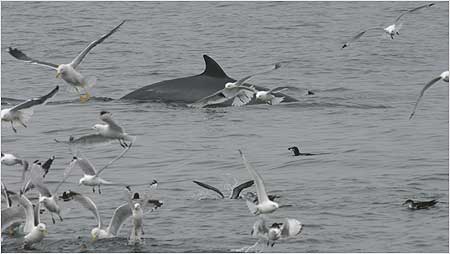
- Know how to 'read' the sea. Use binoculars to scan for birds diving or feeding in groups on the surface of the water which might indicate the presence of a whale. Large shoals of small fish attract birds such as shearwaters, kittiwakes and gulls - the birds keep an eye out for the whales as they herd fish into tight shoals and bring them to the surface which makes it easier for the birds to catch them.
- Watch for whales blowing bubbles below the water to push the fish nearer to the surface.
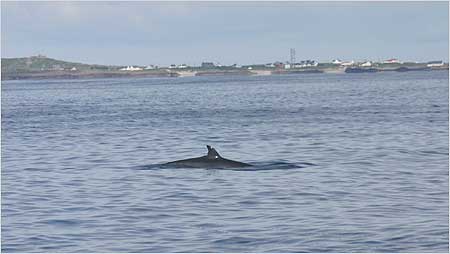
- Scan the water for whale fins as they swim along at the surface - their fins stick out of the water as they break the surface.
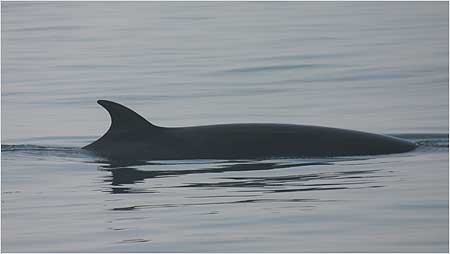
- Keep your eyes open for whales surfacing. As they come to the surface, they 'roll' and you'll be able to see the smooth curve of their back followed by a dorsal fin, a tail and sickle shaped fin towards the end of its body.
- Look for typical whale behaviour - spy hopping, lunge feeding, and breaching.
- Minke Whales are inquisitive and frequently approach boats and swim beside them. If they don’t feel bothered by the boat, they may come towards it and poke their head out of the water for a better look – known as 'spy hopping'.
- From a distance it's easy to mistake a Minke for a dolphin or porpoise. The most distinctive features are the white bands on the Minkes' flippers. Minkes are also considerably larger and have a longer back with a fin at the end.
Habitat
Minke Whales are seen in coastal and inshore waters, sometimes in estuaries, bays and inlets. They are usually solitary but sometimes can be spotted in groups of two or three. Minke Whales spend 95 per cent of their time underwater.
The Hebridean Whale and Dolphin Trust has identified more than 65 whales which live in Scottish Hebridean waters during the summer. Some Minke can be seen around the UK all year even in winter. However we don’t know whether others migrate and we're unsure exactly where they go to breed.
The Minke has become more common around the UK and has expanded its range in the last 20 years. This may partly be the result of a reduction in the population of other whale species such as Fin Whales and Humpbacks.
These whales also have a dramatic way of feeding - they herd fish such as sand eels or sprats and bring them to the surface. Sometimes they do this by blowing bubbles just below the surface, probably to herd the fish. When the fish are close to the surface they are spotted by sea birds that dive to catch them. The fish then form a tight ball in an effort to escape but the whales lunge forward out of the water in an attempt to grab as many of them as possible. This results in a feeding frenzy.
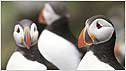
No. 20 _ Puffins
Puffins are often described as comical looking birds - they've been nicknamed 'sea parrots' and 'the clown of seabirds'.
Best places to see - Isle of May (Scotland), Farne Islands (Northumberland), Skomer (Wales).
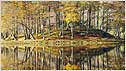
No. 19 - Autumn colours
Autumn is the season of stunning tree colours with spectacular russets, oranges, yellows and browns.
Best places to see - Thorp Perrow (North Yorks), Westonbirt (Glos), Longhaw (Sheffield).
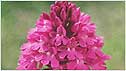
No. 18 - Wild Orchids
Orchids are arguably the most glamorous and mysterious of Britain's wild plant families. Summer is a great time to see wild orchids in proliferation.
Best places to see - Kenfig (South Wales), Kent Downs.


Also on Nature's Top 40
BBC Nature & Wildlife
More from bbc.co.uk nature

BBC iD
BBC iDBBC navigation
BBC links

BBC © 2014The BBC is not responsible for the content of external sites. Read more.
This page is best viewed in an up-to-date web browser with style sheets (CSS) enabled. While you will be able to view the content of this page in your current browser, you will not be able to get the full visual experience. Please consider upgrading your browser software or enabling style sheets (CSS) if you are able to do so.
