| 13 November 2014 |

| |
| BBC Homepage | | |
| |||
| Contact Us | | |
Your StoriesYou are in: Leicester > People > Your Stories > Controlling Anger 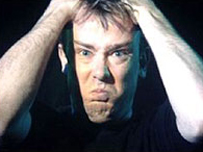 Controlling AngerHow do you cope with life's challenges? The BBC is taking an in-depth look at how to look after your mental wellbeing called Headroom. BBC Leicester's Tony Wadsworth takes a closer look at the issues surrounding anger. Why do people get angry and what is the best way to deal with an aggressive situation? That is the question that presents itself to everyone and BBC Leicester is tackling the issue head-on. BBC Leicester's Tony Wadsworth has been speaking to some experts in the field to answer the age-old question of what makes us angry, how we express it and what can happen when we struggle to control it...  Women Out of ControlIt is common to see people in trouble with the law because they "lose it" habitually. But just how can you break that cycle? And are we guilty of associating anger with men and over-looking the angry behaviour of women. Leicestershire is home to the only probation programme in the country that is specifically designed for female offenders who have problems controlling their anger Tony Wadsworth spoke to Head of psychology at Leicestershire and Rutland Probation Service, Kirsten McClaymont and University of Leicester graduate Sarah Brockie who volunteered and did research on the courses. Tony investigates a project which works with habitually angry women. Help playing audio/video Kirsten's most forceful point that anger is a natural emotion. "We should feel worried if people didn't feel anger. They would be a doormat. "On the other hand if you feel aggrieved there are ways of getting your point across without expressing anger or being physically violent."
The course teaches assertiveness which is a kind of middle way between complete docility on one side and aggressive anger on the other. Sarah Brockie said that although both men and women indulge in anger related violent behaviour it is somehow more socially acceptable for a man to be angry than a woman. Public attitudes to anger are as complex as the reasons for anger. Kirsten said that there are people who are so habitually angry that "they have to be given permission not to be angry." This can be a difficult lesson to learn. How do clients find the project? Some are referred but others go along voluntarily because they realise their anger is out of control. Often they realise this because the children are suffering. Tony spoke to Linda Boland from the British Association of Anger Management (BAAM), and a Leicester counsellor from charity MIND Brenda Varney. Help playing audio/video Both deal with very angry people on a daily basis and advice them on how to cope under pressure. Tony started by asking Linda how she coped with her day-to-day role: "Dealing with anger in a professional capacity is not to take it personally. Every one has their own anger, it is easier said then done, until you find the principal cause behind it. "People do project their own reality on to others therefore to take something personally is irrational. It shouldn't be taken personally at all." Tony asked Linda whether anger could be construed as a form of bullying. Linda said there is a very fine line: "It is bullying in some respect, aggressively angry persons want to be domineering and want to have control over another person. "The way to tackle it is to acknowledge it's their problem and not your own." Assertion not AggressionBrenda is a counsellor for one Leicester's leading charities. She says if a person's angry they must know it's their responsibility and they need to know it and it should be highlighted.  "Some of it can be can be pressure, personal values and responsibilities, others have been taught to blame other people rather than take responsibility. "When people are angry the best thing is to bring it to someone's attention." She adds: "Losing your temper is not uncommon, but it's where you lose it and how you lose it. That's very important. "It's about changing those responses and getting to the root cause of that anger, and questioning it. Where does it stem from? Learning to value yourself and taking responsibility for what you do." Linda says most people have boundaries and when that is crossed it triggers anger.
Linda says culturally it's been more acceptable for men to be more expressive with their anger but women have the same pressure points. It's what we do with it is what makes a difference between healthy and unhealthy anger. She says it's better to get it out then keeping it in: "It shouldn't be bottled in and anything that can help to take that out whether it's a swim or going to the gym or for a walk. Anything at all that can help take that stress out and get rid of that anger should be done. " Paul Matthews who has worked in various call centres for years and has been on both sides of the telephone. BBC Leicester's Julie Mayer went to meet him to find out just how frustrated people can get over the telephone and started by asking Paul if he had experienced working in call centres at its worst... Help playing audio/video Paul says it had been an unhappy experience: "Customers don't like being pushed or being rude and it can be unpleasant. I've been told to go away by vicars, old ladies, children and it can be soul-destroying. It does devalue people that are doing the job. "I've worked in a number of very big call centres and where people went home crying." 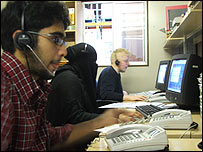 He said that was the main trigger point for angry outbursts: "Everybody is so busy to reach a target and people often forget they are talking to another human. "People should be trained to deal with people who are angry but you have to meet the targets and you are worrying about when your next break is and worst of all you know you're on the phone. "In truth people get frustrated when they aren't listened too. The secret is to listen and you shouldn't have a script. You don't have a script for life. Human interaction isn't like chess, it's not that manipulative and it should be much more genuine." last updated: 23/09/2008 at 16:13 You are in: Leicester > People > Your Stories > Controlling Anger |
| | About the BBC | Help | Terms of Use | Privacy & Cookies Policy |