Summary
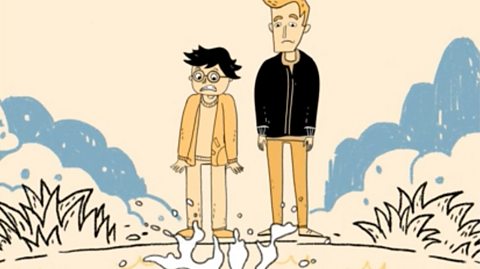
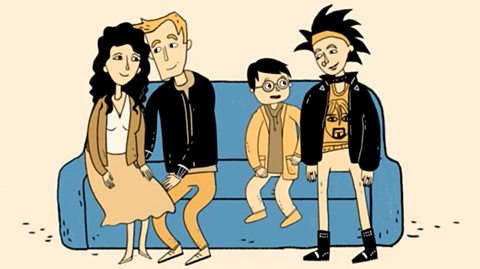
About a Boy was written by Nick Hornby in 1998 but is set five years earlier in 1993. It is a A coming-of-age story is about a character growing up and changing from a child into an adult. novel focusing on two main The chief character in a novel, film or play., 12-year-old Marcus and Will, a 36-year-old man.
Summary: About a Boy is told from two different points of view, although it is written in the A third person narrator is not a character in the story. They see the events from the outside and tell the story using third person pronouns, like 'him', 'her' and 'they'.. The first point of view is through the eyes of Marcus, a 12-year-old boy who is considered to be ‘uncool’ by other children, and who lives with his mother, Fiona. Marcus used to live in Cambridge when his parents were still together, but after they split up, his dad remained in Cambridge while Marcus and Fiona moved to London to start a new life. Marcus has a lot of responsibilities for a young boy, since his mum suffers from depression and often finds it difficult to cope with life.
The second point of view is through the eyes of Will, a 36-year-old single man who considers himself to be ‘cool’. Will is independently wealthy, because his father wrote a famous Christmas song years ago, and Will receives a lot of money in royalties. Will has no responsibilities – in fact he runs away at the first sign of commitment or responsibility. While his friends are marrying and having children, Will continues to live like a teenager and feels sorry for his friends because he thinks that they have lost their freedom.
Through his two main characters, Nick Hornby investigates how we mature, and how we react to the problems which life throws at us. In effect, Marcus has grown up too fast and needs to learn how to be a child, whereas Will has never grown up and needs to learn how to be an adult! The Narrative is another word for story. moves equally between the two characters, with each odd-numbered chapter (1, 3, 5 etc.) being from Marcus’ point of view and each even-numbered chapter (2, 4, 6 etc.) being from Will’s point of view.
Title: About a Boy – the The indefinite article is the word 'a' or 'an' used before a noun to show it refers to any general item, not a specific one "a” is non-specific, meaning the “boy” in question could be Marcus, a literal child, or Will, who is an adult but has arguably never grown up. The title is an A quick reference - often to an image, character or place - from a work of literature or music or mythology. to the Nirvana song About A Girl.
Narrative perspective: Third person narrative perspective by an unseen narrator, told from two points of view: Marcus’s perspective and Will’s perspective.
Setting: London, 1993.
Themes: Isolation and community, loneliness and connection, relationships, childhood and adulthood, mental illness and A feeling of deep sadness and misery., growth and change, popular culture, belonging, freedom and responsibility.
Main characters
Marcus
Marcus is one of the two main characters in About a Boy. Although he does not narrate in the The 'I' or 'we' used by a narrator who is a participant in a narrative, in contrast to the third person - 'he', 'she' or 'they' - of a narrator who is not directly involved., we see events from his point of view through an unseen narrator. As the novel opens, we see that he has recently moved to London with Fiona, his mother, after she split up with Marcus’ father, Clive. Clive has stayed in Cambridge. Marcus and Fiona moved at the beginning of the summer holidays so that Marcus could get used to living in London before starting school.
| How is Marcus like this? | Evidence | Analysis |
|---|---|---|
| Sensitive Although he is young, Marcus feels worried about his mother from the start of the novel. | “His mum was sad, he knew that – she cried a lot now, more than she did before they moved to London… If it wasn’t boyfriends, though, he didn’t know what it could be, apart from something bad.” “… he was worried that the trouble in the soaps would remind his mum of the trouble she had in her own life. So they watched a nature programme…” | Marcus is too young to understand about depression. He tries to work out why his mother is so sad all the time, but cannot think of an obvious reason. He worries about her all the time. Marcus finds himself To examine something and decide whether to cut out parts which may be offensive. the programmes they watch, which is something that you would expect a parent to do for their child rather than the other way around. |
| Does not understand sarcasm Marcus does not have a ‘normal’ sense of humour and is unable to understand when somebody is being sarcastic. As the novel progresses he learns to recognise when somebody is being sarcastic or trying to be funny, and he responds in a way that he thinks is appropriate, because this will make him seem less of an outsider. Will often uses sarcasm but it is lost on Marcus. | “’You don’t have to make yourself invisible. You just have to go in disguise.’ ‘What, with a moustache and stuff?’ ‘Yeah, right, with a moustache. Nobody would notice a twelve-year-old boy with a moustache, would they?’ Marcus looked at him. ‘You’re joking. Everyone would notice. I’d be the only one in the whole school.’” | Marcus takes everything To take something at its surface meaning. and this makes him appear humourless and weird to the other schoolchildren. Will keeps having to remind himself not to use sarcasm on Marcus as he always ends up having to explain what he means. It is worth noting that this characteristic (along with Marcus’s inability or unwillingness to make ‘small talk’ and have ordinary trivial conversations with people his own age) could suggest Marcus is somewhere on the Autism is a neurodevelopmental condition which often involves differences in thinking patterns, sensory processing, communication and social interactions. Because autism affects people differently, some people don't need a lot of help, but others might need extra support throughout their life.. This is never explicitly confirmed in the novel, but Hornby’s own son has autism; the author is familiar with many of the traits shown by autistic people and may have used these in his characterisation of Marcus. |
| Terrified of being left alone Marcus is terrified of being left alone if his mother dies. After her attempted suicide, he devotes a lot of thought to finding ways of bringing more people into their circle of friends, so that if she does die, he will not be alone. | “But this was the scariest thing he’d ever seen, by a million miles, and he knew the moment he walked in that it was something he’d have to think about for ever.” “… and then there’d be four of them, and four was twice as good as two.” “… the other choice meant he’d have to be his own mother, and how could you be your own mother when you were only twelve?” “Every time he thought about this, it came back to the same problem: there were only two of them…” “What he felt, all the time, every single day, was a horrible fear.” | Marcus is traumatised by Fiona’s attempt to kill herself, and is afraid that if it happens again he will have to cope with it on his own. Marcus plots to bring Will and Fiona together so that they can all live in the same house, and thinks that his problem of being left alone if Fiona dies will be solved. Marcus feels a sense of urgency because he knows he is too young to look after himself and he is always afraid that Fiona will try to kill herself again. None of the adults in Marcus’ life seem to realise just how badly he has been affected by his mother’s attempted suicide. |
| A child in a man’s body Marcus feels the pressures of life far more than most 12-year-olds. He dresses in an old-fashioned way and listens to the music which his mother likes. He does not know about the latest music or fashion, and this makes him seem different from other children. | “Marcus needed help to be a kid, not an adult.” | It is Happening in the opposite way to what is expected and maybe causing amusement because of it. that Marcus needs to learn how to be a child, since he is one. He has so many worries that he has no time to play or have fun. His mother does not really have a sense of humour and this has rubbed off on Marcus. He has the values of a person of Fiona’s age, not his own. |
| Not very self-aware Marcus does not have very good self-awareness. He turns up on Will’s doorstep every afternoon, not considering that Will may not always want to see him. One day he even stands with his finger pressing the buzzer for over half an hour, until Will finally lets him in. | “Nothing in Marcus’ face or voice suggested that he had been in the least bit inconvenienced or bored during his thirty-odd minutes of buzzing.” | This adds some humour for the reader, as the image of a small boy ringing the doorbell for half an hour and not being put off is very funny. Meanwhile, Will carries on as usual inside his flat. It shows that Marcus is childlike in that he thinks that the world revolves around him. |
| Loyal to his mother Marcus is aware that his mother is not like other mothers but he is still loyal to her. Even after he has worked out that she is part of his problem in not being accepted by other children, he still tries to protect her. | “His mum looked good, Marcus thought. She was wearing her best leggings and a baggy, hairy jumper.” “Marcus knew he was weird, and he knew that part of the reason he was weird was because his mum was weird. She just didn’t get this, any of it.” | Again, there is some humour here, as the reader can see that what Fiona is wearing is not particularly stylish. It reinforces the way that Marcus is always prepared to see the best in people. As the novel progresses, and Marcus becomes more worldly-wise, he is able to see that his mother is rather strange, but he still supports her. |
| Kind Marcus is kind. Everything he does is with the intention of helping. He often agrees to do something which he knows he will not enjoy, simply to make life easier for other people. | “Marcus glanced at Will and Will nodded once, while Rachel’s back was turned towards him.” “‘Yeah,’ Marcus shrugged, and for a moment Will loved him, really loved him.” | When Will is trying to impress Rachel, and is pretending that Marcus is his son, he wants Marcus to play upstairs with Ali, Rachel’s horrible son, so that Will and Rachel can be alone downstairs. Marcus knows that he and Ali are not going to get along, but he agrees to stay with him to help Will. |
| Hero-worships Ellie Marcus hero-worships Ellie. He has never met anybody like her, and cannot stop talking about her to Will. He initially thinks that he wants her to be his girlfriend until he realises that she is too different from him and would be hard to manage. | “Marcus was even more smitten than he had been before, and Will feared for him.” ‘You don’t mind being treated like a … like a gerbil?’ ‘No. Course not. That’d do me. I just want to be with her.’” “Suddenly Marcus could see a problem… school was full of walls and rules and she could just bounce off them; but out in the world, where there were no walls and rules, she was scary. She could just blow up in his face at any time.” | Will is concerned that Ellie will not feel the same way about Marcus; after all, she is three years older than he is and far more confident. Will does not want Marcus to be hurt. Will has never seen Marcus so To be madly in love with/obsessed. before. He is quite happy just to be in Ellie’s circle, but Will knows that you cannot put all your trust in one person. It is also ironic because Marcus himself has found out that this is the case, but he forgets that with Ellie. Towards the end of the novel, Marcus understands that Ellie is too unstable for him – he needs somebody who is calm and unlikely to flare up for the slightest reason. Therefore, Ellie is used in the novel to illustrate how Marcus gradually learns to work people out for himself. |
Will Freeman
Will Freeman is the other main character in About a Boy. He is 36 years old and owns a flat in London. He does not need to work – in fact he has never had a job – because his father wrote a Christmas song many years earlier and Will receives royalty payments every month, on which he is able to live very well. Will thinks that he has a fantastic life, because he does what he wants whenever he wants to, and it is true that he has a very expensive lifestyle. However, he is rather selfish and does not see himself as a member of a society in which we all have a duty to help others.
| How is Will like this? | Evidence | Analysis |
|---|---|---|
| Selfish Will is self-centred and focused on his own experiences and pleasure – he does not want to get involved in other people’s problems. | “You needed money, sure - the only reason for having children, as far as Will could see, was so they could look after you when you were old and useless and skint – but he had money, which meant that he could avoid the clutter and the toilet-paper throws and the pathetic need to convince friends that they should be as miserable as you are.” | Will thinks that he is not like most other people because he is independently wealthy and needs nothing from anybody. He thinks he can exist in a vacuum and remain untouched by the problems of everyday life. As the novel progresses, it becomes evident that Will actually enjoys interacting with other people, even when he becomes involved in all their messy problems. |
| Lonely It becomes clear to the reader that he is actually quite lonely. Will thinks that it is better to live alone than to be part of a family, and he feels sorry for his friends John and Christine, who have a toddler and a new baby. Will thinks that their lives are over, and cannot imagine living as they do, with toys and clutter all over the house. However, his loneliness becomes more apparent when he thinks about having to spend Christmas alone. | “… it struck him that how you spent Christmas was a message to the world about where you were at in life, some indication of how deep a hole you had managed to burrow for yourself…” “What Marcus was saying, in his artful, skewed way, was that he didn’t want Will to be alone on Christmas Day.” | Will prides himself on being able to live without other people, but at times like Christmas he becomes aware that everybody else will be with families and friends, even if they do not particularly like those people. When even Marcus seems to pity him, Will feels very depressed. |
| Immature Will is immature and behaves more like a teenager than Marcus does. He buys magazines in order to do the quizzes, and makes sure that he is up-to-date with the latest music and singers. He considers himself to be very ‘cool’, but is unable to see that other people of his age actually pity him because his existence seems pointless. | “He was, according to the questionnaire, sub-zero! He was dry ice! He was Frosty the Snowman! He would die of hypothermia!” | Will is like a teenager in the way he completes questionnaires in magazines and actually takes the results seriously. As a man approaching 40, he should really be dismissing these quizzes as nonsense. It makes the reader feel that he is a likeable idiot with too much time on his hands. |
| Afraid to commit He is afraid to commit to a relationship. Whenever a woman seems to be growing too fond of Will, he ends the relationship. If the woman happens to mention that she would like to settle down and have children with him, he is terrified. Will’s relationships never last long because he refuses to contemplate a future with any of the women. | “If she but knew it, he was exactly right; if there was a man better equipped for the meaningless fling, he wouldn’t like to meet him. I’ve been putting this on! He wanted to tell her. I’m horrible! I’m much shallower than this, honest!” | Will hides behind a charming front. He behaves as if the woman he is currently seeing is the most important thing in the world to him, but he has no intention of staying with her for the long term. Here, he listens to Suzie telling him that she wishes that their relationship could carry on, but that he is too nice for her in her current state of mind, because he seems serious about their future together. |
| Devious Will is devious, willing to trick or lie to others to get what he wants. He poses as a single father so that he can meet women, and does not feel bad about pretending to have a child. | “– what more could a man want? Single mothers – bright, attractive women, thousands of them, all over London – were the best invention Will had ever heard of. His career as a serial nice guy had begun.” “… now he had found the ideal solution to this unexpected A lack or scarcity of something. of prey. He had invented a two-year-old son called Ned and had joined a single parents’ group.” | When Angie finishes with Will, saying that it is not him, it is her, he considers it the best relationship break-up he has ever experienced. At that moment he decides to date single mothers exclusively. Will feels no guilt for planning to tell lies about his situation. This indicates that, at the beginning of the novel, he does not care about anybody else’s feelings. It also shows that he does not spend much time worrying about the possible consequences of being found out. |
| Good-hearted Will is, despite his faults, a good-hearted person. He helps Marcus a lot when he is being bullied and worrying about his mother, by offering him a place to escape from his problems and by giving him advice. He often gets cross about being put in a position where he has no choice but to help, but nonetheless he does the right thing, and is kind to Marcus and Fiona. | “Before, he thought that going out with a mother was a heavy number; how much heavier would it be going out with a suicidal mother? But he didn’t want to let it drop. He still had this sense that Fiona and Marcus could replace soup kitchens and media Guardian jobs, possibly for ever.” “I could leave him outside to take his chances, but I’ve been letting him in for his own safety.” | Even though Will is not attracted to Fiona, he makes a real effort to treat her and Marcus to a meal in a nice restaurant. He thinks of them as the latest in his line of do-good projects. |
| Insecure It is obvious to the reader by the end of the novel that Will does not engage normally with other people because he is insecure in himself, and afraid of being rejected. Once he truly cares about Rachel, Will is scared that she will leave him. | “Wanting Rachel so much still frightened Will […] She might meet someone else […] She might die, suddenly, without warning, in a car crash …” | It becomes clear that the reason that Will has never been able to commit himself to anybody else in the past is because he is so afraid of being abandoned by them somehow. This is very similar to Marcus’ terror of being left alone if his mother dies. |
Secondary characters
Fiona Brewer
Fiona is Marcus’ mother. She suffers from depression and finds it difficult just to get through the day sometimes. She tells Marcus that she loves him but resents him too, and thinks that being his mum is not enough for her. In her suicide note to him she asks him not to hate her. It is hard for the reader not to judge Fiona, because she has a 12-year-old son to look after, but depression is a terrible illness and, as Fiona writes to Marcus, it just doesn’t listen to anything or anybody else. It just wants to do its own thing.
Fiona is regarded by Will as a hippy, because she wears long, baggy clothes and never bothers to have her hair cut properly. She makes Marcus listen to her favourite music, such as Joni Mitchell and Bob Dylan, and has never allowed him to eat meat. She is not much use to him when he is being bullied, just telling him that he will have to get used to it. Fiona has problems keeping relationships with men and admits to Will that she worries about this. She has remained on fairly good terms with Clive, Marcus’ father, and even invites him, his girlfriend Lindsey, and Lindsey’s mother to spend Christmas day with her and Marcus in London. Overall, Fiona is a good person but she has to learn to let Marcus make his own decisions about life.
Ellie
Ellie is a girl at the same school as Marcus. She is three years older than he is, and is in Year 10. She is a fan of the band Nirvana, and loves the lead singer, Kurt Cobain. She feels that he understands the awful problems which face teenagers. She always wears a sweatshirt with a picture of Cobain on the front, and it is because of this that she is outside the head teacher’s room on the day that Marcus has to be there too.
Marcus admires her for her fearlessness. He is slightly afraid of her at first, but gradually comes to adore her. Ellie helps Marcus to deal with the bullies, and she and her friend Zoe look after Marcus during the dinner break at school, taking him to their form room. Ellie is amused by Marcus, and when she realises that he knows nothing about Kurt Cobain, she teases him, saying that Cobain is a footballer with Manchester United. Other pupils are impressed by the way that Marcus is taken under Ellie’s wing, and he no longer faces problems in school. When there is an incident at a newsagent’s shop after school, Ellie threatens the bullies and they leave Marcus alone after that.
Marcus goes to Suzie’s New Year’s Eve party and sees Ellie there. They chat about their mothers – Ellie says that her mother always ends up kissing the same man at midnight on New Year’s Eve and always regrets it the next day. Ellie seems to get on very well with her mother on the whole. She tells Marcus that she just wants her mother to be happy, and this makes Marcus think about his own mother.
When Kurt Cobain attempts to kill himself but fails, Ellie is very upset. She tells Marcus that Cobain hates this world and just wants to die, even though he has a wife and a little girl. This makes Marcus compare his own situation with that of Kurt Cobain, and he feels very sad. Ellie goes on the train with Marcus to Cambridge but, as it is on the actual day when news breaks that Kurt Cobain has succeeded in killing himself, she is in a strange mood and is determined to get drunk. She frightens Marcus and seems out of control. When she tells Marcus that “life is shit” he questions her, asking if she really thinks that, because to him her life does not look too bad. They are hardly speaking to each other when the train stops at Royston and Ellie gets off.
She goes into the town, followed by Marcus. When Ellie sees a life-size cardboard cut-out of Kurt Cobain in a music shop window, she becomes furious, saying that the shop owner is exploiting Cobain’s death. She breaks the window, taking out the cut-out and sitting on the pavement with it. The police take Ellie and Marcus to the police station and they wait for their parents to arrive. Ellie’s mother, Katrina, seems used to Ellie being in these types of situations and admits that, while she had hoped that Ellie would grow up to be a rebel, she now wishes that she had an ordinary daughter who stayed at home. Ellie meets Ruth, the owner of the music shop, and everyone is struck by how similar the two girls look. They get on extremely well.
Ellie is an important character in the book because she provides Marcus with an image of a single parent family which functions well, although it has its problems too. Through Ellie, he realises that there are many types of people in the world and we just have to make the best of those with whom we are involved.
Rachel
Rachel is the woman with whom Will falls in love for the first time in his life. She is another single parent and has a 12-year-old boy called Ali. She is entirely self-sufficient and has many interests. Her house is very welcoming and Will feels comfortable with her there. Rachel is the first woman who makes Will feel he needs to be truthful. He eventually admits that Marcus is not his son and that he let her think he was so that she would like him. Rachel is very insightful and tells Will that he is a good man, and that she admires him for the help he has given Marcus, although he did not have to do so.
She also allows Will to deal with Fiona in a very clever way. She lets Will think that she will meet him and Fiona one evening, so that Fiona can talk about her depression, but when Rachel does not turn up, Will realises that Rachel intended all along to leave him alone with Fiona so that they could have a serious talk. Will worries that he will lose Rachel, but she teaches him that this is a risk that we all have to take. Nobody can be insulated from life’s disasters unless they choose to live outside human society, and that is very lonely. Will is deeply in love with Rachel by the end of the novel.
Clive
Clive is Marcus’ father. He lives in Cambridge and smokes a lot of marijuana. He left Fiona and Marcus, which prompted their move to London. It is not clear whether Fiona was depressed before she split with Clive, or whether she became depressed afterwards, but Clive does tell Marcus that he feels bad about leaving them, saying “I shouldn’t have wandered off.” He has a girlfriend called Lindsey, and he asks Marcus at the end whether he would mind if Lindsey and Clive were to have a baby. Marcus tells him that he likes babies, which is not exactly true, but he figures that it would mean one extra person in his life. Marcus does not really take his father seriously because he is always stoned.
Clive is more important as an absent character than when he does appear, because Marcus feels that he should have been around more, and the few appearances he makes in the novel illustrate how small a part he plays in Marcus’ life.
Minor characters
- Lindsey – Clive’s girlfriend
- Lindsey’s mother – the unnamed mother of Lindsey, who gives Marcus £5
- Zoe – Ellie’s friend
- Ali – Rachel’s unpleasant son
- Suzie – a woman who goes out with Will for a while
- Angie – a woman to whom Will is attracted
- Mr Patel – the kind newsagent
- Lee Harper – the school bully
- Nicky and Mark – boys in Marcus’ class
- Mrs Morrison – Marcus’ head teacher
- Frances – the woman who runs SPAT, the single parents’ group
- Katrina – Ellie’s mother
- Ruth – the owner of the music shop which Ellie vandalises
- Roger – Fiona’s most recent ex-boyfriend
- Andrew – another ex-boyfriend, disliked by Marcus
- John and Christine – a married couple who are friends of Will
- Barney and Imogen – John and Christine's young children
- Ms Maguire – Marcus’ English teacher, who humiliates him
- Jeremy – the only single father in SPAT
- Sam Lovell – a boy at Marcus’ old school who recommended Planet Hollywood
- Robert – the man who throws the New Year’s Eve party where Will meets Rachel
- Tim Porter – the man who always ends up kissing Ellie’s mother on New Year’s Eve
Test yourself
Further study
Bookclub. podcast
James Naughtie and a studio audience meet novelist Nick Hornby to discuss About a Boy – his insight into laddishness, masculine wish-fulfilment, fear and love.

World Book Club. podcast
Nick Hornby talks to an audience about his book Fever Pitch – about being an Arsenal football fan. Presented by Harriett Gilbert.

Listed Londoner. audio
Nick Hornby was born in 1957, in Surrey. His dad, Sir Derek Hornby, was the chairman of London and Continental Railways. Before becoming a novelist, he worked as a secondary school English teacher.

More on About A Boy
Find out more by working through a topic
- count3 of 5
- count5 of 5
- count1 of 5