Quick version
Many different groups of people use the Dorset Coast in different ways, which can result in conflict.
A large amount of conflict is due to the mass influx of tourists to the area, especially during summer months.
Travel for local people becomes difficult as roads become more congested with visiting tourist. Encouraging both groups to use public transport can reduce this issue.
Different groups of tourists can come into conflict. Noise pollution from water sports may disturb those fishing or enjoying nature reserves. One solution is making clear zones for different activities.
It's not just tourists that are involved in conflict:
Industrial activity can create a conflict for locals and tourists alike as quarries are considered an eye sore and the heavy goods lorries create noise and pollution. Planning rules can limit quarrying in Areas of Outstanding Natural Beauty.
Military land access can also cause problems. Areas may only be passable at certain times when there is no training taking place.
Conflict 1: tourists vs locals
The Dorset coast, and other coastal landscapes, are popular tourist destinations. The influx of tourists to the region, especially during summer months, can create challenges for the local people who live there.
Below are some of the conflicts which can arise between locals and tourists in coastal landscapes as well as solutions which can be adopted to deal with the identified conflicts.
Click here for a text version of the above information in a table.
| Problems | Solutions |
|---|---|
| Increased traffic congestion especially in 'honeypot' areas such as Corfe Castle | A steam railway line from Swanage to Corfe allows sightseers access and minimises congestion on the road |
| Increased traffic leads to a rise in noise and air pollution | Train lines, bus routes, cycle paths and boat trips offer alternative forms of transport |
| Unsightly footpaths and erosion of sand dunes because of the number of visitors | The National Trust and Dorset Wildlife Trust buy and manage land, eg surface footpaths |
| Increase in litter and fires especially on the beaches, eg Chesil Beach | Local authorities fine for littering or dumping. Voluntary litter picks arranged |
| Fragile wildlife habitats may be destroyed by walkers | Replant A grass found on coastal sand dunes. Its roots bind together the loose sand. to conserve vegetation and sand dunes at Sites of Special Scientific Interest, eg Studland |
| Wildlife is disturbed on the beaches | To protect wildlife, nature reserves such as Brownsea Island have been created (National Nature Reserves) |
| Second home ownership increases, causing local first time buyers to struggle to get on the property ladder | National Government offer help to first time buyers through various schemes |
Here are some examples of the above conflicts and solutions:
- Image source, PabloMendo/Getty Images
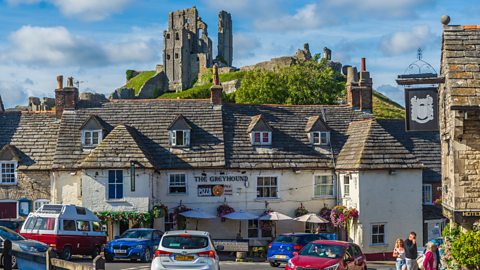
Image caption, Traffic
Increased traffic congestion, especially in 'honeypot' areas such as Corfe Castle (above), can lead to a rise in noise and air pollution. Train lines, bus routes, cycle paths and boat trips offer alternative forms of transport. (Paul Weston / Alamy Stock Photo)


1 of 5
Conflict 2: tourists vs tourists
Different types of tourists coming to coastal landscapes, like the Dorset Coast, can create challenges for each other. Not every visitor is there for the same reason or the same values.
Click below for a text version of the above information in a table.
| Problems | Solutions |
|---|---|
| There are about 18 different land users in Poole Harbour and 4,000 boats use the area during peak periods | Zoning of areas ensures that different activities are kept apart, eg at Poole Harbour. Speed limits have been put in place |
| Tourist facilities such as car parks, camp/caravan sites and marinas spoil the look of the coast | World Heritage Site Status allows local authorities to protect the coast from over-development with strict planning controls |
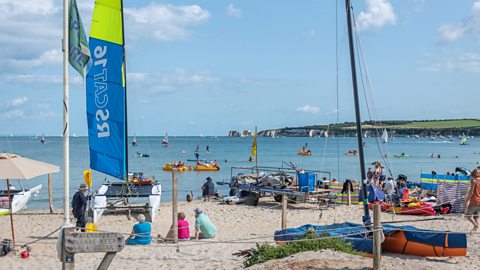
| Swimmers and sunbathers may be disturbed by the noise of motor boats | A Shoreline Management Plan encourages quiet areas (zones) |
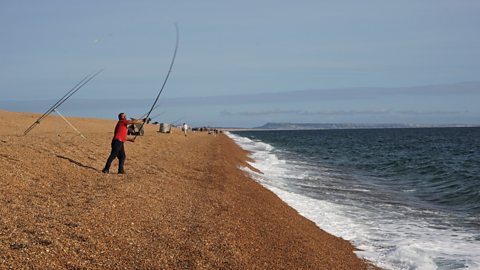
| Anglers, eg at Chesil Beach may be disrupted by activities such as water skiing | Public education schemes, eg guide books, leaflets and signs are designed to promote responsible tourism |
| As many as 20,000 visitors can visit Studland beach on a hot day in the summer | Local authorities comply with the EU Blue Flag Scheme on beach quality |
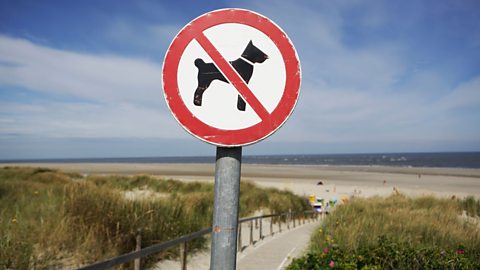
| Visitors' dogs can dirty the beaches and footpaths | Poop scoop schemes have been set up to stop dogs fouling on the beach |
Here are some examples of the above conflicts and solutions:
- Image source, Roger Mechan/Getty Images
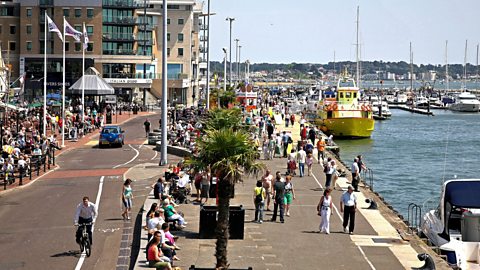
Image caption, Poole Harbour
There are about 18 different land users in Poole Harbour and 4,000 boats use the area during peak periods. Zoning of areas ensures that different activities are kept apart. Speed limits have been put in place.
1 of 4
Conflict 3: conflicts involving local people
Other conflicts exist outside of those involving the seasonal increases in tourists.
Locals and industry
Locals who live close to industry, such as quarries, oilfields or the shipping hub of Portland harbour will have increased heavy goods lorries passing their property, raising noise and pollution. One solution is setting restrictions on the time of quarry activity.
Locals and renewable energy
Although many may be in favour of using clean energy, there can still be unhappiness about the changes to the landscape and views caused by wind turbines.
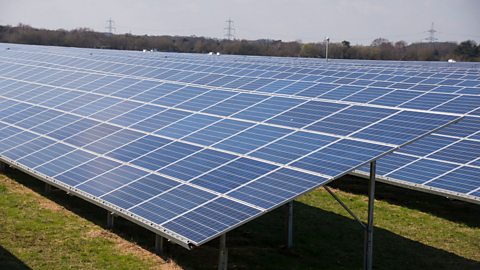
Solar farms also take up large areas that may have previously been used for arable or pastoral farming, which may not be welcomed by all as there can be a negative impact on soil health and biodiversity.
Locals and military bases
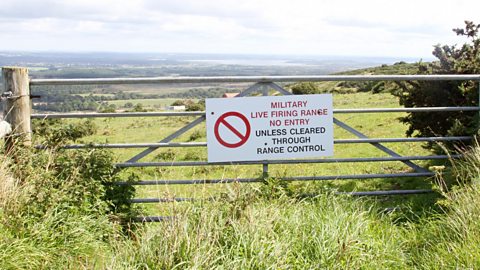
Military training may involve firing practice which can be noisy and disturb pets, livestock and wildlife. The land used for this will also be restricted, if not fully, at certain times. A solution is to allow access on weekends when more people are likely to want to walk through the land.
- Image source, AmandaLewis/Getty Images
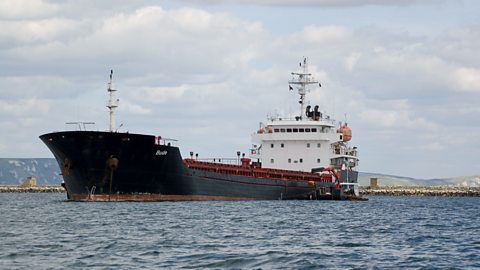
Image caption, Industry
Portland Harbour provides direct access to the English Channel – a major shipping route for imports and exports to and from Europe. Coordinating shipping times can control traffic from heavy goods vehicles to reduce congestion at busy times.
1 of 3
More examples of conflict and resolution
Conflict and solutions related to energy production
Solar farms take up land that could be used for farming. At Parley Court solar farm, solar panels will be mounted high enough above the ground to allow sheep to graze under them.
Solar farms can have a negative impact on the natural environment and are seen as an eye sore that spoils the scenery for both locals and tourist.
To meet planning requirements, the developer's plans for Parley Court solar farm include retaining existing trees and hedges to help minimise visual impact, and providing additional landscaping to enhance local biodiversity.
Conflict and solutions related to dogs
Dogs that are not kept under control can annoy other visitors to beaches.
Dogs are not permitted on East Beach (east of the harbour) or West Beach (west of the harbour) between 1st May and 30th September.
There is a third beach at West Bay where dogs are welcome all year round.
Loose dogs can disturb or even kill wildlife.
Dogs are not allowed at the Dorset Wildlife Trust site on Brownsea Island, to protect red squirrels and wild bird colonies.
Conflict and solutions related to access
The South West Coast Path passes through the Lulworth Ranges military firing ranges.
Access is restricted for public safety but kept open at weekends and other times when there will be more visitors. Information on firing times are published online to allow people to plan their visit and avoid disappointment.
Conflict and solutions related to industry
Industry brings money and jobs to the area but industrial sites can spoil the appearance of scenery for locals and tourists.
The Wytch Farm Oil Field has small buildings and is surrounded by trees, which screen its appearance.
Planning rules limit development of quarries in sensitive areas and Areas of Outstanding Natural Beauty (AONB)
Noise, dust and air pollution are limited by using conveyors instead of trucks on site.
Bunds (banks of earth and soil) can screen quarrying activity and act as a barrier to noise. However, the bunds themselves can be seen as an eyesore.
Permission for quarrying includes rules about restoring and improving the landscape. For example permission to extend Woodfords Quarry includes a requirement to create a wetland nature reserve.
Conflict and solutions related to transport
High volumes of traffic through towns and on country roads causes congestion, noise and pollution, as well as increasing travel times for locals and visitors.
Lulworth Estate has provided a large car park which has helped in reducing some of the parking issues.
A bus service has also been introduced from the nearest train station to encourage visitors to swap the car for public transport.
A roundabout has been built at the car park entrance to allow traffic to turn and reduces congestion.
Increase in use of cycle routes and train lines which has helped to reduce traffic congestion on coastal roads.
Click below to see the above land use problems and solutions in a table.
| Problems | Solutions |
|---|---|
| Industry and trade coming through the port relies on heavy goods lorries which can slow traffic and create noise/air pollution | Staggering times so that related traffic is reasonable and locals are less impacted |
| Industry such as quarries or oil fields can be seen as an eye sore | Screening from trees and bunds can both help reduce the visual impact on a landscape as well as any related noise pollution |
| Solar farms take up land that may have previously been used for arable or pastoral farming | Solar panels mounted high enough above the ground to allow sheep to graze under them |
| Solar farms can be seen to have a negative visual impact on the landscape | Planning requirements mean the developer must retain existing trees and hedges to help minimise visual impact, and provide additional landscaping to enhance local biodiversity |
| Dogs can threaten local wildlife and disturb visitors to beaches | Dogs are not permitted on certain beaches or nature reserves |
| Military training bases can present an obstacle for those wishing to pass through that land | Access is restricted for public safety but opened at weekends and other times when there will be more visitors |
| High volumes of traffic cause congestion, noise and pollution, as well as increasing travel times for locals and visitors | Improving public transport available and developing cycle path networks help to reduce number of cars and road congestion |
Quiz
Recap
Dorset coast is a popular tourist attraction. This can lead to a variety of conflicts arising between locals and tourists as well as with different groups of tourists.
In addition these two groups also can have conflicts resulting from the shared land use with industry, renewable energy and military access. The table below highlights some of the solutions to common conflicts.
| Problems | Solutions |
|---|---|
| Influxes of tourists in summer can create traffic congestion and increase journey times and noise/air pollution for locals | Improving public transport and encouraging its use along with cycle paths can help reduce congestion |
| Different activities by different groups of tourists can disturb each other | Creating zones in beach areas mean conflict is less likely |
| Industry such as quarries or oil fields can be seen as an eye sore | Screening from trees and bunds can both help reduce the visual impact on a landscape as well as any related noise pollution |
| Solar farms take up land that may have previously been used for arable or pastoral farming | Solar panels mounted high enough above the ground to allow sheep to graze under them |
| Dogs can threaten local wildlife and disturb visitors to beaches | Dogs are not permitted on certain beaches or nature reserves |
| Military training bases can present an obstacle for those wishing to pass through that land | Access is restricted for public safety but opened at weekends and other times when there will be more visitors |
More on Coastal landscapes
Find out more by working through a topic
- count1 of 4
- count2 of 4
- count3 of 4