The 'inspiration' behind fictional places
The film and television industry has long transported viewers to fascinating, fictional places. From realistic towns to fantasy worlds and even entire universes, we all have our favourites spanning generations and genres.
But like other forms of art and media, many of our loved films and TV shows are based on, loosely inspired by or give a nod to real-life places. Some look similar to real places or have adopted their aesthetic, whereas others subtly take inspiration from an area they know or even a famous destination.
Here, BBC Bitesize takes a closer look at just a few famous fictional places that are loosely based on or said to have been somewhat inspired by the real world. From popular shows to Disney classics and more, see how many you recognise.
Stars Hollow (Gilmore Girls)
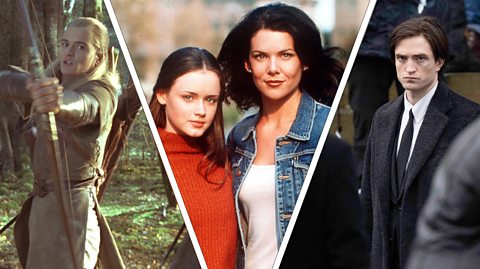
Created by Amy Sherman-Palladino, Gilmore Girls first came to our screens back in the year 2000. Synonymous with autumn, the series follows Lorelai Gilmore (Lauren Graham), her daughter Rory (Alexis Bledel) and the eccentric characters living in the charming, fictional town of Stars Hollow in Connecticut, USA.
The series ran until 2007 but is still popular today thanks to streaming services like Netflix and viral trends surrounding the show taking over platforms like TikTok. In 2026, HBO Max also announced that a Gilmore Girls documentary was in the works.
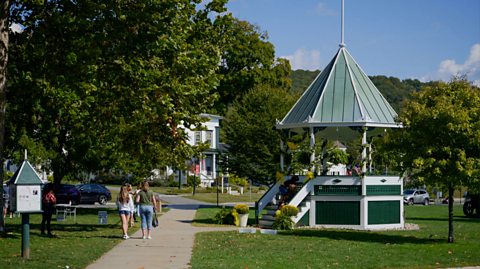
But did you know Stars Hollow is primarily inspired by a real town? While staying in Washington Depot - a picturesque village in Litchfield County, Connecticut - creator Amy Sherman-Palladino was inspired to create a series set in a similar-style cosy town with a close-knit community. Stars Hollow is also thought to have drawn inspiration from other nearby towns, including New Milford, which visually boasts a similar town green and public gazebo.
The Gilmore Girls pilot episode was filmed in Unionville in Ontario, Canada, while the rest of the hit series was shot on a permanent set at the Warner Bros. Studios in Burbank, California.
Corona (Tangled)
Disney’s Tangled is loosely based on Rapunzel, an 1812 fairy tale by Brothers Grimm. The animated film follows Rapunzel, a princess with long, golden, magical hair who leaves her secret tower on her 18th birthday to explore the world she’s never seen.
Released in 2010, a live-action adaptation is now in the works and is set to star Teagan Croft, Milo Manheim and Kathryn Hahn. If you’re a fan of Disney, you’ll know a beautiful castle can often be found in many films.
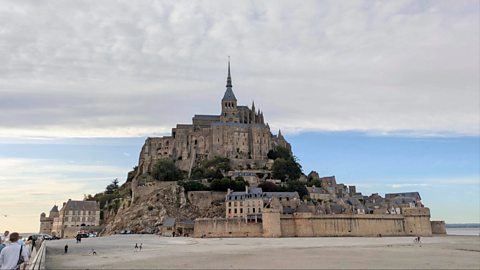
Did you know several have taken inspiration from real-life castles? And Tangled is no exception. The castle in the kingdom of Corona in Disney’s Tangled is said to be based on Mont-Saint-Michel, a commune in Normandy, France.
A UNESCO World Heritage site, it was originally a Benedictine abbey and later became a prison. If you look at an image of Mont-Saint-Michel and then Tangled’s Corona castle, you will see the resemblance.
Gotham (Batman)
One of the world’s most famous superheroes,Batman first appeared in Detective Comics #27 back in 1939. The DC superhero story follows the life of billionaire Bruce Wayne who transforms into his alter ego, Batman, to fight crime in Gotham City and avenge his murdered parents.
Generations have come to know the various film and television adaptations of the original comics. In more recent years, cities like Chicago and Liverpool have also doubled as Gotham City on screen.
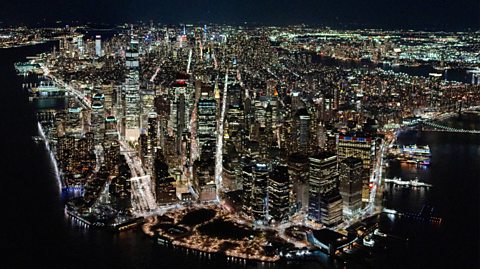
But Gotham is primarily based on New York City - transporting fans to a much darker version of Manhattan. Batman co-creator Bill Finger is said to have named the city after a local jewellery shop that was listed in an NYC phone book.
However, the ties between Gotham and New York go back much further. Author Washington Irving nicknamed NYC as Gotham in 1807 in the magazine Salmagundi.
Hundred Acre Wood (Winnie-the-Pooh)
One of the most iconic characters in children’s literature, generations of children across the world have come to know Winnie-the-Pooh. Written by A.A. Milne, the stories follow Pooh, a honey-loving bear, his fellow animals and best friend Christopher Robin’s adventures in Hundred Acre Wood.
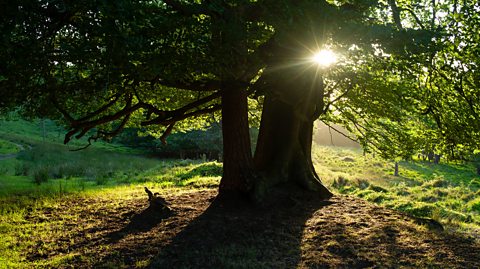
Also known as 100 Aker Wood, the fictional setting of the characters is inspired by a real place – Ashdown Forest in East Sussex. Author A.A. Milne had a country home on the edge of the forest, and the beautiful landscape inspired Winnie-the-Pooh's famous Hundred Acre Wood.
Over time, much of the landscape has changed - but every year, tourists from across the globe visit to see what inspired the setting of the beloved children’s books. There are several literary landmarks to see, such as the original Poosticks Bridge, built in 1907, which is said to be where Milne and his son Christopher first played the game.
The year 2026 marks the 100th anniversary of Milne's beloved, original story.
Hawkins (Stranger Things)
Created by the Duffer Brothers and Netflix, Stranger Things first aired back in 2016 and quickly became a cultural phenomenon. Set in the 80s, the hit sci-fi drama follows a group of friends battling the dark forces that come to the fictional town of Hawkins in Indiana, USA.
Throughout the episodes, viewers are also transported to a gateway between Earth and another dimension, which is dubbed "the Upside Down.” The series was primarily filmed in Atlanta, Georgia.
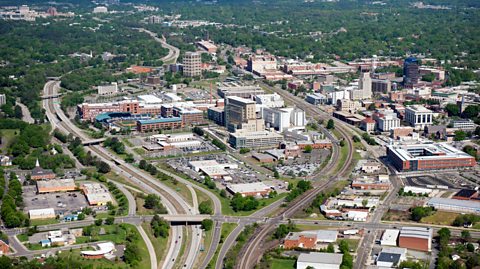
But the fictional town of Hawkins is said to have taken inspiration from a mix of real places. This includes Durham, North Carolina, where the Duffer Brothers grew up. In the series, Matt and Ross Duffer named some places in Hawkins after real-life places in Durham. One example is Cornwallis Street, which is the name of a real street near where they grew up.
The series concluded in 2025 and as set by the British Board of Film Classification (BBFC), it has a 15 rating - meaning those watching the show should be 15 years or older.
Middle-earth (The Lord of the Rings)
One of the most famous franchises in the world, The Lord of the Rings (LOTR) novels, by J.R.R. Tolkien, were first published in the 1950s. The epic fantasy story follows hobbit Frodo Baggins who inherits a powerful ring but must travel with his fellowship to destroy it and save Middle-earth.
On the big screen, Peter Jackson’s six films (the Lord of the Rings trilogy and the three films that tell Bilbo Baggins’s story in The Hobbit) have been entertaining fans for years. On 17 December 2027, a new film, The Lord of the Rings: The Hunt for Gollum, is also set to be released.
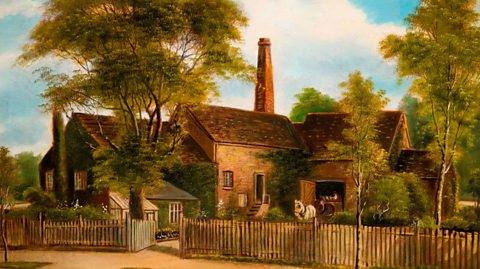
All film adaptations were filmed in New Zealand, but author J. R. R. Tolkien drew inspiration mainly from the English landscape. BBC News previously reported how Tolkien grew up in and around Birmingham and that the Shire in the series was inspired by the village of Sarehole.
In his personal letters, Tolkien also offered more clues to what other areas inspired the fictional place his famous books were set. Another example is the Elvish settlement of Rivendell and the Misty Mountains, which Tolkien is thought to have partly inspired by landscapes he saw during a 1911 trip to Switzerland.
Kuzconian Empire (The Emperor's New Groove)
In 2000, Walt Disney Pictures released their hit animated comedy, The Emperor's New Groove. The film follows the selfish Emperor Kuzco (David Spade) who is transformed into a llama and must work with a kind-hearted villager to reclaim his throne.
The name Kuzco is a play on Cuzco, the historic capital of the Inca Empire, which in parts covered modern day Peru, South America. Villager Pacha (John Goodman) also serves as a nod to Inca emperor Pachacutec.
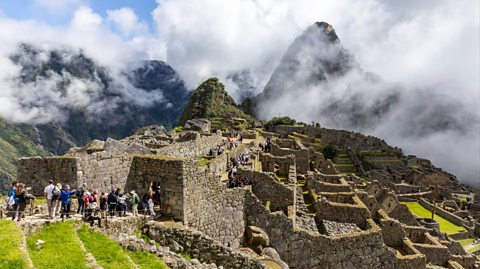
The creators also drew inspiration elsewhere from ancient Incan civilisation and culture. Visually, the film's mountainous setting resembles landscapes around Machu Picchu.
One of the seven wonders of the world, the historic city ruins are in the High Andes of Peru and were built in the 1400s by the Inca Empire. For research, several crew members working on The Emperor's New Groove also travelled there to study the ancient ruins and landscape.
Arendelle (Frozen)
Disney’s Frozen franchise has quickly become a favourite across the globe. The film, which is loosely inspired by Hans Christian Andersen's 1844 fairy tale, The Snow Queen, was released in 2013.
In the film, we meet sisters Elsa and Anna, as well as snowman Olaf, iceman Kristoff and reindeer Sven. When Queen Elsa accidentally traps her kingdom, Arendelle, in eternal winter, her sister Anna and friends work together to save their home.
The name of the kingdom derives from the town of Arendal in Norway. And many of the landscapes depicted in Frozen are based on real Norwegian destinations.
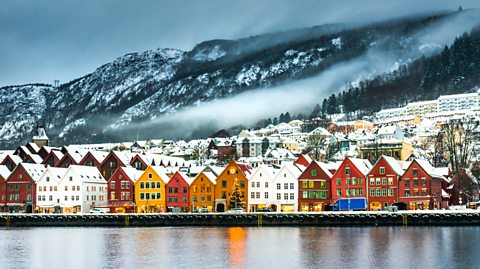
The beautiful city of Bergen is said to have been the primary visual inspiration for the fictional kingdom of Arendelle. Elsewhere in Norway, the Akershus Fortress in the capital, Oslo, is also said to have inspired Elsa and Anna’s family castle in the film.
This article was written in August 2026
Learn more about film and media
- The real stories behind Disney classics
- Iconic characters 'inspired by' real life people
- Which film won Best Picture the year you were born?
- Six blockbuster films and how they got history wrong
- 'Based on true story' films that aren't actually accurate
- Which classic stories were these modern films inspired by?
