|  |  | | Want to spend the rest of your waking days writing about your big passion? From fansites to magazines
and newspapers we show you how to make sure you never have to get a proper job! |
| | | |  | 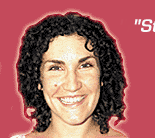 |  | | Deputy Editor, TOTP magazine on what it takes: "Make sure you have enthusiasm and willingness to do everything, study how things have been written, look at the individual style that a magazine has, and be prepared for a lot of determination and hard work. You must be flexible and be prepared to work long hours too." |
|
|
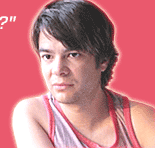
| |  |  | | Producer, TOTP Online on getting started: "I was a big Madonna fan so I thought, why not do my own little website - Madonnarama. Then I thought, I love doing this and I'm good at it. Why don't I do this for a living? I was worried that I was really inexperienced when I got the TOTP job because I had no commercial experience. I wasn't. Don't let that put you off." |
|
|  |
| |  | 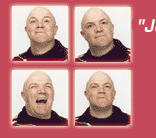 |  | | Radio Ulster DJ on trade pitfalls: "The average rock journalist spends much of his or her time at some dim bar, drinking noxious snakebite and enduring three pitiful acts on the bill before the much-hyped headliners take to the stage." |
|
|
| |  |  | | Dannii Minogue's Web Editor on going from fan to employee: "We had to do some web design in my computing course at university and I picked Dannii Minogue. I did a members' area and built up a list of people who loved Dannii, eventually contacted her and met her. When she split from her record company we became her official site."
Dannii adds: "David
is incredible at keeping the website up to date, when I ask him for things to
be added in I know that it's on the site the next day. I love it because it was made by a fan for the fans." |
|
|  |
| |
| | | |  | |  | |
What qualifications do I need? |  |
| | |
What types of courses are available? |  |
| | |
What key skills do I need? |  |
| | |
What's the best thing about the job? |  |
| | |
How much can I earn? |  |
| | |
What's a good way to get started? |  |
| |
| |  | |  | |
English, communications and media are useful subjects to study at GCSE and A level. Approach colleges directly for their entrance requirements.
| | |
You can study journalism at HND, Degree and Postgraduate level - get a portfolio of written work together by working on your school magazine or local paper. You can also train on the job at a local paper to gain NCTJ accreditation but this takes a number of years. Or you can start your own fansite or fanzine and get writing that way.
| | |
Rosalie says: "You need to be good at juggling plates, know the market you're writing for, be diplomatic and friendly because you need to get on with PR and press agents, and be creative."
| | |
Rosalie says: "It's busy, creative, always varied, sometimes there's a real buzz and you get to work in music which is what you love."
| | |
Salary depends on who you work for. Junior writers/editorial assistants start on around £14,000. At the top end of the scale, editors can earn up to £35-40K. Web writers or researchers start on around £17,000.
| | |
Study the magazines, newspapers or sites you like. Practice writing in the style of the them, come up with feature ideas or ideas that might improve them. Then contact with samples of your work and try and get a placement.
| |
| |
| | | |  |  | | Rosalie says: "It can be stressful and hectic. You might hear you've got an interview with Busted an hour before you do it and you have to gather ideas, get questions together, grab your tape recorder. Grabbing people at Top Of The Pops can he awkward and you feel like a bit of a stalker, so stay calm at all times!" |
| | | |
| |
| |
|