A child-led introduction to Hamburg, Germany, suitable to support study of a European location at KS2.
The video
Zoe - TRANSLATED: My name is Zoe. I'm nine years old. I live in Hamburg in Germany. I live in Hamburg in Altona close to the River Elbe. Hamburg is the second largest city in Germany.
Maria is a good friend of mine. At school she is very helpful and kind. Actually, she is very helpful generally and she is very nice.
My favourite place is down by the beach. From the beach you can see the big ships, almost as big as a house. Sometimes I ask myself where the ships are coming from. And where are they going? Every year ships bring ten million containers. The big ships come from the sea. The water is deep, otherwise the ships can't get through. Hamburg is about 100 kilometres from the North Sea. And Hamburg is the third largest port in Europe. From the ferry, you can see the big ships, the small boats, the port, and the cranes. And the people who work there.
There are lots of bridges in Hamburg. There are also tunnels in Hamburg. In the old tunnel, there is a lift for cars so they can go under the Elbe.
I have a brother. He is 11 years old. I also have a little sister. She is one and a half years old. My hobbies are… Playing a bit of football. And I play the violin and the piano. My school is called Trenknerweg. I am at primary school. My school is a kilometre away from home. I like sport and art, and also like English. I take an extra English course because I enjoy it so much.
We went on a visit to England and I met my friend Emma. We went in a small group to make contact with an English school. Next year 25 children from my school will go there.
Narrator: You saw them wearing uniforms. Would you like to wear uniforms?
Student 1: Perhaps girls would wear a skirt in summer and a dress in winter. Maybe the boys would wear short trousers in summer and long ones in winter. In that checky pattern.
Narrator: Is there anyone here who wouldn't like it?
Student 2: Yes, because we would all look the same and that would be boring.
Narrator: If English children came here they would want to explore Hamburg. What would be your favourite places to show them?
Student 3: I would show them the Elbe. The Elbe at night, because there are lights everywhere and it looks really great!
Student 4: I would take them to the town hall at night. It looks so great lit up. The Hamburger Dom comes three times a year. I would definitely show any children visiting the Dom. I like the big wheel best, and the wild mouse ride and the booths where you can win things.
SPEAKS GERMAN
Zoe & Maria – TRANSLATED: In Hamburg we like eating Frikadellers. In England you call Frikadellers hamburgers. Anyone visiting Hamburg would have a brilliant time.
Video summary
Download/print a transcript of the video.
A child-led introduction to the physical and human geography of Hamburg.
Hamburg is the second largest city in Germany and has a busy container port situated on the River Elbe, about 100km from the North Sea.
Zoe is 9 and lives and goes to school very near the River Elbe.
At school with her classmates they discuss the similarities and differences between Hamburg and the town they visited in England, and what they would show visiting English exchange pupils.
The discussion is illustrated by images of the river, tunnels, river traffic and the port and harbour with its warehouses and landing stages.
Zoe and her friend experience the thrills of the famous 'Hamburger Dom' fair and we see views of the famous Christmas Market, plus the inland lakes and canals created by the damming of rivers Binnen and Alster.
Teacher Notes
Download/print the Teacher Notes for this episode (pdf).
Teacher Notes prepared in partnership with the Geographical Association.
Central idea
- Places can be connected at a range of scales.
Think, work and apply like a geographer
- Compare
- Interconnected
- Space
- Sense of place
Questions to explore
- Where is Hamburg?
- How do rivers affect life in a city?
- How are goods and people transported from place to place?
- Are all areas of a settlement the same?
- What geographical features help connect places at a local or global scale?
- What aspects of life in Hamburg as similar and different to life where you are?
- What makes Hamburg an attractive place to visit?
- Which place in the video would you like to explore and why?
- What makes our local town/city a great place to visit?
Key learning outcomes
- To know that cities have a number of different functions.
- To know how to locate Hamburg on a map and explain where it is.
- To know that ports act as transport hubs for people and good, interconnecting places at a national and international level.
- To know how to recognise human and physical features and decide whether they would attract visitors.
Geographical vocabulary
- Town
- City
- Port
- Shipping container
- Ferry
- Beach
- Seasons
- Tourist attraction
Suggested learning opportunities
My favourite spot
- In pairs pupils video-record each other, locating their favourite spot in the school grounds or local neighbourhood on a map describe what it is like and explain why this place has significance for them. If they can record on location that would improve the video. These videos could be shared with new families to your school as part of a digital welcome pack.
Where can I travel to?
- Ships constantly come and go from Hamburg, some will be carrying people. Discuss as a class how people move from place to place and why some modes of transport might be better for some journeys than others. In small groups investigate the bus/train routes that run close to school, where the buses or trains go to, come from and stop along the way, what times they run, what might be seen along the route (use maps) and consider whether public transport should be free for everyone.
- Take the class on a round trip on the local bus and survey what can be observed along the route- this can include dynamic elements of the landscape such as traffic, wildlife and the movement of people which might not be the same on the return journey.It is also possible to include a destination that would allow the study of a physical or human feature.
Ideas for going further and links
- Investigate trade routes and the origins of products found in local shops and supermarkets.
KS2 Geography: A location in Europe - Rotterdam, Netherlands
KS2 Geography: UK settlements and navigating using maps
KS1/KS2 Primary Geography: Maps
This clip will be relevant for teaching Geography at KS2 in England and Northern Ireland, Progression Step 3 in Wales and 2nd and 3rd level in Scotland. The National Curriculum for Geography at Key Stage 2 emphasises study of a European location and making comparisons with a location in the United Kingdom.
A location in Europe - Haarlem, Netherlands. video
10-year-old Mika describes the traditional Dutch architecture of her hometown of Haarlem, Netherlands.
A location in Europe - Rotterdam, Netherlands
11-year-old Martina introduces the busy port of Rotterdam, Netherlands, where her parents work.
A location in Europe - Veere in the province of Zeeland, Netherlands. video
Nine-year-old Robbert introduces his hometown of Veere in the province of Zeeland, Netherlands.
A location in Europe - Kinderdijk, Netherlands. video
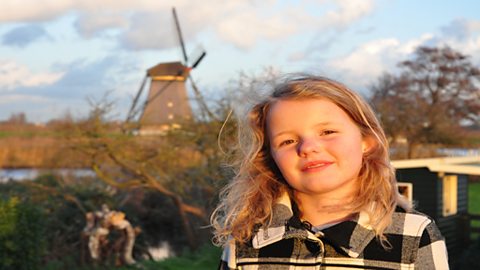
Nine-year-old Donna introduces Kinderdijk - a region famous for its canals and windmills.
A location in Europe - the North Frisian island of Sylt, Germany. video
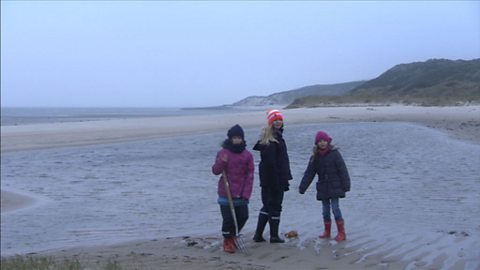
11-year-old Helen explains what life is like on the German island of Sylt.
A location in Europe - Inzell, Germany. video
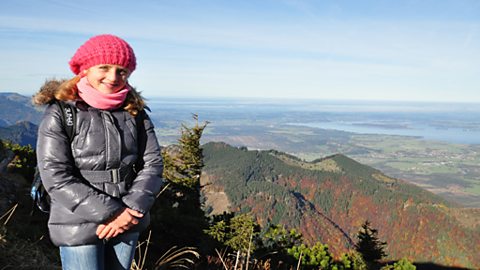
11-year-old Josephine introduces the physical and human geography of Inzell, in Bavaria.
A location in Europe - Cologne, Germany. video
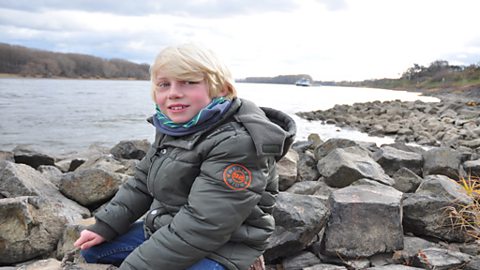
Nine-year-old Niklas shows what life is like in the city of Cologne.
A location in Europe - Füssen, Germany. video
12-year-old Philipp introduces Füssen in the Allgäu region of Bavaria.