A child-led introduction to Kinderdijk, Netherlands, suitable to support study of a European location at KS2.
The video
Rhona: My name is Rhona and I'm nine years old.
Rhona - TRANSLATED: I live in Kinderdljk in the province of South Holland. It is only a small village, but people come here from all over the world. They come to see something special. It is something you will like. What people come to see are the windmills. We have 19 windmills. Most of them stand along the canal. The canal is a drainage canal. Our windmills are used to keep the land dry. If they didn't, the land would flood. The windmill is a symbol of the Netherlands, and it's really important in the history of our country. What is special is that the windmills are lived in.
Bjorn is putting on the sails. He is a miller. A miller is actually a wind catcher. Not many people in the world know how to do this. A miller needs to know a lot about the weather.
Mr Vandenberg also lives here. He has been a miller here for over 40 years. His children also know how to operate the windmill, but I'm not sure if they will be millers. It's not easy to become a miller. It takes a long time to learn. What are you doing?
Mr Vandenberg - TRANSLATED: Taking the brake off, so the windmill can start turning.
Rhona- TRANSLATED: Will you be working the windmill tomorrow?
Mr Vandenberg - TRANSLATED: Yes, I will if there is wind.
Rhona- TRANSLATED: When the mill is running you can hear the sails. They go really fast, just like the wind. It sounds a bit like this.
RHYTHMIC BREATHING
Rhona- TRANSLATED: When you go inside, straight away you will see some big wheels. The sound of the mill can send you to sleep. But a miller will know exactly if there's a problem or if the wind stops or changes, just from the sound.
This is a windmill you can visit. You can see inside this one and see how millers used to live. This is where the parents used to sleep.
This is the chamberpot. And these are the clocks people used to wear. And some people still do. Here are some old clock boots millers used to wear. And some old ice skates. I'm going to live in a windmill soon.
This is our windmill. Rick is my brother, and he's helping Dad do up our windmill. Our windmill is octagonal. My dad is very passionate about windmills and keen to preserve them. Because the windmills are very old, they are an important part of Dutch history. We have to look after them otherwise we lose a part of our history.
If you'd like to visit, that would be fine by me. It's great fun to live in a windmill because, well, yes, it's really rather beautiful. And it's also on the water.
Video summary
Download/print a transcript of the video.
Kinderdijk is famous for its canals and windmills.
There are nineteen windmills in Kinderdijk run by millers. Donna, a 9-year-old girl, cycles along the drainage canals to meet a couple of the last remaining millers in the region.
They illustrate how the wind drives the sails on the windmill to grind the wheat and pump the water from the flat lands to prevent flooding.
Donna and her family are in the process of restoring an old windmill to create their new home.
She visits a restored windmill and points out artefacts that illustrate life in the past, including clogs.
This film was first broadcast as part of the series Living abroad.
Teacher Notes
Download/print the Teacher Notes for this episode (pdf).
Teacher Notes prepared in partnership with the Geographical Association.
Central idea
- Land can be drained and managed for human activity.
Think, work and apply like a geographer
- Compare
- Sustainability
- Sense of place
Questions to explore
- Where is Kinderdijk, Holland and the Netherlands?
- What if there were no windmills in Kinderdijk?
- Why does the land need to be drained?
- What problems does flooding bring?
- What else is wind useful for?
- What are the challenges of wind power?
- How is tourism important to a region?
Key learning outcomes
- To know how to locate places on maps.
- To know that humans can change how land can be used through intensive management.
- To know how flooding impacts life and livelihood.
- To know that landscape features can be both functional and a tourist attraction.
Geographical vocabulary
- Canal
- Flood
- Tourism
Suggested learning opportunities
Flood
- Pupils investigate the impacts of flooding and using maps of the Netherlands discuss where might be affected by a rise in sea level.
Weather watch
- Pupils compare aspects of the weather in several towns and cities across Europe or even the globe using this weather site.
- Pupils consider the positives and negatives of living in places with different temperatures, levels of rainfall, daylight hours, cloud cover and wind speeds.
Ideas for going further and linksKS2 Geography: A location in Europe - Veere in the province of Zeeland, Netherlands
KS2 Geography: Lakes, lochs, reservoirs and the water cycle
KS1/KS2 Primary Geography: The water cycle
This clip will be relevant for teaching Geography at KS2 in England and Northern Ireland, Progression Step 3 in Wales and 2nd and 3rd level in Scotland. The National Curriculum for Geography at Key Stage 2 emphasises study of a European location and making comparisons with a location in the United Kingdom.
A location in Europe - the North Frisian island of Sylt, Germany. video
11-year-old Helen explains what life is like on the German island of Sylt.
A location in Europe - Rotterdam, Netherlands
11-year-old Martina introduces the busy port of Rotterdam, Netherlands, where her parents work.
A location in Europe - Veere in the province of Zeeland, Netherlands. video
Nine-year-old Robbert introduces his hometown of Veere in the province of Zeeland, Netherlands.
A location in Europe - Haarlem, Netherlands. video
10-year-old Mika describes the traditional Dutch architecture of her hometown of Haarlem, Netherlands.
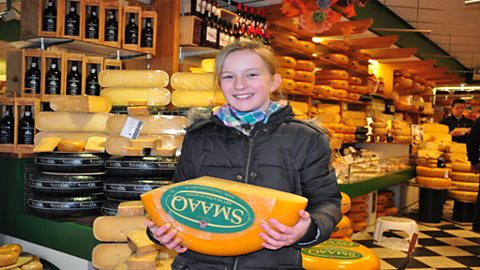
A location in Europe - Inzell, Germany. video
11-year-old Josephine introduces the physical and human geography of Inzell, in Bavaria.
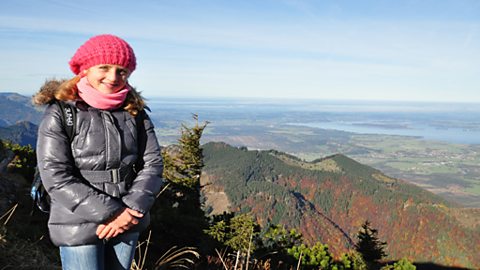
A location in Europe - Hamburg, Germany. video
Nine-year-old Zoe introduces the physical and human geography of Hamburg, Germany.
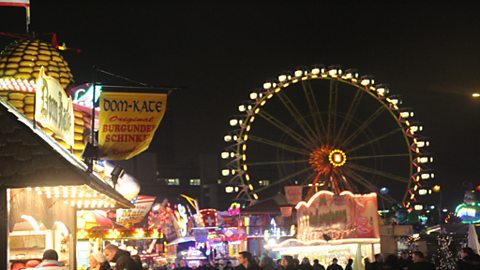
A location in Europe - Cologne, Germany. video
Nine-year-old Niklas shows what life is like in the city of Cologne.
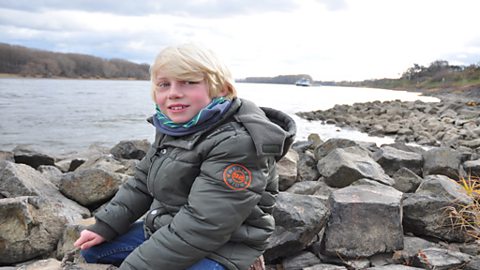
A location in Europe - Füssen, Germany. video
12-year-old Philipp introduces Füssen in the Allgäu region of Bavaria.