How does the technology work?published at 11:20 BST
Sweden 5-1 Tunisia
 Jonty Colman
BBC Sport Journalist
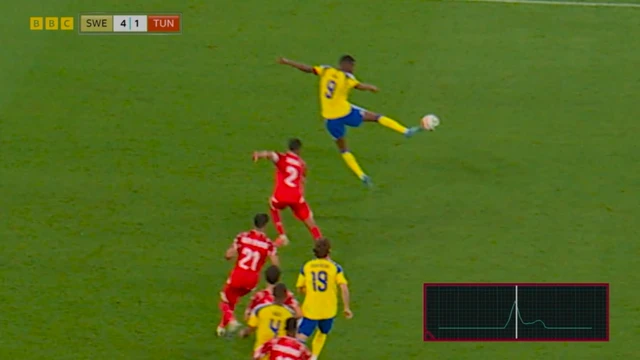 Image source, BBC Sport
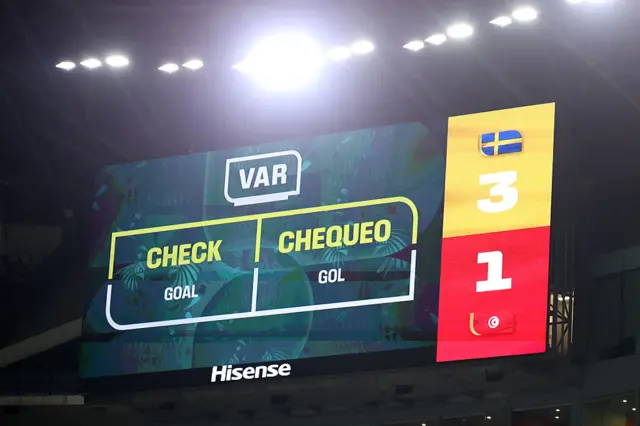
Waveform technology that mirrors cricket's Snickometer (more commonly known as Snicko) judged that after the free-kick was taken, Sweden and Liverpool striker Alexander Isak got the faintest of touches on the ball - and when he did, Svanberg had moved back into an onside position, meaning the goal was allowed.
The Trionda match ball, made by Adidas for this year's World Cup, has a microchip in it that can detect when the ball has been touched.
It is part of Adidas' Connected Ball Technology, allowing precise data such as every individual touch of the ball with a boot or hand to be immediately sent to the Video Assistant Referee in real time.
Adidas say the technology "enables faster in-game officiating decisions and more insight into gameplay than ever before."
When Svanberg's goal was awarded, replays showed a flat line sensor on the screen that had a spike as the ball passed Isak's outstretched foot, confirming that he got a touch on the ball that was not necessarily obvious to the naked eye.