


Expedition end
Mission accomplished
The Oceans BBC film team and presenters Tooni, Paul, Philippe and Lucy have returned safely home following their final expedition together.
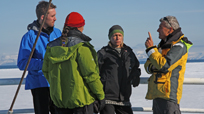
This was the last in a series of eight programmes being filmed for a programme due for broadcast on BBC Two in the autumn. The team has spent over a year filming the world's oceans including the Atlantic, Indian, Red Sea, Mediterranean, Southern Ocean and Sea of Cortez.
The Arctic proved the most challenging expedition of all, not least because of the hazards, including attack by polar bear and walrus, the dangers of diving under the moving pack ice and the physical demands of being in this cold and hostile environment.
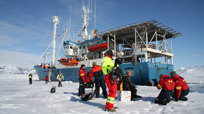
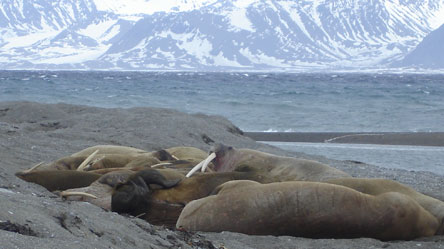
But the team did achieve the ambitious targets they set, to capture a snapshot of the health of the Arctic, and some unique and surprising high definition film of this icy habitat. Some persistence was required with the walrus but once they found their feeding grounds, the team was able to film the huge males socialising in their groups. They located a pod of elusive beluga whales to learn more about how they've adapted to the Arctic.
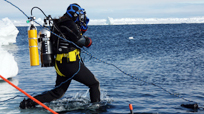
To study life beneath the surface, the team collected samples. The data will be added to a worldwide project, The Census of Marine Life. The census scientists aim to determine what organisms are under threat and how this might affect the food chain. Working with climate scientists the team sampled the thickness of the sea ice. Comparison with long term trends gives an indication just how healthy the summer 2008 ice cover is.
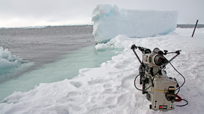
The complicated dives at the edge of the pack ice were also a big challenge. Finding the edge in early summer was no small task. The pack ice changes its position daily as it is not attached to a shoreline or the ocean floor. It's a great mass of ice covering up to 15 million square km, which can drift tens of kilometres in a single day.
And finally in Blubbertown, the team explored the abandoned communities at Smeerenburg and Virgohamna in north-western Svalbard to discover the centuries old history of whaling and exploration in the Arctic.





 Delicious
 Digg
Digg reddit
 Facebook
 StumbleUpon
