Learning to ask for help made me a better doctor
When Dr. Trevor Yellon’s partner Drew was diagnosed with cancer, they fought the illness together.
As a GP, Trevor felt uniquely equipped to deal it. But the strain grew more and more intense – until he realised he wasn’t coping.
Trevor talks to Life Changing’s Dr Sian Williamsabout why deciding to ask for help ultimately made him a better doctor.
'He was funny and handsome'
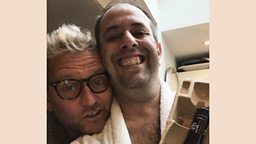
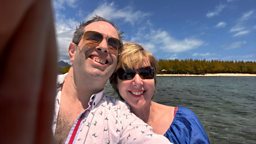
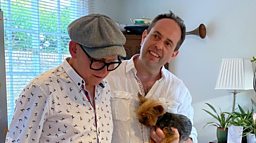
GP Trevor connected with Drew (pictured left) on a dating website in September 2005 – and immediately hit it off.
“From that moment on, were together permanently,” Trevor says (pictured right). “He was funny and handsome and entertaining.”
After two years the pair were engaged, tying the knot in 2009.
Then in 2016, Drew became unwell.
Worsening symptoms
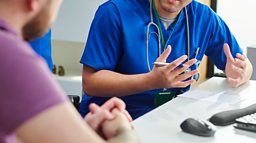
“He’d had a problem with his bowels ever since I've known him, actually, and it was something we hadn't taken seriously, but it was getting worse,” says Trevor.
"It was something we hadn't taken seriously, but it was getting worse"Dr. Trevor Yellon
Doctors thought Drew had a fistula – a small tunnel that develops between the end of the bowel and the skin near the opening of the anus, often caused by an infection.
But when Drew went into surgery to have it removed, the surgeon discovered it was actually cancer.
“He said chemoradiotherapy tends to make these cancers melt away,” Trevor recalls. “I remember hanging on to that.”
Drew had treatment done quickly through work.
“He didn't let me attend a single one of his appointments,” says Trevor. “He went to all of them on his own. He was very independent.”
After three to four months, Drew was given the all clear.
All clear, and a new life

In 2020, the couple moved, with their two dogs, to a beautiful listed cottage in a Cambridgeshire village.
“It was a really positive move, and Drew absolutely loved it,” says Trevor.
Drew built a studio and started a candle-making business and the couple would sell the wares at a local market on the weekend.
But within a few weeks of the move, Drew’s symptoms had returned.
Trevor presumed the fistula was to blame. He arranged for Drew’s GP to give him very strong pain relief.
When Drew lost 20 kilos in weight, Trevor thought it must be the medication affecting his stomach.
Drew underwent an examination. Sadly, the rectal cancer had returned - and had spread to his liver.
As a doctor, “I kicked into action"
“I kicked into action and I started using all my contacts,” states Trevor.
“I was desperate to know what we would do next. Drew was trying to manage his upset and the grief of finding out that his cancer had recurred.
“I was trying to manage the practicalities. How are we going to do this?”
“The thing that was overriding all of this was the pain,” states the doctor. “Drew was in absolutely phenomenal amounts of pain.”
Drew had more chemotherapy. Trevor remembers his hair turning white overnight.
When the treatment didn’t work, they moved to immunotherapy treatments.
But Drew began to experience “septic showers” caused by an infection, which led to him experiencing extreme confusion.
“Drew just couldn't speak, couldn't understand anything I said to him,” says Trevor. “They would happen once or twice a day.”
Not coping
Dr. Trevor thought he was OK; he was coping, but it was clear he wasn’t.
“They let me take him home... because I was able to do stuff at home that most people may not have been able to do"Dr. Trevor Yellon
“Eventually you can't do it anymore,” he admits.
“I couldn't work full time and watch this person I love getting sicker and try to explain the symptoms in a biologically plausible way to him and myself, and try to be optimistic that he was going to get better. It just wasn't working,” he says.
When Drew fell on the stairs, weak and confused, Trevor couldn’t move him. At the hospital they diagnosed him with osteomyelitis – a bone infection which required antibiotics.
“They let me take him home because I was a doctor and because I was able to do stuff at home that most people may not have been able to do,” says Trevor.
But, when Drew fell out of bed, Trevor was forced to call an ambulance again.
Then came a phone conversation that changed everything.
Asking for help 'never occurred' to me
“It was 10 o'clock on a Sunday night and I was very upset and I phoned my stepmum and she just said, ‘Trevor, you know you're trying to do this on your own. You haven't asked for help. If you want help, you just need to ask.’”
"I didn't think I needed [help]. I didn't think there was anyone to provide it.”Dr. Trevor Yellon
“It never occurred to me to ask,” he admits. “I didn't think I needed it. I didn't think there was anyone to provide it.”
Within an hour, his stepmum, Lucy (pictured, right), was at the house.
Lucy, his aunt, cousin and five of his best friends formed a WhatsApp group, and a rota of support, in what became Drew’s final days.
“From that moment on till a month after Drew died, I was never on my own,” Trevor says.
“Every night someone would stay with me and in the last few weeks would sleep in my bed with me next to Drew.”
“What's important about it is not just to thank and celebrate my friends and family who supported me in that awful time, but actually they made Drew's death a very positive experience,” says Trevor.
“It was an absolute privilege to look after him when he was dying and to do a good job.”
“We’d play games, and we'd watch films together. And there were people there with us all the time, helping.”
It was sad but also hugely meaningful.
“Every moment feels full of profundity and it’s so weird because, although it was winter, when I think back to it, I think of it as being sunny all the time.”
New direction is 'a tribute to Drew'
In his first week back at work, Trevor went to visit a patient who was dying.
“I was sitting next to her and I was crying, and I was wondering how that felt for her, but I couldn't help it,” he states.
The patient wrote to Trevor to say she was grateful that he’d come to see her; she understood how difficult that must have been.
Trevor is incorporating his experiences into his medical practice and teaching others too.
“I've just been involved in a project with Warwick University about bereavement and dying in the LGBTQIA+ community because it is an area which is lacking,” says the doctor.
“The support around palliative care is there, whatever your background is, and it's amazing.
“But the peer support that you would get from a community that you consider yourself belonging to is not there when you're younger and gay.”
That life-changing decision, to ask for help, has changed him and his goals.
“It has pointed me in a certain direction, and I guess that is a tribute to Drew and our life together.”
More from Life Changing
![]()
I faced leg amputation – or experimental surgery
After a horrific motorcycle accident, it looked as if Laurie would lose her lower leg. But a pioneering a medical experiment - only ever tried behind the iron curtain – gave her hope to walk again.
![]()
I fell 900ft to the ground - and survived
When parachute instructor Rob Bugden stepped towards the aircraft edge for a routine training jump, he had no idea that it would be the last time he ever walked.
![]()
‘I ran off with a biker at 49 – and it changed my life’
At 49, nurse Jacqui found herself at a crossroads, longing for something different. She set off on a journey across the world for the adventure of a lifetime, proving it is never too late to find yourself.