Summary

  1. Refuse collector's 'weird and wonderful' findspublished at 18:51 GMT 25 February

    Phil Shepka
    Political Reporter, Cambridgeshire

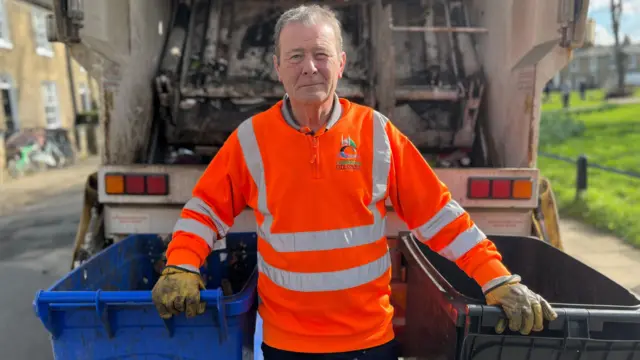
    Chris Lively looking into camera. He has short hair and is wearing an orange council jumper, and yellow gloves. He is standing in between two bins, which he is holding, and in front of the back of a bin lorry.
    Image caption,

    Chris Lively has worked for Cambridge City Council for more than two decades

    A city centre refuse collector said he has seen "weird and wonderful things" in bins, including a mahogany wall clock.

    Chris Lively, 64, has worked for Cambridge City Council for more than two decades.

    He says some of the challenges he faces include "cyclists locking their bikes to the bins so we can't actually get to them to open them" and the weather.

    "Other than that, people tend to leave us alone, and we just crack on with what we do," he says.

  2. Surprising facts about recyclingpublished at 18:41 GMT 25 February

    Judy Hobson
    Environment Correspondent

    There is a drive to push up recycling rates in the UK from about 44% of waste recycled to 65% by 2035.

    Greater Manchester is doing well. It recycles around 50% of its waste.

    But are your household’s efforts to recycle being undermined by these surprising facts shared by environmental charity WRAP, the Waste and Resources Action Programme?

    • One household bin containing the wrong recycling could mean a whole truckload ends up in landfill instead. Recycling should never be placed in plastic bags or it risks the same fate.
    • Broken glass must go in general waste, and lids should be taken off bottles otherwise liquid can be stored inside that will be rejected by the recycling plant.
    • Also, did you know that if everyone recycled just one toilet roll tube per week, it could power 26,000 UK homes for a year?
  3. Meet the man who loves bin collection daypublished at 18:23 GMT 25 February

    Dan Ragusa
    BBC Tees

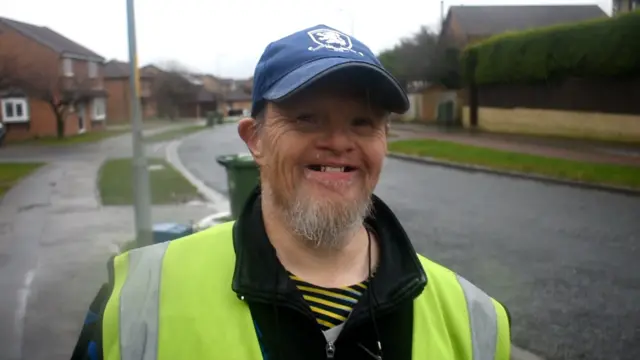
    Randal, a man in a hi-vis vest and a cap, on a street smiling with a wheelie bin behind him

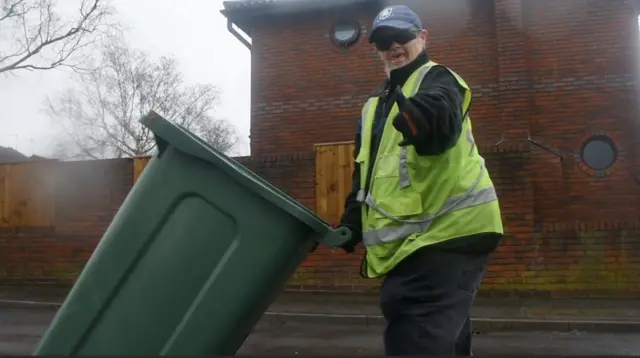
    Every Wednesday Randal sticks on his high-vis vest, gloves and sunglasses before heading out on to the streets of Ingleby Barwick, Stockton.

    For more than 25 years he’s been making sure that all of the bins in his neighbourhood are at the side of the kerb, to make it easier for the waste crew to collect them.

    The 52-year-old does this voluntarily with his dad Alan, saying he “just likes to help people”.

    No matter the weather, rain or shine, Randal, who has Down's Syndrome, is out every single week helping the crew.

    A man in a yellow h-vis vest wheels a bin down the street
  4. From trash to treasure: woman's recycling missionpublished at 18:08 GMT 25 February

    One woman in Southsea has taken recycling to a whole new level.

    Louise Lea transforms unwanted items such as bouncy castles, coffee pods and bottle tops into jewellery.

    "Being on the coast, there is obviously a lot of inflatables, and then bouncy castles from funfairs and kids' days out," Louise says.

    "That's the sort of thing that you might not even think could have a second life."

    Media caption,

    One woman in Southsea has taken recycling to a whole new level.

  5. How old sails are turned into high-end fashionpublished at 17:54 GMT 25 February

    Katy Lewis
    BBC News Online

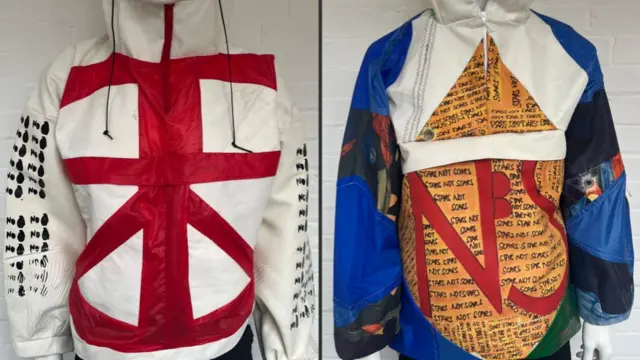
    Two jackets made from a mainsail are displayed side by side. The left one features a bold red graphic resembling a cross, set against a white background. The one on the right is made from panels of brightly-coloured material, including blue, yellow, red and off white. The front features handwritten style text in repeating lines.
    Image caption,

    Students say 'a lot can be done' with sail fabric

    Fashion students in Cambridge are making waves by turning old boat sails into high-end garments.

    First-years on the BA (Hons) Fashion Design course at Anglia Ruskin University are using kite sails from dinghies to create clothes with pattern-cutting techniques that leave minimal waste.

    The university has partnered with Clean Sailors, which runs a recycling scheme called ReSail.

    The organisation says more than 97% of sails end up in landfill and there are currently no formal recycling facilities for them anywhere in the world.

    Lecturer Sarah Graham said: "It's really important that we address the issues that are affecting the fashion industry…. and sustainability is a really important issue."

  6. How does Wales have the highest recycling rate in the UK?published at 17:03 GMT 25 February

    Jonah Fisher
    Environment Correspondent

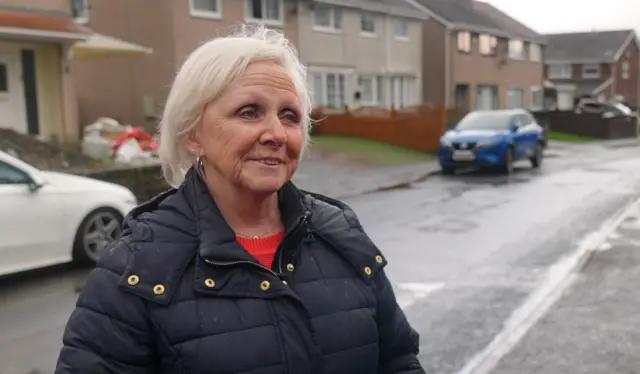
    Anne Crimmage, a woman wih white hair wearing a red jumper and black coat, standing on a street in Wales.
    Image caption,

    Anne Crimmage says recycling is made easy for people, to encourage them to do it

    Wales has easily the highest recycling rate in the UK - and one of the best in Europe. So how has it done it?

    Recycling experts say it's due to consistency of policy and targets, and the fact that every council picks up food waste every week.

    To see for ourselves, we went out on a bin collection in Rhondda Cynon Taf (RCT). On a street corner in the pouring rain we chatted with Anne Crimmage, a proud cabinet member from the local council.

    “I think in Rhondda Cynon Taf, our secret is the simple way we have the recycling.” she tells me, “We've got one clear bag for all our dry recycling. We've got a caddy for our food recycling and a larger caddy for the residents to put their food waste out.”

    The amount of food waste being collected and recycled in RCT has gone up from 11,000 tonnes in 2022 to 15,000 tonnes in 2025. At the same time the amount of refuse, or the black bag waste, has fallen dramatically.

    At the nearby Bryn Pica anaerobic digester they handle all of RCT’s food waste. We’re shown it being loaded into a macerator where it’s turned into a thick, grey sludge that they call “soup”.

    That soup is then pumped into huge storage tanks - where it produces biogas which is burnt immediately to generate electricity. The leftover digestate is then used as fertiliser for local farmers.

  7. Welsh homes top for recyclingpublished at 16:48 GMT 25 February

    Ema Sabljak
    England Data Unit

    Wales has the highest recycling rate for waste from households in the UK.

    In 2023, the last comparable year for the four nations, it had a recycling rate of 57%.

    Northern Ireland also managed to recycle more than half of waste from households.

    Of the four nations, Scotland had the lowest rate at 42%.

    The figures are measured a little differently at the local authority level, including things like collections from public spaces like parks.

    In Wales and Northern Ireland even the worst performing local authorities still recycled more than two fifths of household waste in 2023-24.

    During that same period, Tower Hamlets in England recycled just 16% of household waste.

    And in Scotland, figures for 2023 show Shetland was the worst performing council with just over a fifth of household waste recycled.

    This Flourish post cannot be displayed in your browser. Please enable Javascript or try a different browser.

  8. How does England compare to the rest of the world?published at 16:35 GMT 25 February

    Lauren Woodhead
    England Data Unit

    It’s not simple to compare recycling rates internationally.

    Countries have their own definitions, standards and release schedules.

    But according to a 2024 report by the environmental consultancy service Eunomia, external, Wales is one of the top-ranking countries for recycling.

    The report looked at 48 countries, focusing on the municipal waste recycling rate – that is the amount of household waste and waste from other sources that are similar in nature and composition to household waste.

    Wales was ranked second, while Austria came first. Northern Ireland, England and Scotland placed 9th, 11th and 15th respectively.

    Adam Herriott, from sustainability charity Wrap, said Wales goes “above and beyond” when it comes to recycling.

    “They’re generally a little bit more ambitious out of all the four nations across the UK as shown by their very high ranking on the recycling league table,” he said.

    Yale University published an Environmental Performance Index, external in 2020. It looked at 180 countries and compared how much recyclable post-consumer material gets recycled.

    The United Kingdom was ranked 27th, with South Korea topping the table.

  9. 'My dog inspired my 10-year litter-picking crusade'published at 16:22 GMT 25 February

    Gina Millson
    BBC Radio Lancashire reporter

    A man and a dog siting on a beach looking out to seaImage source, Wayne Dixon

    A man who walked thousands of miles along the coast of Britain with his dog on mission to pick up litter said it was the best thing he has ever done.

    Wayne Dixon and his Northern Inuit Koda set off 10 years ago with the aim of picking up rubbish while raising awareness about littering.

    After travelling about 4,000 miles (6,440km), the coronavirus pandemic put a stop to their efforts and the pair never actually completed walking the full length of the coast.

    They were forced to return home to Darwen in Lancashire where they continued to pick up litter in and around their local area.

    Koda died in 2025, but Wayne described him as "the perfect friend".

  10. The Bincredible Hulk and Bin Diesel join council's recycling wagonspublished at 15:25 GMT 25 February

    Louisa King
    BBC Merseyside

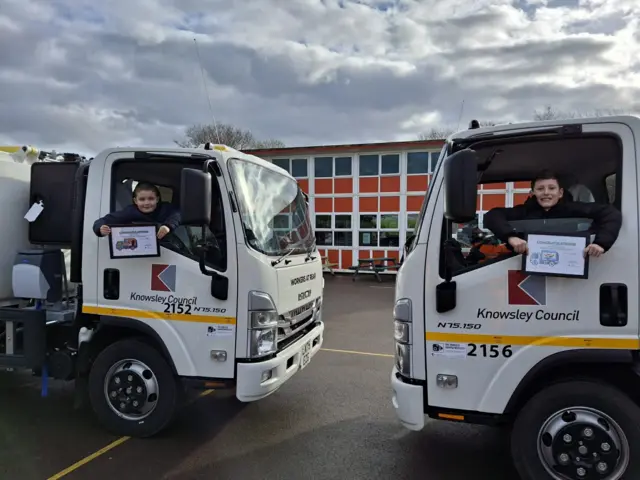
    Two bin wagons parked facing each other in a car park, with a boy aged about 10 sat in each cab. THe boys look out of the winow and hold certificates.
    Image caption,

    Harry (left) and Archie saw the newly-named wagons arrive at their school in Knowsley

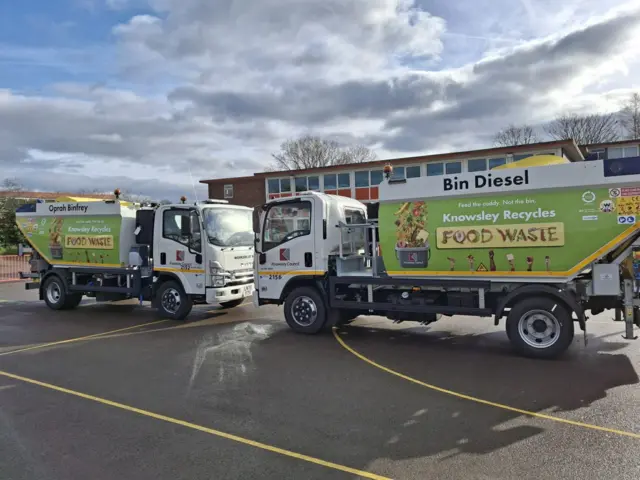
    Bin Diesel, Oprah Binfrey and The Bincredible Hulk will soon be collecting one Merseyside council’s recycling.

    School children in Knowsley took part in a competition to name the borough’s new recycling wagons - and the results are brilliant.

    Winning pupils at one Kirkby primary school, Archie and Harry, got a huge surprise this morning when two bin lorries arrived emblazoned with their new names.

    Archie - who named Bin Diesel - said it was “boss”, and Harry - who named Oprah Binfrey - said he felt “proud”.

    Two bin wagons parked facing each other, one named Oprah Binfrey and the other Bin Diesel

    The competition inspired listeners to BBC Radio Merseyside to call in with their own suggestions. Binnie-the-Pooh, Obi Bin Kenobe and Bindiana Jones were some of our favourites. More than 700 names were submitted to the council - which were whittled down to nine winners.

    Another favourite was Vincent Van Scoff.

    Knowsley Council is to roll out food waste collections across the borough from 13 April. Council leader Graham Morgan said the competition was a fun way to engage the community in something which will mark a big change to the way people deal with their leftovers.

  11. Relentless fly-tipping costing us thousands, says farmerpublished at 15:15 GMT 25 February

    Jack Fiehn
    Political reporter

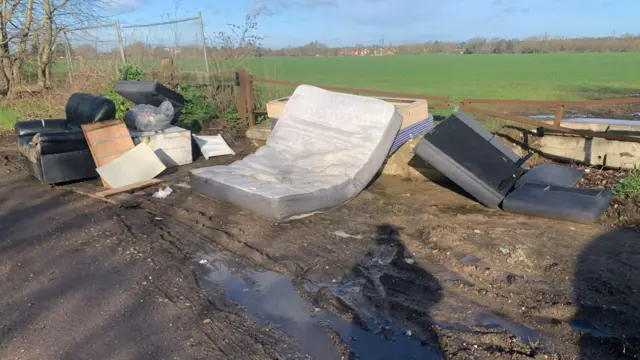
    Fly-tipping at a gate next to a field. The waste includes a sofa, a mattress and other rubbish. A shadow of the person taking the photo can also be seen.Image source, Colin Rayner

    Farmers in Surrey say that fly-tipping is "relentless" and happening "virtually every week", with the clear-up costing them thousands of pounds a year.

    Colin Rayner says the waste dumping is happening on an industrial scale and has forced him to bring in people to guard gates during harvesting.

    "We find anything from asbestos to tyres to dead dogs... you name it, we've found it," he says.

    "We then have the responsibility of taking it to a waste transfer station and getting rid of it legally."

    The Department for Environment, Food and Rural Affairs (DEFRA) said tougher checks and stronger penalties were being introduced.